The Hidden Cost of Neglecting Blood Flow, Metabolic Health, Hormones, Nerves and Sexual Wellbeing
Core message:
The penis can carry the accumulated cost of how a man has treated his circulation, metabolism, nerves, hormones and mind. The consequences may remain hidden for years—but a man can stop adding to the balance, investigate warning signs and begin protecting his future sexual health today.
Important note
“Penis debt” is a metaphor created to explain how risks and neglected health problems can accumulate. It is not a medical diagnosis, and it should never be used to shame a man. Erectile or penile problems are not always caused by personal habits, and lifestyle changes cannot guarantee prevention or reversal. Persistent or concerning symptoms deserve assessment by an appropriately qualified healthcare professional.
Introduction: The Body Keeps the Complete Account
Debt rarely becomes dangerous because of one isolated purchase.
It becomes dangerous through repeated decisions that appear affordable at the time.
Another cigarette.
Another night of excessive drinking.
Another year without exercise.
Another warning about blood pressure ignored.
Another promise to improve the diet postponed.
Another symptom hidden because discussing it feels embarrassing.
Each decision appears separate, but the body keeps the complete account.
The penis keeps part of that account.
An erection depends on several systems working together. Sexual stimulation must be processed by the brain and nerves. Signals must allow blood vessels to relax. Blood must enter the erectile tissue and remain there long enough to create firmness. Hormones, emotions, energy, relationships and general health can all influence the result.
When those systems are protected, a man gives himself a stronger foundation for sexual function. When they are neglected repeatedly, the cost may eventually appear through less reliable erections, altered desire, discomfort, changes in shape or reduced sexual confidence.
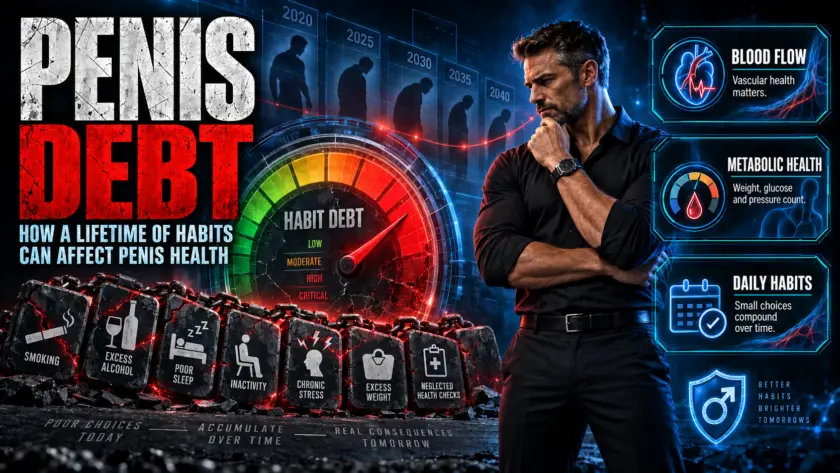
This is penis debt: the accumulated sexual-health burden created by damaging habits, unmanaged conditions, untreated injuries and warning signs that have been ignored for too long.
The debt does not always announce itself immediately.
A man may smoke for years and still experience erections. He may gain abdominal weight without noticing an obvious sexual change. He may repeatedly sacrifice sleep and assume that tiredness is the only consequence. The body can compensate, adapt and conceal weaknesses—until it cannot.
Then the man may make another mistake.
Instead of viewing the change as information, he treats it as humiliation. He remains silent. He blames age. He orders an unregulated tablet online. He tries to force performance while refusing to investigate what the symptom may be saying about his wider health.
Silence adds interest to penis debt.
But this article is not a verdict against the past.
It is an invitation to take control of the future.
A man cannot return to every cigarette, every inactive year or every missed health check and choose differently. He can stop adding new charges. He can measure his blood pressure. He can investigate his blood sugar and cholesterol. He can stop smoking, move his body, improve his weight, moderate alcohol, protect sleep and seek proper treatment.
He can also recognise that not every sexual-health problem is his fault. Genetics, prescribed medicines, surgery, neurological disease, cancer treatment, trauma and psychological distress can affect erections and penile health. Responsibility means acting on reality—not inventing guilt for everything that happens to the body.
Penis debt is therefore not a message of shame.
It is a message of awareness, ownership and recovery.
The repayment starts when denial ends.
The Penis Debt Account at a Glance
| Account | What can add to the balance | What responsible action may include |
|---|---|---|
| Circulation | Smoking, inactivity, unmanaged blood pressure or cholesterol | Stop smoking, exercise, obtain health checks and follow treatment |
| Metabolism | Uncontrolled diabetes, unhealthy weight and poor dietary patterns | Monitor blood sugar, improve nutrition and pursue sustainable weight management |
| Nerves | Diabetes, neurological disease, pelvic injury or surgery | Seek assessment and manage the underlying condition |
| Hormones | Genuine deficiency, steroid misuse or inappropriate testosterone use | Test properly and use hormones only under qualified medical care |
| Psychology | Chronic stress, anxiety, depression, shame or performance fear | Communicate, address mental health and consider appropriate therapy |
| Structure | Penile injury, scar tissue, unsafe enlargement methods or untreated pain | Stop the harmful activity and seek medical assessment |
| Sexual health | Untested infections, risky sexual behaviour or ignored symptoms | Use protection appropriately, test when indicated and complete treatment |
| Action | Avoidance, self-diagnosis and unregulated treatments | Replace assumptions with professional evaluation and evidence-based care |
Alpha Insight
Every account affects the same man. Penis health becomes stronger when circulation, metabolism, hormones, nerves, psychology and responsible action are protected together.
1. Your Penis Is Connected to Your Entire Health
The penis is sometimes treated as though it were an isolated machine: either it performs or it fails.
Human biology is more complicated.
Erectile function depends upon communication between the brain, nerves, blood vessels, hormones and erectile tissue. Desire can influence the process, but desire alone cannot overcome every physical problem. Strong blood flow matters, but blood flow alone does not resolve every psychological or relationship difficulty. Testosterone may contribute to libido and wider sexual health, but it is not the explanation for every unreliable erection.
The US National Institute of Diabetes and Digestive and Kidney Diseases explains that erectile dysfunction can be connected to conditions affecting blood vessels, nerves or hormones. It may also be influenced by medicines, mental or emotional issues and lifestyle behaviours. NIDDK
Potential physical contributors include:
- Diabetes
- High blood pressure
- Atherosclerosis and other cardiovascular disease
- High cholesterol
- Obesity
- Kidney disease
- Neurological conditions
- Hormonal disorders
- Pelvic surgery or radiotherapy
- Penile curvature and Peyronie’s disease
- Medicine-related effects
Potential psychological or situational contributors include:
- Anxiety
- Depression
- Stress
- Performance fear
- Low confidence
- Negative body image
- Relationship difficulties
- Lack of emotional safety or sexual communication
Many men have a mixture of influences rather than one clean cause. That is why a complete assessment looks beyond the penis itself.
It is also why erectile function should not be used as a crude test of masculinity.
A strong erection does not prove that a man is healthy in every way. An unreliable erection does not make him weak, defective or less of a man. It is a biological event influenced by health and circumstances—not a moral ranking.
There is another distinction that matters inside the Male Fertility Knowledge Hub:
Penis health and sperm health overlap, but they are not the same.
Erectile or ejaculation problems can make conception more difficult by interfering with intercourse or semen delivery. However, sperm are produced in the testes. A man can have dependable erections and still have a low sperm count, poor motility or another fertility problem. He can also have healthy sperm production while experiencing erectile difficulties.
Sexual performance cannot replace semen analysis, and semen analysis cannot explain every erection problem.
Understanding the complete system prevents false confidence, unnecessary shame and oversimplified solutions.
Alpha Insight
The penis is not separate from the man. It reflects a biological system—and protecting that system is an act of health, not a test of worth.
2. Penis Debt Accumulates Quietly
Financial debt is easy to understand because statements arrive. The numbers are visible. Interest can be calculated.
Biological debt is less obvious.
The body often allows a man to continue functioning while risks accumulate beneath the surface. Blood pressure may rise without obvious symptoms. Blood sugar may remain elevated before a diagnosis is made. Arteries may gradually lose flexibility. Stress becomes normal. Poor sleep becomes identity. Extra abdominal weight arrives one year at a time.
Because sexual function may remain adequate during part of this process, the man assumes there is no cost.
That assumption is dangerous.
The absence of an erection problem today does not prove that smoking, inactivity or uncontrolled diabetes is harmless. It only means that obvious erectile difficulty has not appeared—or has not yet been recognised.
The first signs may be subtle:
- Morning erections become less frequent
- Firmness takes longer to develop
- The erection is lost more easily
- More stimulation is required
- Desire becomes inconsistent
- Recovery between sexual activity changes
- The man begins avoiding sex through uncertainty
- Anxiety appears before intimacy
Any one of these experiences can occur temporarily. Tiredness, alcohol, stress and relationship circumstances can affect an individual occasion. The NHS notes that most men occasionally have difficulty getting or keeping an erection and that stress, tiredness or excessive alcohol may be responsible. NHS
The important issue is pattern.
If erection problems keep happening, a man should not simply keep testing himself in private. The repeated symptom deserves attention because it may be linked to a treatable physical or psychological cause.
Penis debt also accumulates through avoidance.
One missed health check does not guarantee disaster. But years of refusing to know blood pressure, cholesterol or blood sugar allow modifiable risks to continue unchallenged. One episode of pain may resolve. Repeated pain or progressive curvature ignored for months may become a more complicated problem.
The body’s ability to cope should produce gratitude and protection—not an invitation to keep testing its limits.
Alpha Insight
The body’s silence should never be mistaken for unlimited permission. Use symptom-free years to build protection, not to assume consequences can never arrive.
3. The Blood-Flow Debt
An erection is not created by confidence alone. It requires blood.
During arousal, chemical and nerve signals help the smooth muscle within the penis relax. Arteries widen, blood enters the erectile chambers and pressure helps restrict the blood’s exit. The result is an erection firm enough for sexual activity.
This makes erectile function deeply connected to vascular health.
Conditions and habits that affect blood vessels throughout the body can also affect the smaller vessels supplying the penis. These include:
- Smoking
- High blood pressure
- High cholesterol
- Diabetes
- Atherosclerosis
- Obesity
- Metabolic syndrome
- Physical inactivity
The European Association of Urology lists many of these among recognised erectile-dysfunction risk factors. Its guidance also states that erectile dysfunction should be considered a possible precursor of cardiovascular disease and that more severe or longer-standing erectile dysfunction is associated with greater risk. European Association of Urology
That makes a persistent change in erections more than a private inconvenience.
It may be a health signal.
This does not mean that every man with erectile dysfunction has heart disease. It means that the shared risk factors are important enough to investigate, particularly when the problem appears persistently or in a younger man without an obvious situational explanation.
A proper evaluation may include:
- Medical and sexual history
- Blood-pressure measurement
- Weight or waist assessment
- Blood glucose or HbA1c
- Lipid profile
- Review of medicines
- Examination when appropriate
- Morning testosterone testing when symptoms justify it
- Further cardiovascular assessment according to individual risk
The point is not to frighten a man.
It is to reveal the opportunity hidden inside the symptom.
An erection problem can bring a man into contact with information he was otherwise avoiding. It may expose high blood pressure, diabetes, abnormal cholesterol, low testosterone or emotional distress early enough for meaningful action.
The penis does not betray him by producing a warning.
It may be trying to protect the rest of him.
Alpha Insight
A weaker erection may not be merely a bedroom problem. It can be the body asking a man to examine the circulation supporting his entire future.
4. Smoking Charges Interest Against Penis Health
A cigarette looks temporary.
It is lit, consumed and discarded within minutes. The vascular consequences are not discarded with it.
Smoking damages cardiovascular health and is a recognised contributor to erectile dysfunction. Repeated exposure can affect the lining of blood vessels, reduce their ability to function normally and accelerate the vascular disease that restricts blood flow.
The man may believe he is paying only for the packet.
His circulation may be paying as well.
This is one of the clearest examples of penis debt because the habit is repeated in small instalments. No single cigarette announces, “This is the one that will affect your erections.” Instead, exposure accumulates.
Some men respond by searching for supplements that supposedly increase nitric oxide or improve blood flow. They continue smoking while trying to purchase protection in another bottle.
That is not repayment.
It is attempting to outspend the damage.
Stopping smoking cannot guarantee that erectile function will return completely. The outcome depends on age, duration of exposure, existing vascular disease and other health factors. But cessation removes a continuing source of cardiovascular harm and supports health far beyond sexual performance.
A serious plan may involve:
- Setting a quit date
- Speaking to a GP or pharmacist
- Using an evidence-based stop-smoking service
- Identifying situations that trigger smoking
- Removing cigarettes and related cues
- Replacing the ritual with a planned action
- Treating a lapse as data rather than permission to abandon the attempt
Vaping should not be adopted as proof that penile risk has disappeared. The safest long-term objective is freedom from tobacco and nicotine dependence, using appropriate professional support when necessary.
The strongest response is not embarrassment about the years spent smoking.
It is refusing to finance another year of the same damage.
Alpha Insight
Every cigarette asks the circulation to finance a habit that gives nothing valuable back. Repayment begins by stopping the next charge.
5. Blood Sugar and Metabolic Debt
An erection requires working blood vessels and responsive nerves. Diabetes can threaten both.
Persistently high blood sugar can contribute to vascular and nerve damage. That combination can interfere with the signals and blood flow required for erections. Diabetes may also coexist with high blood pressure, abnormal cholesterol, obesity and other cardiovascular risks.
This is why metabolic health belongs inside any serious discussion of penis health.
The problem is often gradual.
A man gains weight around the waist. Activity declines. Sleep worsens. Energy drops. He becomes more dependent on convenience food and less willing to obtain health checks. Because no single day feels catastrophic, he delays change.
Years later, the consequences appear connected:
- Reduced fitness
- Poorer blood-pressure control
- Insulin resistance or diabetes
- Lower confidence
- Reduced libido
- Less reliable erections
- Greater cardiovascular risk
Weight itself is not a moral failure, and thin men are not automatically metabolically healthy. The objective is not humiliation. It is understanding that body composition, movement, diet, sleep and medical conditions can influence the environment in which sexual function operates.
Useful actions include:
- Checking blood pressure
- Asking whether blood glucose or HbA1c testing is appropriate
- Knowing the lipid profile
- Measuring waist or tracking weight trends without obsession
- Replacing repeated ultra-processed meals with a sustainable dietary pattern
- Increasing daily movement
- Performing regular resistance and aerobic exercise when medically appropriate
- Taking prescribed diabetes, blood-pressure or cholesterol treatment correctly
Men already diagnosed with diabetes should not assume that erectile difficulty is simply unavoidable. It deserves assessment because treatment options exist and improving overall disease management remains valuable.
Equally, a man should not stop prescribed blood-pressure medicine because he suspects it is affecting sexual function. Some medicines can contribute to erectile problems, but uncontrolled blood pressure also damages health. The correct action is to discuss the problem with the prescriber, who may be able to review the dose or select an alternative.
Never trade a treated health condition for an untested theory.
Alpha Insight
A man cannot continually neglect his metabolic health and assume his sexual health will remain untouched. Measure early, manage intelligently and remove shame from the process.
6. Inactivity Allows the Balance to Grow
The modern body can spend most of the day almost completely still.
A man sits while working, sits while travelling, sits while eating and sits while recovering through entertainment. He may be mentally exhausted at night while his cardiovascular system has barely been challenged.
Physical inactivity contributes to the same network of risks associated with erectile dysfunction:
- Reduced cardiovascular fitness
- Weight gain
- Poorer blood-pressure control
- Insulin resistance
- Lower energy
- Reduced confidence
- Depression and stress
Movement is therefore not a superficial penis hack. It strengthens the health systems upon which erections depend.
European urology guidance reports evidence that regular exercise and a reduction in body-mass index can improve erectile function. European Association of Urology
That does not mean every man can exercise his way out of every erectile problem. Nerve injury, severe vascular disease, surgery, medication effects, hormonal disorders and psychological factors may require other forms of treatment.
It means movement can be part of repayment.
A sustainable weekly foundation might include:
- Brisk walking
- Resistance training
- Moderate aerobic exercise
- Short movement breaks during sedentary work
- Mobility work
- Activities the man genuinely enjoys enough to repeat
The objective is not to perform one punishing workout after months of inactivity. It is to stop allowing inactivity to compound daily.
Cycling deserves a balanced note. It can provide valuable cardiovascular exercise, but prolonged perineal pressure or numbness should not be ignored. Bike fit, saddle choice, positioning and breaks may matter. The NHS advises men experiencing erectile problems who cycle for more than three hours a week to stop cycling for a while and seek appropriate advice. NHS
Exercise should build the system, not injure it.
Alpha Insight
The penis benefits when the whole body becomes more capable. Train circulation, strength and metabolic health consistently—not desperately.
7. Alcohol, Drugs and Hormonal Shortcuts
Temporary pleasure can create a longer biological bill.
Alcohol may reduce inhibition, but excessive intake can interfere with arousal and the ability to develop or maintain an erection. One poor sexual experience after heavy drinking does not automatically indicate chronic erectile dysfunction. Repeated heavy intake, however, should not be dismissed as irrelevant.
Recreational drugs may affect judgement, sensation, circulation, hormones, mental health and sexual behaviour. They can also increase the likelihood of unsafe sex or combining substances in dangerous ways.
Then there are hormonal shortcuts.
Some men use anabolic steroids or external testosterone to gain muscle, appear more masculine or accelerate performance. They may assume that more androgen must mean better sexual and reproductive health.
The reality is not that simple.
Anabolic-steroid misuse can be associated with erectile dysfunction, reduced sperm count, infertility and shrinking of the testicles. NHS
The distinction matters:
- The penis does not necessarily shrink because the testicles shrink.
- Libido or erections may initially feel stronger during some forms of hormone use.
- Natural hormonal signalling and sperm production may still be suppressed.
- Sexual symptoms can appear during use, between cycles or after stopping.
- “Cycling”, “stacking” and “pyramiding” have not been proven to remove the risks.
Medically supervised testosterone therapy is different from steroid misuse, but it still requires a genuine diagnosis, appropriate monitoring and discussion of fertility plans. External testosterone can suppress sperm production and is not a fertility treatment.
A man using anabolic steroids should not respond to problems by adding more underground drugs or abruptly changing a complex regimen without help. He should disclose what he has taken to a qualified clinician and seek appropriate support.
The body does not become stronger when its warning signals are chemically silenced.
Alpha Insight
A chemical shortcut can create a biological bill that continues after the temporary advantage disappears. Power without medical understanding is not control.
8. Sleep, Stress and Psychological Debt
Not every erection problem begins in an artery.
Sexual arousal is influenced by attention, mood, safety, confidence and the nervous system. A man can be physically capable of an erection yet struggle in a specific situation because anxiety is overwhelming the sexual response.
One difficult experience can create a cycle:
- The erection is lost.
- The man interprets the event as failure.
- He becomes afraid it will happen again.
- He monitors himself during the next encounter.
- The pressure makes arousal more difficult.
- The next difficulty appears to confirm the fear.
The debt grows because every sexual experience becomes an examination.
Chronic stress can add to the problem. The mind remains occupied by work, money, conflict, grief or caregiving. Sleep becomes shorter. Energy and desire decline. The man expects his body to switch instantly from survival mode into relaxed intimacy.
Sometimes it cannot.
Depression may reduce desire, pleasure and motivation. Anxiety may produce avoidance. Relationship conflict can make physical closeness emotionally unsafe. Some prescribed medicines used to treat mental-health conditions may also affect sexual function, although stopping them independently can be dangerous.
A complete response may include:
- Improving sleep opportunity and regularity
- Reducing excessive work or digital stimulation before bed
- Discussing fears with a partner without blame
- Addressing depression or anxiety
- Working with a properly qualified counsellor or psychosexual therapist
- Reviewing medicines with the prescriber
- Removing the demand that every intimate moment must lead to penetration
- Rebuilding touch, communication and confidence gradually
Pornography requires careful language. Some men report that compulsive use, escalating novelty or unrealistic expectations affect their arousal, confidence or relationships. Research does not justify claiming that pornography or ordinary masturbation physically destroys the penis in every user. The useful question is functional:
Is this behaviour strengthening or weakening your ability to live according to your values, respond to a real partner and remain in control of your attention?
Normal masturbation has not been shown to shrink the penis. Injury, soreness or compulsive behaviour is a different matter. Stop any activity causing pain and seek advice when symptoms persist.
Alpha Insight
The penis responds to the mind as well as the body. A man should address anxiety and stress with the same seriousness he gives blood pressure and fitness.
9. Injury and Unsafe Experimentation Can Create Structural Debt
Some forms of penis debt are not gradual. They are created through injury.
The penis can be damaged during forceful sexual activity, an accident or aggressive attempts to change its size. Pain is not a challenge to prove toughness. A sudden injury is not something to hide because the body part feels embarrassing.
Dangerous practices may include:
- Forceful manual stretching or “jelqing”
- Unregulated injections, oils or fillers
- Hanging weights from the penis
- Excessive pump pressure or prolonged constriction
- Using traction devices without correct guidance
- Continuing sexual activity after sharp pain or significant bending
- Buying devices from sellers making impossible enlargement promises
Some medical devices have legitimate uses. Vacuum erection devices and penile traction may be recommended in selected circumstances. The difference is proper design, correct use, realistic expectations and clinical guidance.
More force does not create more health.
New curvature or a hard area
Peyronie’s disease involves scar tissue that can produce curvature, shortening, narrowing, a hard area, painful erections or difficulty with sex. The cause is not always known, although injury may sometimes play a role. The NHS advises seeing a GP for a hard lump, significant new curvature, painful erections or associated erectile difficulty. NHS
A naturally slight curve is common. A new or progressive change is different.
Suspected penile fracture
A forceful bend of an erect penis can tear the tissue surrounding the erectile chambers. A cracking or popping sensation, sudden pain, rapid loss of erection, swelling or bruising requires urgent medical attention.
Priapism
An erection lasting more than three to four hours is a medical emergency, particularly when painful. The NHS warns that priapism can cause permanent penile damage if it is not treated quickly. Go to A&E or call 999 according to NHS instructions. NHS
The debt metaphor must stop at the emergency-room door. Do not calculate, wait, experiment or protect your pride when time-sensitive treatment may preserve tissue.
Alpha Insight
Do not damage a healthy body while chasing an insecurity, and do not let embarrassment delay urgent care after an injury.
10. Sexual Risk and Ignored Symptoms Add Another Account
Penis health includes more than erections.
The skin, foreskin, glans and urethra can develop symptoms related to infection, inflammation, injury or other medical conditions. Sexual responsibility therefore belongs inside the penis-debt conversation.
Warning signs may include:
- Unusual discharge from the penis
- Pain or burning when urinating
- Blisters, sores, ulcers or warts
- A persistent rash
- New lumps or skin growths
- Bleeding
- Swelling
- Persistent itching or irritation
- Pain during sex
Some sexually transmitted infections produce no symptoms. Feeling normal after unprotected sexual contact does not prove that no infection is present. The NHS notes that testing is the only way to know for certain and advises attending a sexual health clinic when a man thinks he may have an STI, a partner has symptoms or he is worried after sex without appropriate protection. NHS
Responsible protection includes:
- Using condoms appropriately with new or non-exclusive partners
- Obtaining testing when indicated
- Completing prescribed treatment
- Informing partners when necessary
- Avoiding sex until advised it is safe after diagnosis or treatment
- Not using fragranced or harsh products that irritate sensitive genital skin
- Seeking help for persistent changes rather than repeatedly self-treating
Hygiene should be gentle, not aggressive. The penis does not become healthier through excessive scrubbing, disinfectants or products that disrupt the skin.
The strongest sexual-health decision is not the one that looks fearless in the moment. It is the one that protects both people from consequences they cannot see immediately.
Alpha Insight
Sexual responsibility is not fear. It is respect for your body, your partner and the future consequences of today’s decisions.
11. Silence Makes Penis Debt More Expensive
Many men would rather discuss almost any other body part.
They will mention a knee injury, back pain or dental problem without hesitation. When erections change, the same men hide, minimise or search anonymously for a product that promises to remove the symptom without requiring a conversation.
Embarrassment is understandable.
It is not a treatment.
Persistent erectile dysfunction may provide an opportunity to identify cardiovascular risk, diabetes, hormonal problems, medicine-related effects, psychological distress or a structural condition. Delaying assessment allows both the symptom and the anxiety surrounding it to become more established.
Silence also affects relationships.
A partner may interpret avoidance as rejection, loss of attraction, infidelity or lack of love. The man may feel pressured to prove himself, which increases anxiety and makes the next experience more difficult.
A calm explanation can interrupt the cycle:
“I have noticed a change in my erections. I do not want either of us to turn it into blame. I am going to get it checked, and I would like us to approach it as a health issue together.”
That sentence contains strength.
It names the issue, refuses shame, protects the relationship and commits to action.
The NIDDK states that erectile dysfunction is not a routine part of ageing, and the NHS recommends seeing a GP or sexual health clinic when erection problems keep happening. NIDDK, NHS
Age can influence erectile function. It does not make persistent problems unworthy of investigation.
Doctors, nurses, urologists and sexual-health professionals discuss these issues regularly. The conversation that feels enormous to the patient is familiar clinical work to them.
The man does not lose dignity by requesting help.
He loses options by refusing it.
Alpha Insight
Embarrassment becomes expensive when it prevents a man from investigating a treatable problem. Direct action protects both health and confidence.
12. Not Every Penis Problem Is Self-Inflicted
The debt metaphor becomes harmful if it is used to accuse every man with erectile or penile difficulties of creating his own condition.
That would be medically inaccurate and morally careless.
Sexual-health problems may develop through circumstances outside a man’s control, including:
- Genetics
- Age-related biological changes
- Prescribed medicines
- Diabetes despite responsible management
- Neurological disease
- Spinal-cord injury
- Pelvic or prostate surgery
- Radiotherapy or other cancer treatment
- Peyronie’s disease without an identifiable injury
- Congenital anatomical differences
- Trauma
- Depression, anxiety or grief
- Relationship experiences
- Hormonal disorders
Even lifestyle-related conditions are not always simple. Food access, working hours, poverty, disability, trauma, addiction, mental health and caregiving responsibilities can shape behaviour. Responsibility still matters, but compassion makes responsibility more usable.
The objective is not to ask:
“Who deserves blame?”
The better questions are:
- What has changed?
- What might be contributing?
- Which risks can be reduced?
- Which symptoms require assessment?
- What treatments are available?
- How can the partner be included constructively?
- What can be improved from this point forwards?
A man can take ownership without carrying false guilt.
He can say:
“I did not choose every factor that brought me here. I will choose how seriously I respond.”
That is the real Alpha position.
Not denial.
Not self-hatred.
Responsible action.
Alpha Insight
Responsibility means addressing reality honestly—not inventing guilt for circumstances you did not create. You own the response even when you did not create the cause.
13. Stop Making Minimum Payments
When debt becomes uncomfortable, people sometimes pay only enough to silence the immediate demand.
Men can do the same with sexual health.
They buy a questionable tablet, achieve one erection and decide the problem is solved. They use increasingly aggressive stimulation. They avoid sex until they feel certain. They blame stress without investigating physical health. They start testosterone because an online influencer described tiredness as proof of deficiency.
These are minimum payments.
They may change the immediate experience while leaving the underlying account untouched.
This does not mean erectile-dysfunction treatments are superficial or illegitimate. PDE5 inhibitors such as sildenafil and tadalafil can be safe and effective for appropriate men when supplied and used correctly. Vacuum devices, counselling, hormone treatment for properly diagnosed deficiency and other interventions may also have important roles.
The problem is using symptom improvement as permission to ignore the cause.
A complete response may include:
- Treating high blood pressure or high cholesterol
- Improving diabetes management
- Changing a contributing medicine under medical supervision
- Addressing genuine testosterone deficiency
- Receiving help for anxiety or depression
- Improving communication with a partner
- Using an evidence-based erection treatment
- Investigating penile curvature or injury
- Assessing cardiovascular risk
Never stop a prescribed medicine independently because erectile difficulties appeared. Never combine erectile-dysfunction drugs with other medicines without checking safety. Products bought from unknown websites may be fake, contaminated or inappropriate for the user. The NHS advises speaking to a doctor before buying erectile medicines online and checking that online providers and pharmacies are properly registered. NHS
The strongest treatment plan does not force a man to choose between immediate sexual function and long-term health.
It addresses both.
Alpha Insight
Treating the symptom may help tonight. Understanding and treating the cause may protect the years ahead. Demand both when both are possible.
14. Begin Repaying Penis Debt
The past cannot be edited.
The balance can still change.
Repayment does not mean punishing the body through extreme dieting, exhausting exercise or a cupboard full of supplements. It means removing avoidable damage, strengthening the systems involved in sexual function and seeking help for problems that self-discipline alone cannot correct.
1. Stop smoking
Use professional cessation support rather than relying entirely on willpower if previous attempts have failed.
2. Reduce excessive alcohol
The NHS advises not drinking more than 14 units a week and spreading intake rather than concentrating it into heavy sessions. Individual medical circumstances may require less or none.
3. Move consistently
Build aerobic fitness, muscular strength and daily movement according to current ability and medical advice.
4. Improve weight without obsession
Aim for sustainable metabolic improvement. Crash diets that damage sleep, recovery and adherence are not repayment.
5. Know the health numbers
Check blood pressure and discuss glucose, HbA1c, cholesterol and hormone testing when appropriate.
6. Protect sleep
Create a regular sleep opportunity, reduce unnecessary late-night stimulation and seek assessment for suspected sleep apnoea.
7. Review medicines properly
Tell the prescriber about sexual effects. Do not stop treatment on your own.
8. Avoid recreational drugs and anabolic steroids
Seek help when use has become difficult to control.
9. Protect the penis from injury
Reject dangerous enlargement practices, stop activity that produces pain and seek urgent help after significant trauma.
10. Practise responsible sexual health
Use protection appropriately, test when indicated and complete treatment.
11. Address psychological barriers
Anxiety, depression, shame and relationship conflict deserve treatment rather than mockery.
12. Investigate persistent symptoms
Do not allow weeks to become years because the conversation feels uncomfortable.
The NHS and NIDDK both include smoking cessation, healthy eating, physical activity, healthy weight, alcohol reduction and stress management among measures that may help prevent or improve erectile difficulties. NHS, NIDDK
Improvement is not guaranteed, and medical treatment may still be needed. But the actions strengthen far more than erections. They support the heart, brain, metabolism, energy and future quality of life.
Repaying penis debt is ultimately an investment in the whole man.
Alpha Insight
You cannot change the years already spent, but you can stop charging tomorrow for decisions made today. Every protective action alters the direction of the account.
The Penis Debt Statement
Complete this audit without exaggeration or avoidance.
| Account | Questions to examine | My next action |
|---|---|---|
| Circulation | Do I know my blood pressure and cholesterol? Do I smoke? How fit am I? | |
| Metabolism | Do I know my blood sugar status? Is my weight or waist trend concerning? | |
| Hormones | Have symptoms been assessed properly? Have I used steroids or external testosterone? | |
| Nerves | Do I have diabetes, numbness, neurological symptoms, pelvic injury or previous surgery? | |
| Psychology | Is stress, anxiety, depression, shame or relationship conflict affecting intimacy? | |
| Structure | Have I noticed pain, injury, curvature, shortening, a lump or another physical change? | |
| Sexual health | Have I taken risks or ignored symptoms that justify STI testing? | |
| Treatment | Am I using prescribed treatment correctly or buying unregulated products? | |
| Action | Which appointment, measurement or conversation have I been avoiding? |
Then write your current statement:
The largest balance on my penis-debt account is ____________________. I will begin repayment by ____________________ before ____________________.
Do not list twenty actions.
Choose the action that changes direction.
The 90-Day Penis Debt Repayment Plan
Ninety days cannot guarantee restoration of erectile or penile health. It is long enough, however, to establish a different pattern and gather useful information.
Phase One: Reveal the Balance — Days 1–30
Medical information
- Arrange a GP or sexual-health appointment if erection problems persist
- Check blood pressure
- Discuss appropriate blood tests
- Review current medicines and supplements
- Disclose anabolic-steroid, testosterone or drug use honestly
- Report pain, curvature, lumps, discharge or injury
Behavioural baseline
Record:
- Smoking or nicotine use
- Weekly alcohol intake
- Daily movement
- Exercise sessions
- Sleep opportunity
- Weight or waist trend if appropriate
- Stress level
- Morning and sexual erection pattern without obsessive daily testing
Relationship action
Have one calm conversation with your partner if the issue is affecting intimacy.
The objective of Phase One is truth.
Phase Two: Stop Adding to the Debt — Days 31–60
Select the highest-impact actions for your circumstances:
- Follow a smoking-cessation plan
- Reduce alcohol
- Complete regular walking or aerobic exercise
- Begin or continue resistance training
- Improve meal quality
- Follow medical treatment consistently
- Remove dangerous enlargement practices
- Stop using unregulated erection products
- Protect a regular sleep schedule
- Arrange counselling or psychological support
Do not attempt to become perfect in every category. Eliminate the largest continuing charge first.
Phase Three: Build Health Credit — Days 61–90
Continue the foundations and add one layer:
- Progress exercise gradually
- Improve cardiovascular capacity
- Strengthen food preparation systems
- Build stress-management practices
- Deepen partner communication
- Attend follow-up appointments
- Review test results
- Use prescribed treatment correctly
- Define the next 90-day priority
At Day 90, ask:
- What damaging habit has reduced?
- What objective health information did I obtain?
- What symptoms changed?
- What has not changed and now requires further assessment?
- Which action improved confidence because I finally faced it?
- What will the next 90 days protect?
The greatest result may not be a perfect erection.
It may be that the man has stopped hiding from his health.
When Penis Health Requires Urgent Action
Do not wait for a routine appointment when:
- An erection lasts more than three to four hours
- A painful erection lasts more than one hour in a person with sickle cell disease
- The erect penis is forcefully bent and there is a pop, sudden pain, swelling, bruising or immediate loss of erection
- There is severe pain, uncontrolled bleeding or major trauma
- Another symptom feels life-threatening
Follow current NHS emergency guidance. For priapism lasting more than three to four hours, the NHS advises calling 999 or going to A&E because delayed treatment can cause permanent damage. NHS
Seek non-emergency medical assessment for:
- Erection problems that keep happening
- New or increasing penile curvature
- Painful erections
- A hard lump or plaque
- Persistent swelling, rash or irritation
- Discharge, sores, blisters or warts
- Urinary symptoms
- Reduced sensation
- A change following medicine, surgery or injury
Urgency is not panic.
It is the correct speed of response.
Frequently Asked Questions
What does penis debt mean?
Penis debt is a metaphor for the accumulated effect that lifestyle risks, unmanaged health conditions, injuries and delayed assessment may have on penile and erectile health. It is not a recognised medical diagnosis.
Can years of unhealthy habits affect erections?
Yes. Smoking, inactivity, excessive alcohol, recreational drugs, obesity, diabetes, high blood pressure and cardiovascular disease are among the factors associated with erectile dysfunction. However, they do not explain every case.
Can penis debt be repaid?
Some contributing risks can be reduced, and lifestyle improvement may improve erectile function in some men. Medical or psychological treatment can also help. Complete reversal cannot be guaranteed because the outcome depends on the cause and extent of the problem.
Is erectile dysfunction a normal part of ageing?
Age can increase risk, but persistent erectile dysfunction should not simply be accepted as inevitable. It may have a treatable cause and deserves assessment.
Can erectile dysfunction be an early warning of heart disease?
It can be. Erectile dysfunction shares risk factors with cardiovascular disease, and European urology guidance describes it as a possible precursor of cardiovascular disease. This does not mean every case is caused by heart disease, but persistent problems justify proper evaluation.
Does one failed erection mean I have erectile dysfunction?
No. Occasional difficulty can result from stress, tiredness, alcohol or circumstances. Seek advice when the problem keeps happening or causes concern.
Does low testosterone always cause erection problems?
No. Low testosterone can affect libido and sexual function, but erectile difficulties have many potential causes. Diagnosis requires appropriate symptoms and properly interpreted blood testing.
Can testosterone improve penis health?
Testosterone treatment may help selected men with confirmed deficiency, but it is not a universal erection treatment. External testosterone can suppress sperm production, so fertility plans must be discussed before treatment.
Do anabolic steroids shrink the penis?
Anabolic steroids are associated with shrinking of the testicles—not normally shrinking of the penis. They can also cause reduced sperm count, infertility and erectile dysfunction.
Does masturbation damage or shrink the penis?
Ordinary masturbation has not been shown to shrink the penis. Forceful behaviour that causes pain, bruising, swelling or injury is different and should be stopped. Persistent symptoms require assessment.
Can pornography cause penis debt?
It should not be described as physically damaging every user’s penis. However, compulsive use, escalating stimulation or unrealistic expectations may affect attention, arousal, confidence or relationships for some men. Judge the behaviour by its effect on control, values and real-life sexual function.
Can exercise improve erectile function?
Regular exercise can support cardiovascular health, blood flow, metabolic health, weight management and confidence. European guidance reports that regular exercise and reducing BMI can improve erectile function, although exercise will not correct every cause.
Should I stop my blood-pressure or antidepressant medicine if erections change?
No. Some medicines can contribute to sexual side effects, but stopping treatment without advice may be dangerous. Discuss the change with the prescriber.
Are online erectile-dysfunction tablets safe?
Only use properly regulated services and medicines appropriate for you. Unknown websites may sell fake or unsuitable products. Speak to a doctor or pharmacist and check UK regulatory registration.
When is an erection an emergency?
An erection lasting more than three to four hours requires emergency care. Follow NHS guidance and go to A&E or call 999.
Does erectile function prove fertility?
No. An erection allows intercourse, but it does not reveal sperm count, motility or morphology. Semen analysis is required to assess these factors.
Closing Declaration
I will stop treating my penis as though it exists separately from my health.
I will protect the blood vessels, nerves, hormones, tissues and mind supporting my sexual function.
I will not use embarrassment as a reason to avoid investigation.
I will not use dangerous shortcuts to compensate for neglected foundations.
I will know my health numbers and address the risks within my control.
I will communicate with my partner instead of allowing silence to create blame.
I will seek urgent care when delay could cause permanent damage.
I will accept responsibility for my actions without blaming myself for every medical outcome.
I cannot erase every decision from my past, but I can stop adding to the debt.
I will protect tomorrow’s sexual health through the decisions I make today.
Final Word
Your body has been recording your habits.
Not to punish you.
To adapt to them.
Every period of inactivity, every cigarette, every ignored medical reading and every night of avoidable excess sends the body instructions. So do exercise, treatment, sleep, honest communication and early assessment.
The account is not fixed.
Some damage cannot be completely reversed. Some problems were never created by lifestyle in the first place. Some men will require medicine, devices, counselling, specialist investigation or surgery. There is no shame in receiving the treatment reality requires.
The shame would be allowing pride to remove options.
Penis debt is not a judgement of manhood. It is a framework for recognising that sexual health has foundations, consequences and warning signals. It reminds a man that erections are connected to circulation, blood sugar, nerves, hormones, mental health and relationships.
Most importantly, it gives him a direction.
Stop adding to the debt.
Reveal the balance.
Treat what can be treated.
Strengthen what can be strengthened.
Protect what remains.
Then allow action—not embarrassment—to write the next statement.
Final Line
Your body keeps an account of how you treat it. Stop adding to the balance—and begin repaying your penis debt before delay collects more interest.


No spam. Unsubscribe anytime.