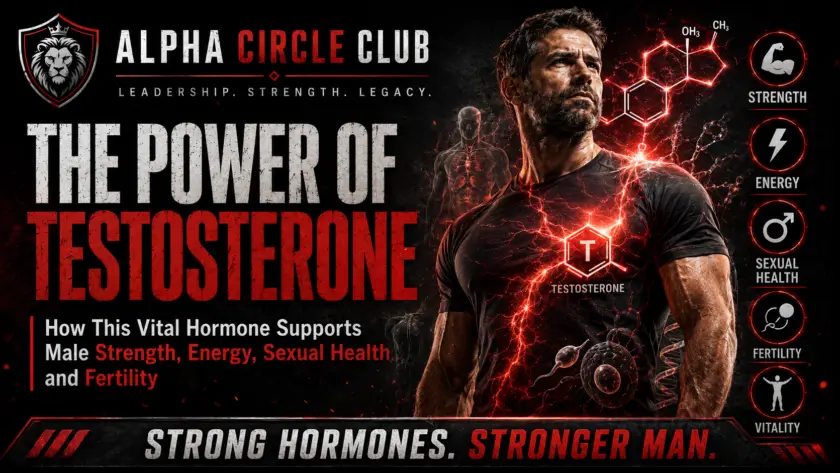
The true power of testosterone is not found in chasing the highest possible number. It is found in maintaining healthy hormone function that allows the male body to perform, recover and reproduce properly.
Testosterone has become one of the most discussed—and most misunderstood—substances in men’s health.
It is praised as the source of strength, ambition, sexual power, confidence and masculine energy. Men are encouraged to increase it, optimise it and sometimes inject it before they have even established whether anything is medically wrong. A difficult month becomes “low testosterone.” A poor workout becomes “low testosterone.” Tiredness, stress, reduced motivation and insecurity are gathered beneath the same convenient diagnosis.
Then the promise appears: raise the number and reclaim the man.
But the real power of testosterone is far more important than the mythology surrounding it. Testosterone contributes to male sexual development, sperm production, libido, muscle and bone maintenance, red-blood-cell production and several other systems that help the male body function. When genuine deficiency develops, the consequences can reach far beyond performance in the gym. Yet more testosterone is not automatically better, and testosterone treatment is not a shortcut that every man should take.
The body does not measure masculinity through a laboratory competition. It regulates hormones through a sophisticated communication system involving the brain, pituitary gland and testes. That system needs balance. Too little testosterone caused by a genuine medical disorder may require investigation and treatment. Excessive or inappropriate hormone use can create new problems, including the suppression of the very sperm production a man may want to protect.
This is the distinction modern men urgently need to understand.
Testosterone matters. It matters to strength, physical development, sexual health, fertility, bone health and wellbeing. But respecting testosterone means refusing to turn it into a religion. It means rejecting miracle boosters, careless self-diagnosis and the belief that a higher result must always create a better man.
You are not a number on a blood report. Your courage, integrity, discipline and value cannot be injected. Hormones influence the conditions in which you live, train and function, but they do not replace character. A man with healthy testosterone still needs to work. A man with testosterone deficiency is not morally deficient. And a man using medically necessary treatment is receiving healthcare—not purchasing masculinity.
Understanding testosterone means respecting its power without becoming controlled by the pursuit of it.
Medical note: This article provides general education, not diagnosis or personal medical advice. Symptoms associated with low testosterone can have many causes. Speak to a GP or qualified specialist before using hormone treatment, changing prescribed medicine or making decisions that may affect fertility.
1. Testosterone Is More Than a Masculinity Symbol
Testosterone is an androgen hormone. In men, most of it is produced by specialised Leydig cells within the testes, with small amounts also produced by the adrenal glands. Its production is not an isolated event. It is controlled through a communication network often called the hypothalamic–pituitary–gonadal axis.
The process begins in the hypothalamus, a region of the brain that releases gonadotrophin-releasing hormone. This signals the pituitary gland to release luteinising hormone and follicle-stimulating hormone. Luteinising hormone stimulates the testes to produce testosterone, while follicle-stimulating hormone works with testosterone inside the testes to support sperm production.
When circulating testosterone rises, it feeds information back to the brain and pituitary. The body then adjusts its hormonal signals. This negative-feedback system helps keep hormone production regulated rather than allowing testosterone to rise without limit. The Society for Endocrinology explains that testosterone levels are normally highest in the morning and fall later in the day—one reason the timing of diagnostic blood tests matters.
Testosterone contributes to:
- Development of male reproductive organs
- Changes associated with male puberty
- Sperm production
- Libido
- Maintenance of muscle and bone strength
- Production of new blood cells
- Body-hair patterns and other male characteristics
- Aspects of body composition and physical function
Some testosterone is converted into dihydrotestosterone, a more potent androgen in certain tissues. Some is converted into oestradiol, a form of oestrogen that also has important functions in men, including within bone. Male hormonal health is therefore not a contest in which testosterone must defeat every other hormone. It is a coordinated system.
That system can be disrupted at different levels. Primary hypogonadism arises when the testes themselves cannot produce sufficient testosterone. Secondary hypogonadism involves problems affecting the hypothalamus or pituitary signals. The difference matters because the possible causes, associated findings and treatment considerations may differ.
This is why a testosterone result should not be interpreted in isolation. A clinician may need to consider symptoms, repeat measurements, luteinising hormone, follicle-stimulating hormone, medicines, weight, sleep, illness and other findings. The correct question is not simply, “How do I raise testosterone?” It is, “Is there a genuine deficiency, and if so, why?”
Testosterone deserves respect because of the systems it serves—not because the internet has turned it into a score for manhood.
Alpha Insight
Testosterone is not a badge of masculinity. It is a powerful biological messenger that must remain properly regulated.
2. The Strength-Building Power of Testosterone
Muscle is one of the most visible expressions associated with testosterone in men. Testosterone supports the maintenance of muscle mass and strength, and genuine deficiency can contribute to reduced muscle bulk or physical capacity. This makes it biologically important—but it does not make it a substitute for training.
Hormones create conditions. Behaviour creates results within those conditions.
A man can have healthy testosterone and still remain weak if he never progressively challenges his body. He can possess excellent potential but waste it through inactivity, inconsistent nutrition and poor recovery. Conversely, a man experiencing symptoms of deficiency may continue training with discipline but find that his performance, recovery or body composition has changed. That pattern may justify medical discussion, but it does not prove the cause.
The strongest natural strength-building system still depends on fundamentals:
- Progressive resistance training: Muscles require a reason to adapt. Gradually increasing load, repetitions, control or difficulty provides that reason.
- Adequate nutrition: Building and maintaining tissue requires sufficient energy and nutrients. Extreme restriction can undermine training and recovery.
- Sufficient protein: Protein provides amino acids needed for repair and adaptation.
- Sleep and recovery: Training is the stimulus; recovery is where adaptation is supported.
- Consistency: No hormone replaces months and years of intelligent execution.
This is also why anabolic steroid use creates a dangerous illusion. A man may gain muscle and strength through supraphysiological androgen exposure while simultaneously disrupting his natural hormonal signalling, sperm production and wider health. An impressive physique cannot reveal what is happening inside the testes, blood or cardiovascular system.
The power of testosterone should therefore be viewed as supportive rather than magical. Healthy hormone function helps the body respond to the work, but the work still matters. If a man is losing strength, the answer is not automatically testosterone therapy. Training design, injury, sleep, calorie intake, protein, stress, illness, medicines and ageing all deserve consideration.
When genuine hypogonadism is diagnosed, appropriately prescribed treatment may improve relevant symptoms and aspects of body composition in some men. But treatment should aim to correct deficiency, not transform an ordinary trainee into an enhanced one. Medical replacement and performance enhancement are not the same objective.
Build strength through discipline. Protect the hormonal health that helps support it. Never use testosterone as an excuse to ignore the training, food and recovery that strength demands.
Alpha Insight
Hormones create potential, but disciplined training determines what a man builds with it.
3. Testosterone and the Architecture of the Male Body
Testosterone is often discussed as though its only purpose were producing muscle and sexual desire. Its influence reaches further. It contributes to the architecture that helps the male body remain strong, functional and resilient.
Bone
Healthy bones are not passive scaffolding. They are living tissue that changes throughout life. Testosterone and its conversion into oestradiol contribute to bone maintenance. Established testosterone deficiency can be associated with reduced bone density and osteoporosis, which may increase vulnerability to fractures.
This matters because bone loss can remain silent. A man does not necessarily feel his bone density declining. He may discover the problem only after a fracture or medical assessment. Men with confirmed hypogonadism therefore require an individual plan that considers more than libido or gym performance.
Muscle and physical function
Testosterone helps maintain muscle tissue and strength. Loss of muscle can affect balance, independence, glucose use, physical confidence and the ability to perform ordinary tasks. Preserving muscle through resistance training remains important throughout adulthood, but unexplained physical decline deserves investigation rather than automatic acceptance.
Blood-cell production
Testosterone signals the body to produce new red blood cells. This is one reason genuine deficiency can sometimes be associated with anaemia—and one reason testosterone treatment requires monitoring. Treatment can raise haematocrit, the proportion of blood made up of red cells. An excessive rise can create risk and may require treatment adjustment or interruption under medical supervision.
Body composition
Low testosterone and increased body fat can exist in a complicated relationship. Obesity may contribute to lower testosterone in some men, while testosterone deficiency may be associated with changes in muscle and fat distribution. This does not mean body fat proves low testosterone, or that testosterone therapy is a weight-loss drug.
The Endocrine Society’s 2026 statement on testosterone replacement therapy says weight loss is typically the first-line therapy when appropriately diagnosed hypogonadism is associated with overweight or obesity and no other cause has been identified. The principle is important: address a potentially reversible contributor rather than immediately assuming lifelong hormone treatment is the only solution.
Sexual development and physical characteristics
Testosterone drives many changes during male puberty, including development of the reproductive system, deepening of the voice and growth of facial and body hair. In adult life, genuine deficiency may affect some of these maintained characteristics.
The architecture of the male body is therefore larger than appearance. Strong bones, functional muscle, appropriate blood-cell production, reproductive health and physical capacity all matter. Chasing testosterone for vanity misses the hormone’s deeper purpose.
Alpha Insight
The power of testosterone reaches far beyond appearance—it helps maintain the structure supporting a man’s entire physical life.
4. Energy, Mood and Motivation: Avoid the Simplistic Claims
Low energy is real. Poor concentration is real. Reduced motivation, irritability and low mood can disrupt a man’s work, relationships and sense of identity. But real symptoms do not always have a simple cause.
This is where testosterone content often becomes irresponsible. A man reports that he is tired, unmotivated or unhappy, and someone immediately tells him his testosterone must be low. He begins interpreting every difficult feeling as hormonal evidence. A complicated life is reduced to one blood marker before that marker has even been tested.
Testosterone deficiency may be associated with reduced energy, mood changes or concentration problems. Yet the same experiences can be influenced by:
- Insufficient or disrupted sleep
- Obstructive sleep apnoea
- Depression or anxiety
- Chronic psychological stress
- Relationship or financial pressure
- Under-eating or nutrient deficiency
- Excessive training without recovery
- Inactivity
- Obesity or metabolic illness
- Thyroid disorders
- Anaemia
- Chronic disease
- Alcohol or drug use
- Medication side effects
The NHS specifically warns that the popular idea of a sudden male menopause is misleading. Testosterone usually declines gradually with age, and symptoms in midlife may have psychological, lifestyle, medical or hormonal causes. The underlying cause matters because the wrong explanation produces the wrong response.
If a man with untreated sleep apnoea assumes he needs testosterone, he may miss the condition disrupting his sleep and health. If depression is interpreted only as a hormone problem, he may delay psychological support. If overtraining and under-eating are driving exhaustion, adding more stimulation will not rebuild the missing recovery.
This does not mean hormonal symptoms should be dismissed. It means they should be investigated intelligently.
Track patterns rather than single bad days. When did the change begin? Is it persistent? Has libido changed? Are morning erections different? Has strength fallen despite consistent training? Has body weight, sleep, medication or stress changed? Are there headaches, visual symptoms, testicular concerns or other features that should be reported to a clinician?
Motivation is not a laboratory value. Testosterone may influence aspects of wellbeing, but it cannot provide purpose, organise a man’s life or choose his priorities. Even after a medical deficiency is corrected, he still needs direction, habits, responsibility and meaningful work.
Treat symptoms seriously without turning testosterone into the explanation for every human struggle.
Alpha Insight
Do not blame one hormone for every difficult day. Symptoms are clues to investigate, not diagnoses to invent.
5. Testosterone, Libido and Sexual Function
Testosterone has an important relationship with sexual desire. Genuine deficiency can reduce libido and may be associated with fewer spontaneous or morning erections. But male sexual function involves more than testosterone, and confusing desire with erection quality can lead men towards the wrong solution.
Libido is the desire for sexual activity. An erection is a vascular, neurological and psychological event requiring adequate blood flow, nerve signalling and arousal. Testosterone can influence the sexual system, but it is not the only component.
Erectile difficulties may be affected by:
- Cardiovascular or blood-vessel disease
- Diabetes
- Smoking
- Neurological conditions
- Medicines
- Alcohol or recreational drugs
- Anxiety, depression or performance pressure
- Relationship difficulties
- Sleep deprivation
- Hormonal disorders, including but not limited to testosterone deficiency
This distinction matters because erectile dysfunction can sometimes be an early sign of wider vascular risk. A man who assumes the problem is simply low testosterone may delay a broader medical assessment. He may purchase hormones or unregulated products while the actual cause remains untreated.
Sexual symptoms also have emotional consequences. When desire or erections change, men may interpret the change as a loss of masculinity. Anxiety then becomes part of the problem: one difficult experience creates fear of another, and sex becomes a test instead of an intimate connection.
A stronger response begins with accuracy. Describe what has changed. Is desire lower, erection quality reduced, ejaculation difficult, or sexual confidence affected? Did the change happen suddenly or gradually? Does it occur in every setting? Are spontaneous or morning erections still present? Which medicines, health conditions or stresses may be relevant?
If testosterone deficiency is confirmed and identified as an important contributor, medically supervised treatment may improve sexual symptoms in some men. But testosterone is not guaranteed to correct erectile dysfunction when the principal cause lies elsewhere.
Do not buy sexual-health products from an unverified source. Do not combine erectile medicines, hormones and supplements without disclosing them to a clinician. And do not allow embarrassment to prevent a medical conversation. Sexual function is part of health; it deserves better than secrecy and experimentation.
The power of testosterone includes its contribution to libido, but healthy sexuality also depends on circulation, nerves, psychology, relationships and general health. Treat the whole man, not one hormone.
Alpha Insight
Testosterone can influence sexual desire, but healthy sexual function depends on far more than one hormone.
6. The Testosterone Fertility Paradox
This is the fact every man concerned about future fatherhood must understand:
Testosterone is essential to male reproductive function, yet externally administered testosterone can suppress sperm production.
That may sound contradictory, but it reflects the difference between testosterone produced in the testes under normal hormonal control and testosterone supplied from outside the body.
The brain releases hormonal signals that stimulate the testes. Luteinising hormone supports testosterone production within the testes, while follicle-stimulating hormone works within the sperm-production system. The testes require very high local testosterone concentrations for normal sperm production.
When a man uses external testosterone or anabolic steroids, the brain detects the androgen signal and reduces its own gonadotrophin-releasing hormone output. The pituitary then reduces luteinising hormone and follicle-stimulating hormone. As these signals fall, natural testicular testosterone production and sperm production may decline. The testes may shrink, and semen may contain fewer sperm or, in some cases, none that are detectable.
This is why testosterone replacement therapy is not a treatment for male infertility. It may improve testosterone-deficiency symptoms in a properly diagnosed man while simultaneously threatening fertility. The Endocrine Society’s clinical guideline recommends against starting testosterone therapy in men planning fertility in the near term.
The same warning applies to anabolic steroids used for physique or performance. The Society for Endocrinology explains that anabolic steroids suppress luteinising hormone and follicle-stimulating hormone, decreasing testosterone and sperm production within the testes.
Men need to act before treatment begins:
- Tell the prescriber if you want biological children now or in the future.
- Ask how the proposed treatment may affect sperm production.
- Discuss whether fertility testing or preservation is appropriate.
- Do not assume a private clinic has considered fertility unless you raise it.
- Never purchase hormones from unregulated sources.
- Do not stop prescribed testosterone suddenly without medical advice.
Recovery of sperm production after stopping external testosterone or steroids can occur, but the timing and completeness vary. It should not be promised, predicted from an online chart or managed with an improvised “post-cycle” drug protocol. A fertility-focused specialist can assess the individual circumstances.
This chapter belongs at the centre of any responsible discussion about testosterone in men. A treatment may improve one health objective while undermining another. The correct decision depends on diagnosis, fertility plans, alternatives, risks and qualified care.
Ask before the first dose—not after the fertility test.
Alpha Insight
The testosterone that strengthens one area of a man’s health can threaten his fertility when used incorrectly.
7. Recognising Possible Testosterone Deficiency
Male hypogonadism means that the body is not producing enough testosterone because of a problem involving the testes, hypothalamus or pituitary gland. The condition can occur at different ages and produce different effects. In adult men, possible features may include:
- Reduced libido
- Fewer spontaneous or morning erections
- Erectile difficulties
- Persistent fatigue or reduced vitality
- Reduced muscle mass or strength
- Increased body fat or altered fat distribution
- Low mood or irritability
- Difficulty concentrating
- Reduced body or facial hair
- Fertility difficulties
- Hot flushes in some cases
- Reduced bone density or osteoporosis in established deficiency
- Anaemia in some men
None of these symptoms is specific enough to diagnose low testosterone alone. Fatigue could reflect sleep loss. Erectile dysfunction may be vascular. Reduced strength may follow inactivity, illness or inadequate nutrition. Low mood may require mental-health assessment. A symptom can justify investigation without proving its cause.
Patterns are more useful than isolated experiences. A man who sleeps badly for three nights should not diagnose a hormone disorder. A sustained combination of sexual symptoms, physical changes and consistently reduced wellbeing deserves a more serious conversation.
Medical history can also raise suspicion. Causes may involve disorders of the testes, pituitary or hypothalamus; genetic conditions; testicular injury or infection; surgery; cancer treatment; some medicines; obesity and other health problems. The Society for Endocrinology distinguishes between primary hypogonadism affecting the testes and secondary hypogonadism affecting the hormonal signals from the hypothalamus or pituitary.
Do not use age as an automatic diagnosis. The NHS states that testosterone generally declines gradually rather than collapsing suddenly in middle age, and late-onset hypogonadism is a specific medical condition rather than an inevitable part of getting older.
Equally, do not let the word “normal” end the discussion if a qualified clinician believes further assessment is appropriate. Laboratory reference ranges, timing, illness, protein binding and the wider clinical picture may matter. The answer is not to demand treatment; it is to ask what the result means in context.
Seek medical advice if persistent symptoms are affecting your health, sexual function, fertility or daily life. Bring a timeline, list of medicines and honest record of hormone or steroid use. The clinician needs the full picture to investigate effectively.
A man is not weak because his hormones require care. The weakness lies in allowing fear, pride or misinformation to make medical decisions for him.
Alpha Insight
A symptom may justify investigation, but it does not give a man permission to diagnose himself.
8. Test Properly Before Trying to “Optimise”
One testosterone measurement cannot tell the complete story.
Levels change throughout the day and can be influenced by sleep, food, acute illness, medicines and the testing method. Laboratories may use different assays and reference ranges. A result close to a threshold therefore requires context, not internet comparison.
The Endocrine Society recommends diagnosing hypogonadism only when a man has relevant symptoms or signs together with unequivocally and consistently low testosterone concentrations. Its guideline recommends confirming the finding with a repeat morning fasting total-testosterone measurement and investigating the underlying cause. The Society’s July 2026 statement reinforces the need for at least two accurately measured early-morning fasting tests and warns that symptoms such as low energy, libido and mood can have many causes.
A professional investigation may include:
- Repeat early-morning total-testosterone testing
- Consideration of free testosterone when clinically indicated
- Luteinising hormone and follicle-stimulating hormone
- Prolactin or other hormone tests when relevant
- Full blood count and other baseline safety tests
- Review of medicines, supplements and non-prescribed hormones
- Assessment of sleep, weight, alcohol, illness and metabolic health
- Physical examination
- Further investigation of testicular or pituitary causes when indicated
The exact tests depend on the man’s symptoms, results and history. More testing is not automatically better; the right testing is better.
Avoid four common errors.
Error one: diagnosing yourself from symptoms
Symptoms overlap with many conditions. They can begin the investigation, but they cannot complete it.
Error two: treating one low result
A single measurement may not be representative. Confirmation protects men from unnecessary treatment and prevents genuine disorders from being interpreted carelessly.
Error three: chasing another man’s number
Laboratory values are not a leaderboard. The target is clinically appropriate health and symptom relief, not possession of the highest result in an online group.
Error four: testing without investigating the cause
Even consistently low testosterone is not the end of the diagnosis. The clinician still needs to consider whether the problem originates in the testes, pituitary or hypothalamus and whether a reversible contributor is present.
Testing is not an obstacle placed between a man and treatment. It is the protection that helps ensure the treatment matches the problem.
Alpha Insight
Do not treat a number until a qualified professional has confirmed what that number means.
9. Build the Foundations That Support Healthy Testosterone
Men understandably want actions they can take. The danger appears when sensible health habits are turned into guaranteed “testosterone hacks.” A particular food, supplement, exercise or morning ritual may be marketed as the answer, but healthy hormone function is built on broader foundations.
These foundations cannot cure every medical cause of low testosterone. They can support general health, reduce some reversible pressures and improve the context in which the hormonal system operates.
Train with resistance
Strength training helps build and preserve muscle, physical function and confidence. Focus on progressive, sustainable programming rather than performing one “testosterone-boosting” exercise. Squats and deadlifts can be valuable, but no lift permanently transforms hormone health by itself.
Maintain a sustainable body weight
Obesity is associated with lower testosterone in some men. Where excess weight is contributing, gradual weight loss and improved metabolic health may help. The goal is not shame or crash dieting. Severe energy restriction can create additional physical stress and is difficult to sustain.
Protect sleep
Sleep influences energy, appetite, recovery, sexual function and hormonal rhythms. Treat sleep as a health requirement. If loud snoring, witnessed breathing pauses, morning headaches or severe daytime sleepiness suggest sleep apnoea, seek medical assessment rather than relying on supplements.
Eat enough nutritious food
A varied diet should provide sufficient energy, protein, healthy fats, fibre, vitamins and minerals. Correcting a genuine deficiency is different from taking excessive doses in the hope of pushing testosterone beyond a healthy range. More zinc, vitamin D or magnesium is not automatically better, and high doses may cause harm or interact with treatment.
Recover from training
Exercise is productive stress. Continuous high-volume training without sufficient sleep, food or recovery can reduce performance and wellbeing. The objective is adaptation, not exhaustion.
Moderate alcohol and avoid recreational drugs
Excessive alcohol can damage health, sleep, sexual function and judgement. Avoid anabolic steroids and unregulated hormones. If substance use feels difficult to control, professional help is stronger than secrecy.
Review medicines and illness
Some medicines and health conditions can contribute to symptoms or altered testosterone. Never stop medication on your own. Ask the prescriber whether a review is appropriate.
Control stress without pretending stress explains everything
Breathing, walking, prayer, structured reflection, counselling and improved boundaries may help a man manage pressure. These are valuable for wellbeing, but they should not replace medical evaluation when symptoms persist.
Build these foundations because they make you healthier—not because someone promised they would double your testosterone. The strongest lifestyle system is one you can sustain and one that leaves room for proper medical care.
Alpha Insight
The strongest testosterone strategy begins by building a body capable of supporting healthy hormone function.
10. Testosterone Therapy Is Treatment, Not a Shortcut
Testosterone replacement therapy can be valuable for appropriately diagnosed men. It may help correct symptoms and consequences of a genuine deficiency caused by disease affecting the testes, pituitary or hypothalamus. That is the purpose of treatment: replacement of what the body is failing to produce—not chemical superiority.
The difference is critical.
Medical testosterone therapy begins with an accurate diagnosis. The man should have consistent symptoms or signs, repeatedly low accurately measured testosterone and an investigation into the cause. Fertility intentions, medical history and potential contraindications must be discussed before treatment.
Treatment also requires monitoring. Depending on the individual, this may involve:
- Assessment of symptom response
- Repeat testosterone measurements
- Full blood count and haematocrit
- Prostate-related risk assessment and monitoring where appropriate
- Review of side effects
- Blood pressure and wider health review
- Evaluation of whether the preparation and dose remain suitable
- Ongoing discussion of fertility
Testosterone therapy is not risk-free. The Endocrine Society’s 2026 statement notes that recent trials have answered some questions but that important uncertainty remains, including long-term safety. It emphasises weighing benefits against risks, appropriate screening and continued monitoring.
Certain circumstances may make treatment inappropriate or require specialist evaluation. The Endocrine Society guideline recommends against starting therapy in men planning fertility in the near term and lists several other conditions requiring avoidance or careful assessment. This is why testosterone should never be obtained from an unregulated website, gym contact or social-media prescriber who has not completed a proper evaluation.
Treatment response must also be honest. If symptoms do not improve despite appropriate levels, the original explanation may need reconsideration. Raising the dose indefinitely is not a substitute for reviewing the diagnosis.
TRT is not proof that a man failed to live correctly. Some men have genuine medical conditions and benefit from replacement. Nor is refusing unnecessary treatment a sign that a man lacks ambition. The mature decision is the one based on evidence, goals, risks and qualified care.
The highest possible testosterone is not the objective. Healthy function is the objective. A hormone should serve the man’s health; the man should not sacrifice his health to serve the number.
Alpha Insight
Testosterone therapy should correct a medical deficiency—not satisfy an obsession with becoming chemically superior.
The Testosterone Health Audit
This exercise is not a diagnostic questionnaire. It is designed to organise your observations and identify areas that may deserve action or medical discussion.
Symptoms and changes
- Has my libido changed persistently?
- Have spontaneous or morning erections become less frequent?
- Has my energy fallen despite adequate rest?
- Have I experienced an unexplained change in muscle, strength or body composition?
- Have mood, concentration or motivation changed for a sustained period?
- Are these symptoms affecting work, relationships or quality of life?
Health foundations
- How many hours of sleep do I obtain consistently?
- Do I snore heavily or experience possible sleep-apnoea symptoms?
- Do I perform regular resistance exercise?
- Am I recovering adequately from training?
- Is my diet balanced, varied and sufficient for my activity?
- Would sustainable weight management improve my wider health?
- Is alcohol, smoking or drug use damaging my sleep or physical wellbeing?
Medical considerations
- Do I have a history of testicular injury, infection or surgery?
- Have I received chemotherapy, radiotherapy or pituitary treatment?
- Do I have diabetes, obesity or another relevant health condition?
- Could a prescription medicine be contributing to my symptoms?
- Have I discussed persistent symptoms with my GP?
Hormone and steroid exposure
- Have I used anabolic steroids, testosterone or prohormones?
- Were they medically prescribed and properly monitored?
- Does my clinician know exactly what I have used and when?
- Am I considering treatment because of symptoms, a confirmed diagnosis or online pressure?
Fertility
- Do I want biological children now or in the future?
- Have I told the prescriber about those plans?
- Do I understand how external testosterone may affect sperm production?
- Should I discuss semen analysis, specialist assessment or fertility preservation before treatment?
Testing
- Was my testosterone measured early in the morning?
- Was a low result repeated?
- Were symptoms considered alongside the numbers?
- Was the possible cause investigated?
- Do I understand the monitoring plan if treatment is proposed?
Select the three questions that reveal the greatest uncertainty. Turn each into one clear next action: improve a foundation, record a symptom pattern, ask a medical question or arrange an appropriate appointment.
The 30-Day Testosterone Foundations Reset
This reset is not a promise to raise testosterone. It is a programme for strengthening the health foundations that support energy, training, recovery and informed medical decisions.
Daily
- Follow a consistent sleep and waking schedule.
- Eat balanced meals that support your activity and recovery.
- Complete planned training, movement or recovery.
- Avoid anabolic steroids, recreational drugs and unregulated hormone products.
- Record energy, libido, mood and sleep without obsessing over daily fluctuations.
Weekly
- Complete two or more appropriately designed resistance-training sessions, adjusted for your health and ability.
- Review alcohol intake and remove avoidable excess.
- Measure progress through behaviours—not promises of instant hormone change.
- Prepare one question for a clinician if symptoms remain persistent.
- Review whether the plan is improving overall health and function.
During the month
- Arrange a GP appointment if persistent symptoms require investigation.
- Disclose all medicines, supplements, testosterone and steroid use.
- Discuss fertility before any hormonal treatment begins.
- Follow professional instructions for the timing and repetition of tests.
At the end of 30 days, do not ask only, “Did I increase testosterone?” Ask:
- Am I sleeping more consistently?
- Am I stronger or recovering better?
- Have I reduced a genuine health risk?
- Are my symptoms clearer?
- Have I obtained appropriate medical guidance?
- Am I making decisions from evidence rather than fear?
That is measurable progress.
Testosterone in Men: Frequently Asked Questions
What does testosterone do in men?
Testosterone contributes to male sexual development, sperm production, libido, maintenance of muscle and bone strength, red-blood-cell production and other aspects of physical function. It works within a wider hormonal system and should not be treated as the sole source of masculinity, energy or sexual health.
What are common symptoms of low testosterone?
Possible symptoms include reduced libido, fewer spontaneous erections, fatigue, loss of muscle mass or strength, mood changes, difficulty concentrating, increased body fat, reduced body hair and fertility difficulties. These symptoms can have many other causes, so diagnosis requires medical assessment and blood testing.
Can one blood test diagnose low testosterone?
Usually not. The Endocrine Society recommends relevant symptoms or signs together with consistently low testosterone, confirmed using repeat morning fasting testing. A clinician may also investigate the cause with additional hormone tests and other assessment.
Does ageing automatically mean a man needs TRT?
No. Testosterone generally declines gradually with age, and most symptoms experienced in midlife are not automatically caused by testosterone deficiency. Routine treatment based only on age or one low result is not the same as treating confirmed hypogonadism.
Does testosterone therapy improve fertility?
No. External testosterone can suppress the hormonal signals required for sperm production and may reduce fertility. Men who want biological children should discuss this before starting treatment.
Can testosterone therapy cause testicular shrinkage?
External testosterone can suppress luteinising hormone and natural testicular testosterone production, which may reduce testicular volume in some men. Individual effects vary and should be discussed with a specialist.
Can natural habits increase testosterone?
Sleep, resistance training, sustainable weight management, adequate nutrition and treatment of relevant health conditions support general and hormonal health. Their effect varies, and they cannot correct every cause of hypogonadism. No lifestyle action guarantees a particular testosterone level.
Do testosterone-boosting supplements work?
Claims often exceed the evidence. A product cannot diagnose or treat an underlying testicular, pituitary or hypothalamic disorder. Supplements may also interact with medicines or cause harm at excessive doses. Discuss them with a qualified clinician or pharmacist.
Is a higher testosterone result always better?
No. The objective is appropriate hormone function and health, not the highest possible number. Excessive androgen exposure can produce serious adverse effects and suppress natural hormone and sperm production.
When should a man speak to his GP?
A man should seek medical advice when persistent sexual, physical or psychological symptoms are affecting his health or daily life, particularly when several symptoms occur together or there is a relevant medical history. Urgent or severe symptoms should be assessed according to their nature rather than waiting for a hormone appointment.
Closing Declaration
I will respect the power of testosterone without worshipping it.
I will build the foundations that support my hormonal health.
I will not diagnose myself through symptoms, social media or insecurity.
I will seek proper testing before pursuing treatment.
I will protect my fertility before using hormones that may suppress it.
I will train with discipline, recover intelligently and care for the body I have been given.
I will not allow a laboratory number to define my value as a man.
I will pursue healthy function—not reckless hormonal excess.
The modern conversation about testosterone has become dominated by extremes. At one end is neglect: men ignoring persistent symptoms and refusing to seek help. At the other is obsession: men chasing higher numbers, unregulated hormones and exaggerated promises in the hope of purchasing strength, confidence or youth.
Neither path represents mastery.
Mastery begins with understanding. Protect the system. Build the foundations. Test properly when symptoms justify it. Investigate the cause. Treat genuine deficiency with qualified medical supervision. Guard fertility before making decisions that may suppress it.
Most importantly, remember what testosterone cannot do. It cannot keep your word, define your mission, control your temper, build your character or choose what you stand for. Those responsibilities remain yours.
The power of testosterone is not measured by how high a man can force it—it is measured by how intelligently he protects the health it was designed to serve.


No spam. Unsubscribe anytime.