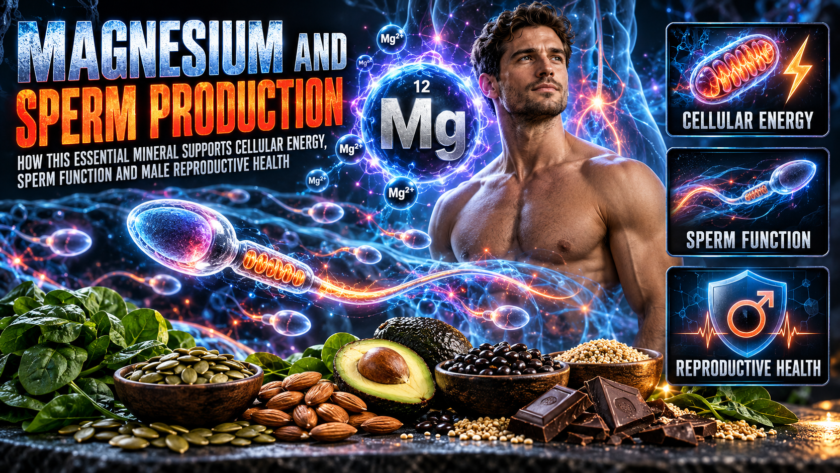
How This Essential Mineral Supports Cellular Energy, Sperm Function and Male Reproductive Health
Most men first hear about magnesium as something that may help with sleep, muscle function or recovery. Far fewer understand that magnesium is also involved in the basic cellular work on which reproductive health depends.
That makes magnesium and sperm production an important subject—but one that must be discussed honestly.
Magnesium is an essential mineral. The body needs it for hundreds of enzyme-driven reactions, including processes involved in energy production, protein synthesis, nerve function and normal muscle function. Sperm are living cells. Their development, maturation and movement all depend on an organised biological environment with sufficient energy, nutrients and hormonal support.
It is therefore reasonable to care about magnesium as part of a fertility-supportive diet.
It is not reasonable to claim that swallowing one supplement will automatically increase sperm count, repair every abnormal semen result or guarantee conception. Human research examining magnesium and semen quality remains limited and mixed. Some studies have found associations between magnesium status and sperm concentration or motility; others have found weak relationships or none at all. Association also does not prove that magnesium caused the difference.
This article will take the useful middle ground: neither dismissing magnesium nor turning it into a miracle.
The purpose is to help a man understand what magnesium does, why cellular energy matters to sperm, how to obtain the mineral through food, when supplementation may require professional advice and why no nutrient should replace a proper fertility investigation.
The goal is not to build a fertility strategy around one mineral. The goal is to build a body that is consistently supplied with what healthy function requires.
1. Magnesium Is More Than a Relaxation Mineral
Magnesium is sometimes marketed almost entirely as a sleep or relaxation supplement. That narrow image hides how fundamental the mineral is.
Magnesium is present throughout the body and participates in hundreds of biochemical reactions. It contributes to normal energy-yielding metabolism, electrolyte balance, protein synthesis, nerve signalling and muscle function. It also supports the structural and regulatory work carried out inside cells.
This matters because male reproductive health does not operate as a separate system floating outside the rest of the body. The testes require blood supply, hormonal communication, cellular energy and adequate raw materials. Developing sperm must form their specialised structures, protect their genetic material and eventually acquire the capacity to move through the reproductive tract.
Magnesium cannot perform all of those jobs alone. No nutrient can. But when a mineral is involved in the systems that allow cells to make energy and carry out enzyme reactions, its adequacy becomes part of the foundation.
The correct question is not:
“Is magnesium a magic fertility booster?”
The better questions are:
- Am I consuming enough magnesium as part of a varied diet?
- Do I have a medical condition or medicine that may affect my magnesium status?
- Is my overall diet capable of supporting reproductive health?
- Am I using supplements to correct a genuine need, or to avoid investigating a larger problem?
This change in questioning matters. It moves a man away from quick-fix thinking and towards responsible health management.
The NHS states that magnesium helps the body turn food into energy and supports normal parathyroid-gland function. UK guidance gives adult men aged 19 to 64 a daily requirement of 300 mg. This is a total intake goal, not an instruction to take a 300 mg supplement on top of food. NHS: Vitamins and minerals—others
Alpha Fertility Insight
A mineral does not need to be miraculous to be important. Magnesium earns its place through the quiet cellular work healthy reproduction depends upon.
2. Sperm Production Requires Energy
Sperm production is an active, highly organised biological process. It is not simply a matter of the testes releasing fully formed sperm whenever ejaculation occurs.
Inside the seminiferous tubules of the testes, germ cells pass through multiple stages of division and development. They must duplicate and organise genetic material, reduce their chromosome number, reshape the nucleus, form the acrosome at the head, develop the midpiece and construct the tail. Supporting cells help regulate this environment while hormonal signals coordinate the wider process.
After sperm leave the testes, they continue maturing in the epididymis. There they develop important functional characteristics, including the capacity for progressive movement. Ejaculated sperm must then survive changing conditions, move effectively and participate in the complex sequence that may lead to fertilisation.
Every stage involves energy.
The sperm tail does not move through determination. Its motion depends on cellular machinery fuelled by chemical energy. The midpiece contains many mitochondria, which contribute to energy production. Sperm also use metabolic pathways outside the mitochondria. Their energy system is complex, and its performance cannot be reduced to one food or nutrient.
The surrounding reproductive tissues need energy too. Sertoli cells support developing sperm. Leydig cells produce testosterone in response to hormonal signals. The epididymis maintains an environment in which sperm can mature and be stored. The prostate and seminal vesicles contribute fluids that become part of semen.
When discussing magnesium and sperm production, this wider system must remain visible. Magnesium supports fundamental cellular chemistry, but the system also depends on:
- Adequate energy and protein intake
- Folate, vitamin B12 and other nutrients involved in cell division
- Zinc, selenium and other trace elements
- Essential fats and a varied diet
- Normal hormonal signalling
- Healthy testicular tissue
- Protection from tobacco, anabolic steroids, certain drugs and excessive heat
- Sleep, metabolic health and appropriate medical care
This is why fertility cannot be “hacked” by isolating a single nutrient. The body builds sperm through a network. A weak link can matter, but strengthening one link does not make the others irrelevant.
Alpha Fertility Insight
Sperm are built through sustained biological work. Support the whole production system instead of searching for one ingredient that promises to do everything.
3. The Magnesium–ATP Connection
To understand why magnesium matters to cellular energy, it helps to understand ATP.
Adenosine triphosphate—ATP—is often described as the cell’s energy currency. Cells use it to power a vast range of activities. Yet ATP does not usually operate in the body as a completely independent molecule. In many reactions it works in association with magnesium.
The magnesium–ATP complex helps enzymes recognise and use ATP effectively. Put simply, magnesium helps make stored chemical energy usable in numerous cellular processes.
That does not mean magnesium supplements act like a direct injection of energy into sperm. Biology is not that simple. The presence of magnesium is one requirement within a much larger chain that includes food intake, digestion, absorption, circulation, cellular transport, mitochondrial function, enzyme activity and overall health.
Still, the connection helps explain why magnesium adequacy deserves attention. A developing or moving cell cannot do its work without energy, and energy-dependent reactions frequently involve magnesium.
This is especially relevant to sperm motility. Movement requires repeated mechanical activity in the tail, ion regulation and continuous energy management. Researchers have therefore investigated whether magnesium levels in blood or semen relate to motility and other semen parameters.
The results have not produced a simple rule. Magnesium measured in blood is not the same as magnesium measured in seminal plasma. Neither result automatically proves how much usable magnesium is present inside sperm. A man can also have an adequate blood concentration while wider diet quality remains poor, because the body regulates circulating magnesium within limits.
This is a useful lesson for men attracted to “optimisation” culture: a laboratory number is not the whole person.
Magnesium participates in the machinery. It is not the foreman, architect, builder and final product at once.
Alpha Fertility Insight
Magnesium helps cells use energy, but reproductive power is created by an entire system working together—not by one impressive-sounding biochemical pathway.
4. Magnesium’s Possible Role Inside the Male Reproductive System
Magnesium may matter to male reproductive health through several overlapping routes.
Cellular energy
As already discussed, magnesium supports ATP-dependent reactions. Developing sperm, reproductive tissues and motile sperm all require energy.
Enzyme activity
Many enzymes require magnesium or are influenced by magnesium availability. Enzymes help govern protein synthesis, nucleic-acid metabolism and other cellular processes relevant to rapidly developing cells.
Genetic material and cell division
Sperm formation involves repeated cell division followed by extensive remodelling. Magnesium participates in processes involving DNA and RNA, although this general role does not prove that supplementation will improve sperm DNA quality in a particular man.
Membrane and ion regulation
Sperm function depends on carefully controlled movement of ions across membranes. These electrical and chemical changes contribute to motility, maturation and the changes sperm undergo before fertilisation. Magnesium exists within this wider mineral environment alongside calcium, sodium, potassium and other ions.
Oxidative balance
Oxidative stress is often discussed in male fertility because excessive reactive oxygen species can damage cellular membranes and genetic material. The body also uses controlled oxidative signalling as part of normal sperm function, so the goal is balance—not the total elimination of oxidation. Magnesium contributes indirectly to general cellular health, but it should not be marketed as a guaranteed antioxidant cure for sperm damage.
General metabolic health
Reproductive health is influenced by wider conditions including obesity, diabetes, poor sleep and chronic illness. Magnesium is involved in normal metabolism, but taking a supplement cannot erase the effect of an unhealthy lifestyle or treat a medical condition by itself.
These mechanisms make magnesium scientifically interesting. They do not yet make it a proven standalone fertility treatment.
That distinction protects men from two mistakes: ignoring an essential nutrient because it is not a cure, and overusing a supplement because a biological mechanism sounds persuasive.
Alpha Fertility Insight
A plausible mechanism is a reason to investigate—not permission to promise a result. Strong health decisions respect both biological possibility and the limits of the evidence.
5. What Human Research Actually Shows
The research on magnesium and sperm production is interesting, but it is not strong enough to support a universal claim that magnesium supplements increase sperm count.
A recent study found encouraging associations
A 2026 analysis involving 299 men with infertility reported that men in the highest third of serum magnesium had higher average sperm concentration, total sperm count and motile-sperm measures than men in the lowest third. The finding is worth attention because it connects magnesium status with clinically familiar semen parameters. PubMed: Serum magnesium and semen parameters in infertile men
However, the study did not randomly assign men to magnesium supplementation and then demonstrate that magnesium caused their sperm results to improve. It was a secondary observational analysis of data collected within another trial. Men with higher magnesium may also have differed in diet, health or other ways. The authors themselves called for further validation.
Seminal magnesium may interact with other minerals
A cross-sectional study of 515 men examined magnesium in seminal fluid alongside the calcium-to-magnesium ratio. The relationship with sperm concentration varied according to that ratio, suggesting that the mineral environment may matter as a balance rather than as isolated numbers. PubMed: Calcium–magnesium ratio and semen quality
Again, this was an association. It does not tell a man that adding magnesium will necessarily improve his semen analysis.
Other studies have found weak or absent relationships
An earlier study comparing fertile and subfertile men reported only a weak correlation between seminal magnesium and sperm count, and the measured minerals did not clearly distinguish the groups. PubMed: Seminal plasma magnesium, calcium and zinc
Another study of fertile men found no significant relationship between seminal magnesium and standard measures including semen volume, sperm count, motility and morphology. PubMed: Seminal magnesium and semen parameters
What can we responsibly conclude?
The current evidence supports five careful statements:
- Magnesium is biologically important and relevant to cellular energy.
- Some human studies have found positive associations between magnesium status and semen parameters.
- Other studies have found weak or no clear associations.
- The evidence does not prove that routine magnesium supplementation increases sperm production in men who already consume enough.
- Magnesium should be treated as one component of nutritional adequacy, not as an alternative to fertility testing or clinical treatment.
This is not a disappointing conclusion. It is an empowering one. It tells a man where to place his effort: build a consistently nutritious diet, correct genuine inadequacy with appropriate guidance and avoid staking his future on an unproven shortcut.
Alpha Fertility Insight
Use promising research as guidance, not as a guarantee. An Alpha man does not need exaggerated certainty before taking sensible care of his health.
6. Magnesium Deficiency and Reproductive Health
Severe magnesium deficiency is not something a man should diagnose through social-media symptom lists.
Possible symptoms associated with low magnesium can include weakness, fatigue, muscle cramps, abnormal heart rhythms and, in more serious cases, neurological changes. But these symptoms are not specific. They can arise from many medical, nutritional and lifestyle causes.
Risk of inadequate magnesium status may be greater in people with:
- Persistently poor or highly restricted diets
- Gastrointestinal diseases that reduce absorption
- Long-term diarrhoea or other significant digestive losses
- Type 2 diabetes
- Alcohol dependence or heavy chronic alcohol use
- Older age
- Certain medicines, including some diuretics and long-term acid-suppressing medicines
- Kidney or other medical conditions affecting mineral regulation
The US National Institutes of Health notes that magnesium deficiency can arise from low intake, impaired absorption or increased losses, and identifies gastrointestinal disease, type 2 diabetes, alcohol dependence and older age among higher-risk situations. NIH Office of Dietary Supplements: Magnesium
If a man is deficient, restoring adequate status is important for his overall health. It is reasonable to expect the body to function better when a genuine nutritional deficiency is corrected. But that is different from claiming that more magnesium always produces more sperm.
Nutrient relationships are often shaped like a sufficiency curve. Too little can impair normal function. Reaching an adequate intake supports that function. Continuing to add more does not necessarily create an extra benefit—and can create harm.
Men should be particularly cautious about self-treatment when they have kidney disease. Healthy kidneys help remove excess magnesium, while impaired kidney function can allow magnesium to accumulate. Supplement decisions in this situation belong with a qualified clinician.
If fertility is the concern, the correct pathway may involve both nutritional review and proper reproductive assessment. A clinician can consider symptoms, medicines, diet, medical history and whether blood testing is useful. A fertility specialist can investigate semen quality and possible underlying causes.
Alpha Fertility Insight
Correcting a genuine deficiency is responsible. Treating every symptom as proof of deficiency is guesswork wearing the clothes of health awareness.
7. Magnesium, Motility and Sperm Energy
Sperm count receives much of the attention, but producing sperm is only one part of fertility. Sperm also need functional qualities that may help them reach and fertilise an egg.
One of those qualities is motility—the ability to move. A semen analysis may report total motility and progressive motility. Progressive motility refers to sperm moving forward rather than merely vibrating or moving without useful direction.
The sperm tail, or flagellum, creates movement through organised bending. That movement requires ATP and precise regulation. This is why magnesium, as part of ATP-related chemistry, has drawn scientific interest.
But the distance between a biochemical role and a successful pregnancy is large.
Motility may be influenced by:
- Testicular and epididymal function
- Genetic factors
- Infection or inflammation
- Varicocele
- Oxidative damage
- Fever in the previous months
- Smoking and recreational drugs
- Anabolic steroid or external testosterone use
- Alcohol exposure
- Obesity and metabolic health
- Environmental and occupational exposures
- Semen-collection conditions and laboratory variability
- Unexplained factors
Magnesium status may be one piece within this picture, but it cannot be assumed to be the cause of low motility. Nor should a man respond to an abnormal result by buying several supplements before speaking to a professional.
It is also important to understand timing. Sperm seen in an ejaculate reflect a development process that began weeks earlier. A meaningful health change may therefore require consistent habits over several months before its possible effect can be assessed. Even then, natural variation means one result should be interpreted in context.
The NHS explains that semen analysis evaluates sperm quantity and movement, and that an abnormal result is commonly followed by a repeat test—often around three months later. NHS: Low sperm count
The productive response is patience with action: improve the fundamentals, follow clinical advice, repeat testing when recommended and avoid turning every daily fluctuation into a fertility verdict.
Alpha Fertility Insight
Sperm energy is built through biology, not hype. Give healthy changes time to work, and give abnormal results the professional follow-up they deserve.
8. The Best Food Sources of Magnesium
For most men, food should be the foundation.
Magnesium-rich foods usually bring more than magnesium. They may also provide fibre, protein, healthy fats, folate, potassium, antioxidants and other nutrients that contribute to cardiovascular, metabolic and reproductive health.
Useful sources include:
| Food group | Examples | Wider nutritional value |
|---|---|---|
| Nuts | Almonds, cashews, peanuts, Brazil nuts | Healthy fats, protein and minerals |
| Seeds | Pumpkin, chia, sesame, sunflower and flax seeds | Fibre, fats, protein and trace nutrients |
| Legumes | Lentils, chickpeas, kidney beans, black beans and peas | Fibre, plant protein and folate |
| Green vegetables | Spinach, chard, kale and broccoli | Folate, carotenoids and other micronutrients |
| Wholegrains | Wholemeal bread, oats, brown rice, quinoa and wholegrain cereals | Fibre, B vitamins and sustained energy |
| Fish and seafood | Depending on the type | Protein, minerals and—in oily fish—omega-3 fats |
| Dairy or fortified alternatives | Milk, yoghurt and selected fortified products | Protein and other micronutrients |
| Other foods | Avocado, tofu, edamame and dark chocolate | Different combinations of fats, fibre and minerals |
The NHS specifically lists spinach, nuts and wholemeal bread as sources of magnesium. NHS: Vitamins and minerals—others
A practical food-first day
A man does not need to calculate every milligram to improve his pattern. A day might include:
- Porridge topped with pumpkin seeds and berries
- Wholemeal toast with eggs
- A lentil, bean or chickpea-based lunch
- A handful of unsalted nuts
- Brown rice or quinoa with lean protein and green vegetables
- Yoghurt or a suitable fortified alternative
This is not a fertility prescription. It is an example of how magnesium can be distributed across normal meals while supporting wider diet quality.
Variety matters more than obsession
Eating an entire packet of one “fertility food” every day is not necessary. Large quantities can add excessive calories, salt, sugar or fat depending on the product. Some foods may also be unsuitable because of allergies, kidney disease, digestive conditions or individual dietary needs.
The better strategy is rotation:
- Choose two or three magnesium-rich foods each day.
- Vary nuts, seeds, wholegrains, legumes and vegetables across the week.
- Build meals around whole foods rather than adding supplements to a weak diet.
- Keep total energy intake appropriate for your body and activity.
This approach supports health without making every meal feel like a medical intervention.
Alpha Fertility Insight
The strongest fertility diet is not built from one heroic ingredient. It is built from varied, nutrient-dense foods repeated until good nutrition becomes normal.
9. How Much Magnesium Do Men Need?
In the UK, the NHS states that men aged 19 to 64 need approximately 300 mg of magnesium per day. Most people should be able to obtain the magnesium they need by eating a varied and balanced diet. NHS: Vitamins and minerals—others
Three distinctions are important.
Requirement is not the same as supplement dose
The daily requirement includes magnesium obtained from food and drink. A label showing 300 mg does not mean every man should take that amount in addition to his diet.
More is not automatically better
Once the body’s needs are met, an increasingly large dose does not necessarily produce a greater benefit. The marketing language of “maximum strength” can be particularly misleading in nutrition. Maximum intake is not the same as optimal status.
Individual circumstances differ
A man with digestive disease, kidney disease, diabetes, a highly restricted diet or relevant medicines may need personalised advice. The appropriate response may be food changes, investigation, treatment of the underlying issue or a carefully selected supplement—not an automatic high dose.
Nutrition databases and product labels can help estimate intake, but perfect arithmetic is unnecessary for most people. A pattern containing wholegrains, legumes, nuts, seeds and green vegetables will generally provide more magnesium than one dominated by highly refined foods.
Men trying to conceive should think in patterns rather than isolated numbers:
- Is most of my food minimally processed?
- Do I eat vegetables and wholegrains regularly?
- Do I include nuts, seeds or legumes if medically appropriate?
- Am I meeting overall energy and protein needs?
- Am I relying on pills to compensate for inconsistency?
A number can guide you. It should not control you.
Alpha Fertility Insight
Know the target, but build the pattern. Daily nutritional adequacy matters more than chasing the largest number printed on a supplement bottle.
10. Choosing a Magnesium Supplement Responsibly
Some men may benefit from a magnesium supplement, particularly when diet is inadequate or a healthcare professional identifies a relevant need. But the decision should begin with a reason—not an advertisement.
First ask why you are considering it
Are you trying to correct a limited diet? Has a clinician recommended it? Are you experiencing a medically investigated deficiency? Or did an influencer claim that magnesium would transform testosterone, sleep, sperm count and confidence at once?
The more dramatic the promise, the more caution it deserves.
Understand the label
Supplement packaging may list both the weight of a magnesium compound and the amount of elemental magnesium it supplies. Elemental magnesium is the figure relevant to the dose.
Also check for duplication. Magnesium may already be present in:
- Multivitamins
- “Male fertility” formulas
- Electrolyte powders
- Sleep products
- Antacids or laxatives
- Sports-recovery blends
A man can unintentionally combine several products because each is marketed for a different goal.
Do not treat supplement form as fertility proof
Products may contain magnesium citrate, glycinate, oxide, chloride, lactate, malate or other forms. Absorption and gastrointestinal tolerance can differ, but no form has been convincingly established as the best form for sperm production.
Choose on the basis of clinical need, tolerability, quality and professional guidance—not because one manufacturer attaches “fertility” to the name.
Check medicines and medical conditions
Magnesium supplements can interfere with the absorption of certain medicines, including some antibiotics and bisphosphonates. Other medicines can affect magnesium status. Kidney impairment increases the risk of excessive accumulation.
Ask a pharmacist or clinician before supplementing when you:
- Have kidney disease
- Take regular prescribed medicine
- Have a heart-rhythm problem
- Have a gastrointestinal disorder
- Use several supplements
- Have persistent symptoms you believe are caused by deficiency
- Are receiving fertility treatment
Never stop prescribed medication because you suspect it is affecting fertility without speaking to the prescriber.
Demand realistic claims
A responsible supplement may help close an identified dietary gap. It should not be sold as a guaranteed route to conception.
Alpha Fertility Insight
A supplement should solve a defined problem—not become an expensive substitute for food quality, medical investigation or disciplined living.
11. Too Much Magnesium Can Cause Problems
“Natural” does not mean unlimited.
Magnesium obtained from food is unlikely to cause toxicity in healthy people because the kidneys regulate excess amounts. Supplements and magnesium-containing medicines can deliver much larger concentrated doses.
The most common problems from excessive supplemental magnesium are gastrointestinal:
- Diarrhoea
- Nausea
- Abdominal cramping
The NHS advises that taking more than 400 mg of magnesium from supplements for a short time can cause diarrhoea. It also states that taking 400 mg or less per day from supplements is unlikely to cause harm, while noting that evidence is insufficient to define the effects of long-term high intake. This figure is a safety statement, not a recommended fertility dose. NHS: Vitamins and minerals—others
Very high magnesium exposure can become medically serious, particularly when kidney function is impaired. Severe toxicity may affect blood pressure, breathing, heart rhythm and consciousness. The NIH notes that the risk of magnesium toxicity increases with impaired kidney function because the body becomes less able to remove excess magnesium. NIH Office of Dietary Supplements: Magnesium
There is another practical fertility issue: supplement excess can create distraction. A man may spend months adjusting powders and capsules while ignoring smoking, steroid use, obesity, poor sleep, testicular symptoms or the need for semen analysis.
The hidden danger is not only physical toxicity. It is misplaced attention.
Use the lowest effective approach for a genuine need. Monitor effects. Review the total amount across all products. Seek professional advice when risk factors exist.
Alpha Fertility Insight
Discipline is not proved by taking more. It is proved by knowing when enough is enough and refusing to let enthusiasm outrun evidence.
12. Magnesium Cannot Replace a Fertility Investigation
If conception is not happening, supplements should not become a hiding place.
Male-factor fertility problems may involve sperm number, movement, shape, production or delivery. Possible causes include testicular damage, hormonal conditions, genetic factors, infection, ejaculation difficulties, blockages, varicocele, certain medicines, chemotherapy, anabolic steroids and external testosterone. Some cases remain unexplained even after investigation. NHS: Causes of infertility
Magnesium cannot diagnose or correct all of these.
When to seek help
NHS guidance advises speaking to a GP when a couple has been having regular unprotected sex for one year without conception. Earlier assessment may be appropriate when the female partner is aged 36 or over, when either partner has a known fertility concern or when there are symptoms or medical-history factors that warrant attention. NHS: Low sperm count
A man should consider earlier medical advice if he has:
- Pain, swelling, a lump or a change in the testes
- A history of undescended testes or testicular injury
- Previous cancer treatment
- Erectile or ejaculation difficulties
- Past pelvic or reproductive surgery
- A known hormonal or genetic condition
- Anabolic steroid or external testosterone use
- A previous abnormal semen analysis
- A partner with a known fertility concern
What assessment may involve
Depending on the circumstances, evaluation may include:
- Medical, reproductive and sexual history
- Review of medicines, supplements and drug use
- Physical examination
- Semen analysis
- Repeat semen analysis after an abnormal result
- Hormone blood tests
- Ultrasound or other imaging
- Genetic testing in selected cases
- Referral to fertility or urology specialists
A semen analysis does not measure a man’s worth. It provides information about a biological sample at a point in time. An abnormal result is not automatically a permanent verdict, and a normal result does not guarantee pregnancy.
Use nutrition to support the body. Use medicine to investigate what nutrition cannot reveal.
Alpha Fertility Insight
A strong man does not protect his pride by avoiding the test. He protects his future by seeking the truth while there is still time to act on it.
13. Build the Complete Fertility Foundation
Magnesium belongs inside a complete fertility strategy—not at the centre of a one-mineral obsession.
Eat for overall adequacy
Build meals around vegetables, fruit, wholegrains, legumes, nuts, seeds, quality protein and suitable sources of healthy fats. Include magnesium-rich foods, but also recognise the importance of folate, zinc, selenium, iodine, vitamins B12, C, D and E, omega-3 fats and adequate protein. More is not automatically better, and supplements should not exceed safe limits without professional guidance.
Protect sleep
Regularly shortened or poor-quality sleep can affect energy, appetite, mood, metabolic health and the discipline required to maintain other healthy behaviours. Aim for a consistent schedule and seek help for persistent insomnia or possible sleep apnoea.
Exercise without abusing the body
Resistance training and aerobic activity support cardiovascular and metabolic health. Extreme training without adequate recovery, energy intake or sleep can work against wellbeing. The goal is sustainable fitness, not exhaustion presented as discipline.
Work towards an appropriate body weight
Both excess body fat and significant undernutrition can affect hormones and general health. Weight change should be gradual, realistic and supported by nutritious food rather than crash dieting.
Avoid tobacco, anabolic steroids and recreational drugs
Smoking exposes the body to toxic compounds. Anabolic steroids and externally administered testosterone can suppress the hormonal signals required for sperm production. Men planning future fatherhood should discuss fertility before beginning any hormone treatment.
Keep alcohol within responsible limits
Heavy alcohol use can damage general and reproductive health. Cutting down can improve sleep, nutrition, weight management and decision-making even before any possible reproductive effect is measured.
Reduce avoidable testicular heat and injury
The testes function best below core body temperature. Avoid repeated unnecessary high-heat exposure, take sensible breaks from prolonged heat and use protection in sports or occupations where injury is possible. Do not become anxious about every warm bath or moment with a laptop; focus on repeated, modifiable exposure.
Address infections and medical conditions
Do not ignore testicular pain, urinary symptoms, sexual-function changes or signs of infection. Review chronic conditions and medicines with a professional rather than making unsupervised changes.
Manage stress without pretending stress is the only cause
Stress does not explain every fertility problem, but unmanaged stress can damage sleep, relationships, diet and consistency. Build recovery through exercise, time outdoors, prayer or reflection, meaningful relationships and professional support when needed.
Test when appropriate
You cannot reliably judge sperm concentration, motility or morphology by appearance, libido, ejaculation volume or sexual performance. Semen analysis exists because important problems can be hidden.
This is the mature approach to magnesium and sperm production: give the body the mineral it needs, but never confuse one nutrient with the whole future.
Alpha Fertility Insight
Fertility is supported by systems: food, sleep, movement, medical care and repeated self-respect. Build the system and let every nutrient play its proper part.
The Magnesium and Sperm Production Audit
Answer each question honestly. The purpose is not to produce a perfect score. It is to identify the next useful action.
Food
- Do I eat green vegetables several times each week?
- Do I regularly include wholegrains rather than relying mainly on refined carbohydrates?
- Do I eat nuts or seeds in sensible portions if medically appropriate?
- Do I include beans, lentils, chickpeas or other legumes?
- Is my diet varied, or do I repeat the same limited foods?
- Am I eating enough overall to support my activity and health?
Supplements
- Am I currently taking magnesium?
- Do I know the amount of elemental magnesium in the product?
- Have I checked my multivitamin, electrolyte powder and other products for duplication?
- Am I taking it for a defined reason?
- Have I experienced diarrhoea, nausea or cramping?
- Have I checked possible medicine interactions with a pharmacist?
Health
- Do I have kidney, gastrointestinal or metabolic conditions that require individual advice?
- Do I have symptoms that I have been trying to self-diagnose?
- Have I discussed persistent symptoms with a clinician?
- Am I managing sleep, exercise, alcohol and body weight responsibly?
- Do I smoke, use recreational drugs, anabolic steroids or external testosterone?
Fertility
- Do I know my current reproductive goals?
- Have my partner and I been trying to conceive without success?
- Do I have a history of testicular problems, surgery, infection or cancer treatment?
- Have I ever had a semen analysis?
- If a test was abnormal, did I complete the recommended follow-up?
- Am I relying on supplements because I am afraid of receiving medical information?
Your next three actions
Write down:
- One magnesium-rich food I will add regularly:
- One supplement or medicine question I will ask a professional:
- One wider fertility action I will complete this month:
The 30-Day Food-First Magnesium Plan
This plan is designed to improve nutritional consistency. It is not a treatment for infertility and does not replace personalised medical advice.
Days 1–7: Observe and Prepare
- Record your meals for three typical days without judging them.
- Identify which magnesium-rich food groups are missing.
- Check every supplement for elemental magnesium and duplication.
- Choose three foods you genuinely enjoy.
- Add one green vegetable to the shopping list.
- Add one wholegrain, legume, nut or seed option.
- Book professional advice if you have kidney disease, relevant medicines or fertility concerns.
Goal: understand your current position.
Days 8–14: Add Before You Subtract
- Add a magnesium-rich component to breakfast or lunch.
- Replace one refined grain with a wholegrain option.
- Include beans, lentils or chickpeas in at least two meals.
- Use an appropriate portion of nuts or seeds on most days.
- Keep food choices varied rather than relying on one ingredient.
Goal: make adequacy easier through routine.
Days 15–21: Strengthen the Wider Foundation
- Protect a consistent sleep window.
- Complete regular, moderate exercise.
- Review alcohol intake honestly.
- Remove tobacco, anabolic steroids and recreational drugs with appropriate support.
- Reduce repeated unnecessary heat exposure to the testes.
- Prepare meals in advance for your busiest days.
Goal: stop asking nutrition to compensate for every other habit.
Days 22–30: Review and Continue
- Repeat your three-day food record.
- Compare variety and consistency with week one.
- Note digestive symptoms or supplement side effects.
- Decide which three habits will continue for the next 60 days.
- Arrange semen analysis or medical assessment if appropriate.
- Set a review date rather than changing the plan every few days.
Goal: turn a short reset into a sustainable system.
Thirty days can establish direction. Sperm development and fertility care require consistency beyond a single month.
Frequently Asked Questions About Magnesium and Sperm Production
Does magnesium increase sperm count?
Magnesium is essential to normal cellular function, and some observational studies have found that higher magnesium status is associated with better sperm-count measures. However, current human research does not prove that magnesium supplementation increases sperm count in every man. If your count is low, seek a proper fertility assessment rather than relying on a supplement alone.
Can magnesium improve sperm motility?
Magnesium is relevant to ATP-dependent energy processes, which makes it biologically relevant to sperm movement. Some studies have reported associations with motile-sperm measures, while others have not found clear relationships. A supplement cannot be promised to improve motility without knowing the cause of the problem.
What is the best magnesium for male fertility?
No magnesium form has been established as the best form for male fertility. Different forms may vary in absorption and gastrointestinal tolerance. Choose a product only when there is a reason to use it, check the elemental dose and seek professional advice when you take medicines or have a medical condition.
Is magnesium glycinate better for sperm?
Magnesium glycinate is often marketed as well tolerated, but there is not convincing clinical evidence that it is superior for sperm count, motility or fertility outcomes. Marketing claims should not be mistaken for direct comparative research.
How much magnesium should a man take for sperm health?
There is no established fertility-treatment dose. UK guidance states that men aged 19 to 64 need about 300 mg of magnesium per day in total, and most should obtain it through a varied diet. That is not an instruction to take a 300 mg supplement. Discuss supplementation with a pharmacist, dietitian or clinician when needed.
How long does magnesium take to affect sperm?
No reliable timeframe can be promised because supplementation has not been proven to improve semen parameters universally. Sperm development takes place over many weeks, and changes seen in semen may reflect habits or illness from previous months. Fertility strategies should therefore be assessed over time and with appropriate testing.
Can magnesium raise testosterone?
Magnesium is essential to health, and correcting a deficiency may help restore normal function. That does not mean supplements reliably raise testosterone in men who already have adequate status. Symptoms of testosterone deficiency require clinical assessment and properly timed blood tests.
Can I get enough magnesium from food?
Many men can. Regularly eating wholegrains, nuts, seeds, legumes and green vegetables can contribute substantial magnesium alongside other useful nutrients. Individual needs differ, so people with restricted diets, absorption problems or relevant conditions may need personalised advice.
Can too much magnesium harm fertility?
Evidence does not establish a simple threshold at which magnesium directly harms sperm, but excessive supplements can cause diarrhoea, nausea and cramping, and very high levels can be dangerous—especially in kidney impairment. Avoid unnecessary high doses and check all combined products.
Should magnesium be combined with zinc?
Both minerals are essential, but combining them does not automatically create a fertility treatment. Assess the whole diet, avoid excessive doses and remember that nutrients can interact. A “male fertility” label does not prove effectiveness or safety.
Should I take magnesium after an abnormal semen analysis?
An abnormal analysis should be discussed with a clinician and is often repeated after an appropriate interval. Dietary adequacy can be reviewed at the same time, but magnesium should not delay investigation of hormonal, structural, genetic, infectious or lifestyle causes.
Can normal sexual performance prove my sperm are healthy?
No. Libido, erections and ejaculation do not confirm sperm concentration, motility or morphology. Men can have normal sexual function with an abnormal semen result. Semen analysis is the appropriate test when sperm quality needs to be assessed.
Closing Declaration
I will respect magnesium as an essential mineral without turning it into a miracle.
I will build my nutrition through real food before searching for shortcuts.
I will understand the dose, purpose and possible interactions of every supplement I use.
I will not confuse a promising association with a guaranteed result.
I will support cellular energy through food, sleep, movement and responsible health care.
I will investigate fertility concerns instead of hiding behind powders and pills.
I will give healthy habits enough time to become a system.
My reproductive future deserves evidence, consistency and disciplined care.
Final Line
Magnesium helps power the cells from which reproductive health is built—but no single mineral can carry the entire weight of male fertility.
Medical Disclaimer
This article is for general education and does not diagnose, prevent or treat infertility, magnesium deficiency or any other medical condition. Do not begin, stop or alter prescribed medicine or hormone treatment without advice from a qualified healthcare professional. Seek personalised guidance if you have kidney disease, persistent symptoms, medicine-interaction concerns or difficulty conceiving.



No spam. Unsubscribe anytime.