Vitamin D3 and testosterone is a subject more men should take seriously — not because vitamin D3 is a magic hormone booster, but because testosterone does not operate in isolation.
Most men think about testosterone in loud terms.
Heavy weights.
Muscle.
Libido.
Drive.
Aggression.
Competition.
Masculine energy.
But sometimes, the male body does not need more noise.
It needs sunlight.
It needs sleep.
It needs recovery.
It needs minerals.
It needs real food.
It needs the quiet foundations that allow the hormonal system to function properly.
That is where vitamin D3 enters the conversation.
Vitamin D3 is often called the sunshine vitamin because the body can produce vitamin D when skin is exposed to sunlight. It plays an important role in bone health, muscle function, immune health, calcium absorption, and overall wellbeing. Vitamin D can come from sun exposure, food, and supplements, and the body must convert it into active forms before it can be used properly.
For men, this matters.
Because low energy, poor mood, weak recovery, poor training performance, low libido, and hormonal issues are rarely caused by one thing alone.
They are often signals that the system needs attention.
Vitamin D3 is not a shortcut.
It is not a cure for low testosterone.
It is not a replacement for strength training, sleep, nutrition, stress control, or medical testing.
But if a man is low in vitamin D, barely gets sunlight, sleeps badly, feels flat, trains hard, and recovers poorly, improving vitamin D status may be part of rebuilding the foundation.
For Alpha Circle Club, the message is simple:
A man who wants strong hormones should stop chasing shortcuts and start protecting the foundations — sunlight, sleep, training, food, minerals, and recovery.

What Is Vitamin D3?
Vitamin D is a fat-soluble vitamin that helps the body absorb calcium and supports bone health, immune function, and muscle function.
Vitamin D3, also called cholecalciferol, is the form of vitamin D produced in the skin when exposed to sunlight. It is also found in some animal-based foods and supplements.
Sources of vitamin D3 include:
Sunlight exposure
Oily fish
Egg yolks
Fortified foods
Vitamin D3 supplements
Vitamin D must be converted in the body before it becomes active. This is why vitamin D status is usually assessed by measuring 25-hydroxyvitamin D in the blood.
Vitamin D3 is not glamorous.
But a man does not become strong by ignoring the basics.
The foundations matter.
Sunlight matters.
Recovery matters.
Nutrients matter.
The quiet systems matter.

Does Vitamin D3 Increase Testosterone?
This is the question many men search for:
Does vitamin D3 increase testosterone?
The honest answer is this:
Vitamin D3 may support testosterone in some men, especially if low vitamin D is part of the problem, but the evidence is mixed.
One study found that vitamin D supplementation increased total testosterone, bioactive testosterone, and free testosterone in men, but the researchers also said more randomized controlled trials were needed to confirm the finding.
However, other research has not found the same result. A randomized controlled trial in healthy middle-aged men found that vitamin D treatment had no effect on total testosterone levels. Another randomized controlled trial in middle-aged men with low testosterone also concluded that vitamin D treatment had no effect on serum total testosterone.
So the responsible conclusion is not:
“Vitamin D3 boosts testosterone fast.”
The responsible conclusion is:
Vitamin D3 may help support testosterone when low vitamin D is part of the problem, but it should not be sold as a guaranteed testosterone booster for every man.
Vitamin D3 may support the environment testosterone needs.
But it does not replace:
Sleep
Strength training
Nutrition
Fat loss where needed
Stress control
Magnesium
Zinc
Medical testing
Proper treatment when testosterone is genuinely low
A serious man does not build his health on hype.
He builds it on evidence, testing, and disciplined habits.

Vitamin D Deficiency and Testosterone
Vitamin D deficiency and testosterone are often discussed together because several studies have found associations between lower vitamin D levels and lower testosterone.
But association does not prove cause.
That point matters.
Low vitamin D may be linked with other factors that can also affect testosterone, such as obesity, poor outdoor activity, poor diet, chronic illness, inflammation, and low physical activity.
In other words, low vitamin D may be part of the wider picture.
It may not be the whole cause.
This is why men should avoid simplistic thinking.
Low vitamin D does not automatically mean low testosterone.
Low testosterone does not automatically mean low vitamin D.
But if a man has symptoms, gets very little sunlight, lives in a low-sunlight climate, has darker skin, covers most of his skin outdoors, rarely eats vitamin D-rich foods, or feels persistently low in energy, testing vitamin D status may be worth discussing with a healthcare professional.
Do not guess.
Test.
A serious man deals with reality.
Vitamin D3 and Free Testosterone
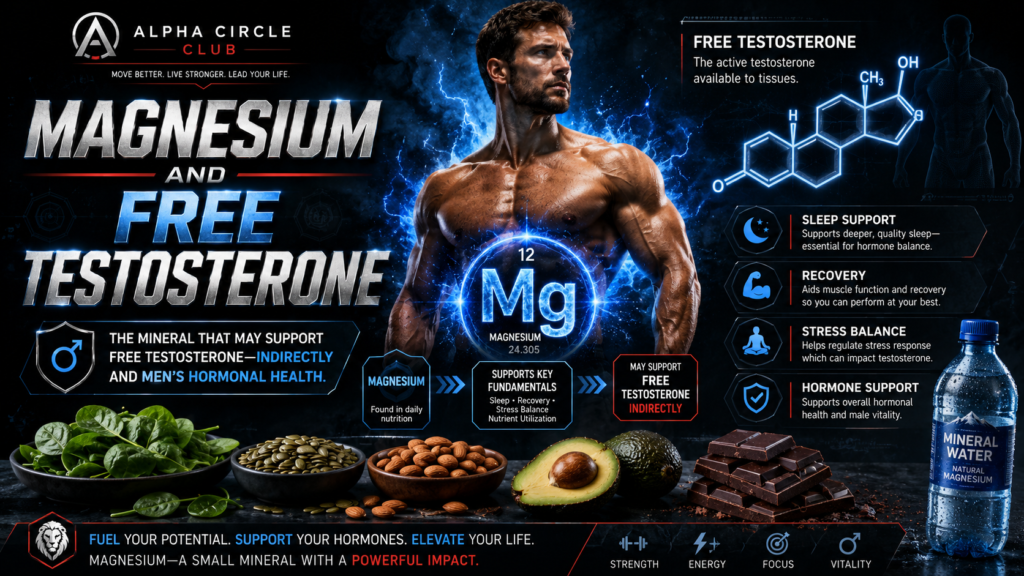
Men often search for vitamin D3 and free testosterone because free testosterone is the portion of testosterone more available for use by tissues.
Total testosterone is the overall amount measured in the blood.
Free testosterone is the portion not tightly bound to proteins.
But the key point is this:
Men should not focus only on one number.
A man’s hormonal picture may include:
Total testosterone
Free testosterone
SHBG
LH
FSH
Prolactin
Vitamin D status
Thyroid markers
Metabolic health
Sleep quality
Body composition
Stress levels
Training recovery
Vitamin D3 may be one part of that picture, but it is not the whole picture.
The goal is not to chase one blood marker.
The goal is to build a body where hormones can function properly.
A man should not ask only, “How do I raise this number?”
He should ask:
“Am I building the system that allows my body to perform?”
That is a stronger question.
Vitamin D3, Magnesium, and Testosterone
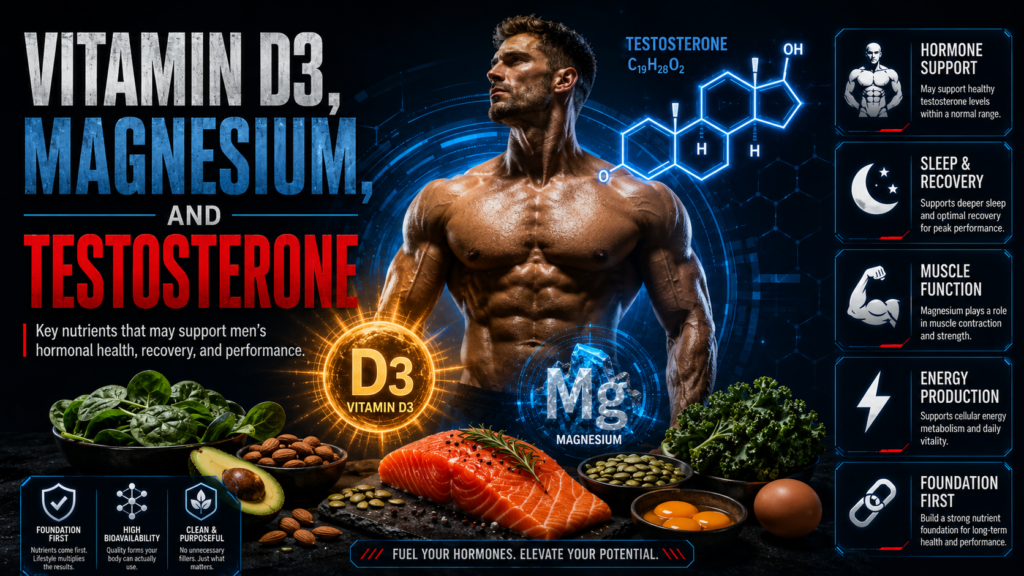
Vitamin D3 and magnesium belong in the same conversation.
Magnesium is involved in vitamin D metabolism, helping the body process and activate vitamin D. Research has described magnesium as a cofactor involved in vitamin D metabolism.
This means a man should not think about vitamin D in isolation.
If he takes vitamin D3 but has poor magnesium intake, poor sleep, high stress, low-quality food, and weak recovery, he is still not building a strong hormonal foundation.
Vitamin D3 matters.
Magnesium matters.
Zinc matters.
Protein matters.
Sleep matters.
Training matters.
Recovery matters.
The male body is not built from one nutrient.
It is built from a system of habits.
A man who wants strong testosterone must stop thinking like a supplement chaser and start thinking like a builder.
Vitamin D3 and K2 MK-7: Why Men Often Take Them Together
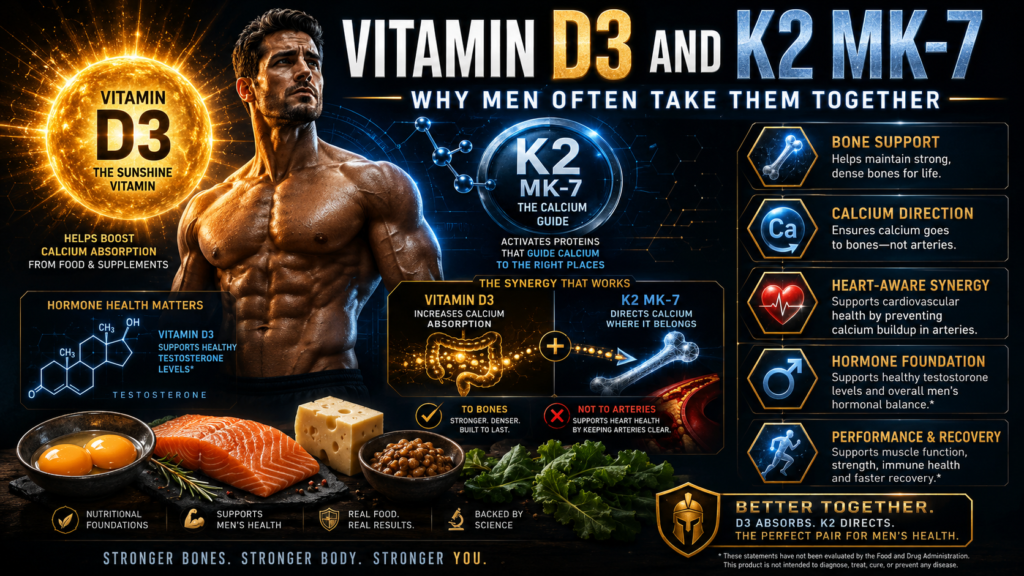
Vitamin D3 and K2 MK-7 are often paired together because they work in the same wider system: calcium regulation, bone health, and cardiovascular support.
Vitamin D3 helps the body absorb calcium.
That is one of its most important jobs.
But absorbing calcium is only part of the story.
Once calcium is absorbed, the body still needs to use it properly. That is where vitamin K2 becomes important.
Vitamin K is needed to activate vitamin K-dependent proteins such as osteocalcin and matrix Gla protein. Osteocalcin is involved in binding calcium into bone, while matrix Gla protein is linked with helping prevent inappropriate calcium build-up in soft tissues.
This is why many people describe the relationship like this:
Vitamin D3 helps bring calcium into the body.
Vitamin K2 helps direct calcium where it belongs.
K2 comes in different forms, but MK-7 is one of the popular supplement forms because it has a longer half-life than some other forms of vitamin K2, meaning it stays active in the body for longer.
For men, this matters because vitamin D3 is often discussed for testosterone, energy, mood, immune function, muscle function, and hormonal health. But a man should not think about vitamin D3 in isolation. If he is supplementing vitamin D3, especially at higher doses or for long periods, K2 MK-7 may be worth discussing because vitamin D and K work together in calcium metabolism.
That does not mean every man automatically “needs” to take K2 with vitamin D3.
It also does not mean K2 directly boosts testosterone.
The more accurate message is this:
Vitamin D3 supports calcium absorption and wider male health. K2 MK-7 supports the activation of proteins that help the body handle calcium properly. Together, they may support a stronger foundation for bone and cardiovascular health — but dosing, medical history, and medication use matter.
This is especially important for men who are taking blood-thinning medication such as warfarin. Vitamin K can seriously interact with warfarin and similar anticoagulants, so men on these medications should not start K2 supplements unless a healthcare professional says it is safe.
Alpha Circle Club Takeaway
Vitamin D3 and K2 MK-7 are not a testosterone shortcut.
They are not a magic stack.
They are part of the foundation.
A man who wants strong hormones, strong bones, strong recovery, and long-term health should think in systems, not single nutrients.
Vitamin D3 helps support the system.
K2 MK-7 helps support calcium direction.
Magnesium helps support vitamin D metabolism.
Zinc supports male reproductive health.
Protein, sunlight, sleep, training, and recovery complete the foundation.
The male body is not built from one supplement. It is built from the right signals, the right nutrients, and the right standards repeated consistently.

Sunlight, Vitamin D, and Male Hormones
Sunlight is not just about vitamin D.
Morning outdoor light can also help regulate circadian rhythm, sleep timing, mood, and energy.
That matters because sleep and hormone regulation are connected.
Men who spend all day indoors, avoid sunlight, scroll late at night, train under artificial light, and sleep badly may be weakening the same system they want testosterone to support.
This does not mean reckless sun exposure.
It means sensible exposure.
Good sunlight habits include:
Getting morning outdoor light when possible
Spending sensible time outdoors
Avoiding burning
Using sun protection when needed
Not treating sun exposure carelessly
Considering vitamin D testing if sunlight exposure is low
A man cannot live like a cave dweller under artificial light and expect his biology to perform at its highest level.
Get outside.
Move.
See daylight.
Protect your sleep-wake rhythm.
Build the foundation.

Vitamin D3, Leydig Cells, and Testosterone Production
Vitamin D3 is often called a vitamin, but inside the body it behaves much more like a hormone.
That matters for men.
A normal vitamin is usually thought of as a nutrient the body uses for basic support. But vitamin D3 goes further than that. Once converted into its active form, it can communicate with cells by binding to vitamin D receptors, also known as VDRs.
These receptors are found in many tissues throughout the body, including parts of the male reproductive system. This means vitamin D is not just sitting in the background as a basic nutrient. It may be involved in signalling, regulation, and cellular function.
One of the most important places this becomes relevant is the testes.
Inside the testes are Leydig cells.
Leydig cells are the cells responsible for producing testosterone. They respond to signals from the brain, especially luteinising hormone, also known as LH. When LH gives the command, Leydig cells begin the process of testosterone production.
That process is called steroidogenesis.
Steroidogenesis is the biological process where the body converts cholesterol into steroid hormones, including testosterone.
This is where vitamin D3 becomes interesting.
Because vitamin D receptors have been identified in testicular tissue, including Leydig cells, researchers believe vitamin D may play a role in supporting the environment where testosterone production happens.
That does not mean vitamin D3 directly forces the body to produce huge amounts of testosterone.
It does not mean taking more vitamin D3 automatically means more testosterone.
It means vitamin D3 may help support the normal function of the cells and systems involved in testosterone production — especially when vitamin D status is low.
Think of Leydig cells like a production factory.
LH is the command signal.
Cholesterol is part of the raw material.
Enzymes are the machinery.
Mitochondria provide energy.
Vitamin D may help regulate parts of the factory environment.
If the factory is under-supported, under-recovered, inflamed, nutrient-deprived, or operating in poor conditions, production may suffer.
That is why vitamin D3 should not be seen as a magic testosterone switch.
It should be seen as part of the male hormone support system.
A man’s testosterone production depends on many factors:
Sleep
Sunlight
LH signalling
Leydig cell function
Nutrient status
Healthy fats
Magnesium
Zinc
Stress control
Body composition
Training and recovery
Overall testicular health
Vitamin D3 may be one piece of that system because of its role in cellular signalling and its connection to steroid hormone regulation.
For Alpha Circle Club, the lesson is simple:
Testosterone is not built from one supplement. It is built from a biological system that needs the right signals, the right nutrients, and the right environment.
Vitamin D3 may help support that environment.
But the man still has to build the foundation.
Get sunlight.
Sleep properly.
Train with discipline.
Eat real food.
Recover harder.
Check vitamin D levels if needed.
Test hormones properly if symptoms persist.
Because the goal is not to chase a single nutrient.
The goal is to build a body where the testosterone-producing system can do its job.
Best Vitamin D3 for Testosterone
Many men search for the best vitamin D3 for testosterone.
But there is no proven “best vitamin D3 for testosterone” that works for every man.
A better way to think is:
What is your current vitamin D level?
Are you deficient?
How much sunlight do you get?
Do you eat vitamin D-rich foods?
Are you taking magnesium?
Do you have medical conditions?
Are you taking medication?
Do you need professional guidance?
Vitamin D3 supplements are commonly used because D3 is effective at raising vitamin D blood levels. But dose matters, and more is not always better.
The NIH Office of Dietary Supplements states that excess vitamin D can be toxic and can cause high calcium levels, kidney problems, soft tissue calcification, heart rhythm problems, and other serious issues. The NHS advises adults not to take more than 100 micrograms, or 4,000 IU, of vitamin D per day because it could be harmful.
More vitamin D is not more masculine.
More than your body needs can become reckless.
A disciplined man does not mega-dose because the internet told him to.
He tests, understands, and acts responsibly.
Vitamin D3 Foods for Men
Food sources of vitamin D include:
Salmon
Mackerel
Sardines
Egg yolks
Liver
Fortified milk
Fortified cereals
Fortified plant milks
Mushrooms exposed to UV light
Food can help, but sunlight and supplementation are often major factors for many men, depending on season, climate, skin tone, lifestyle, and diet.
In the UK, the NHS advises that people should consider taking a daily supplement containing 10 micrograms of vitamin D during autumn and winter. It also warns not to take more than 100 micrograms, or 4,000 IU, per day because it could be harmful.
This is especially relevant for men in the UK, where sunlight is limited during parts of the year.
A man should not guess his way through low energy, poor mood, and weak recovery.
He should understand the basics.
Food.
Sunlight.
Testing.
Responsible supplementation.

Vitamin D3, Zinc, Magnesium, and Testosterone
Men often search for combinations like zinc magnesium vitamin D testosterone because they want a simple stack.
But supplements are not magic.
Zinc, magnesium, and vitamin D are all important for men’s health, but they work best as part of a full system.
The foundation includes:
Strength training
Walking
Healthy body composition
Protein
Healthy fats
Sleep
Stress control
Sunlight
Minerals
Reduced alcohol
Medical testing when needed
Zinc, magnesium, and vitamin D are not shortcuts.
They are building materials.
A man still has to build.
Supplements cannot replace discipline.
They can only support it.
When Should Men Test Vitamin D and Testosterone?
A man may want to discuss blood testing with a healthcare professional if he has:
Persistent fatigue
Low libido
Low mood
Poor recovery
Weak training performance
Low motivation
Brain fog
Frequent illness
Bone or muscle issues
Very low sunlight exposure
Symptoms of low testosterone
Fertility concerns
Testing may include:
25-hydroxyvitamin D
Total testosterone
Free testosterone
SHBG
LH
FSH
Prolactin
Thyroid markers
Full blood count
Metabolic markers
Testing matters because symptoms can overlap.
Low energy could be poor sleep.
Low libido could be stress.
Poor recovery could be under-eating.
Brain fog could be low vitamin D, thyroid issues, depression, sleep apnea, poor nutrition, or low testosterone.
A serious man does not live by guesswork.
Test, do not guess. A serious man deals with reality, not supplement hype.
What This Article Is Not Saying
This article is not saying vitamin D3 cures low testosterone.
It is not saying vitamin D3 boosts testosterone fast.
It is not saying every man with low testosterone only needs vitamin D.
It is not saying sunlight replaces medical care.
It is not saying more vitamin D is always better.
What this article is saying is this:
Vitamin D3 is important for men’s health.
Low vitamin D may be associated with low testosterone in some men.
Vitamin D supplementation may help some men, especially if deficient, but evidence is mixed.
Vitamin D3 works best as part of a full health system.
Testing matters.
Excessive supplementation can be harmful.
This is the balanced position.
Not hype.
Not fear.
Foundation.
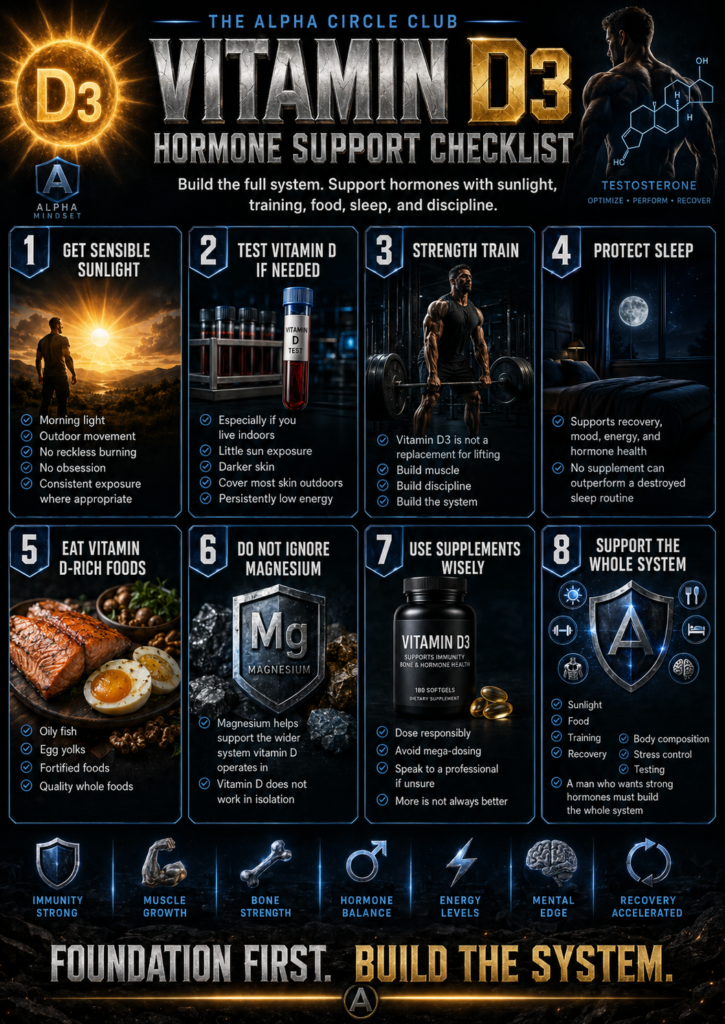
The Alpha Circle Club Vitamin D3 Hormone Support Checklist
1. Get Sensible Sunlight
Morning light.
Outdoor movement.
No reckless burning.
No obsession.
Just consistent exposure where appropriate.
2. Test Vitamin D If Needed
Especially if you live indoors, get little sun, have darker skin, cover most skin outdoors, or feel persistently low in energy.
3. Strength Train
Vitamin D3 is not a replacement for lifting.
Build muscle.
Build discipline.
Build the system.
4. Protect Sleep
Sleep supports recovery, mood, energy, and hormone health.
No supplement can outperform a destroyed sleep routine.
5. Eat Vitamin D-Rich Foods
Oily fish.
Egg yolks.
Fortified foods.
Quality whole foods.
6. Do Not Ignore Magnesium
Magnesium helps support the wider system vitamin D operates in.
Vitamin D does not work in isolation.
7. Use Supplements Wisely
Dose responsibly.
Avoid mega-dosing.
Speak to a professional if unsure.
More is not always better.
8. Support the Whole System
Sunlight.
Food.
Training.
Recovery.
Body composition.
Stress control.
Testing.
A man who wants strong hormones must build the whole system.
Vitamin D3 Is Not Magic — It Is Foundation
Vitamin D3 will not turn a weak lifestyle into a strong one.
It will not replace sleep.
It will not replace strength training.
It will not replace protein.
It will not replace magnesium.
It will not replace medical testing.
But vitamin D3 may support the foundation male hormones depend on, especially when low vitamin D is part of the problem.
A man who wants stronger testosterone should stop chasing miracle boosters and start building the system.
Get sunlight.
Eat real food.
Lift weights.
Walk daily.
Sleep properly.
Manage stress.
Check vitamin D.
Test testosterone if symptoms persist.
Use supplements wisely.
Vitamin D3 is not the whole answer.
But it may be one piece of the masculine health foundation.
A serious man does not chase shortcuts.
He builds the body, habits, and environment that hormones can respect.

Want to support testosterone, energy, recovery, and long-term male vitality?
Explore more Alpha Circle Club guides built for men who want strength, discipline, and hormonal resilience.
No spam. Unsubscribe anytime.