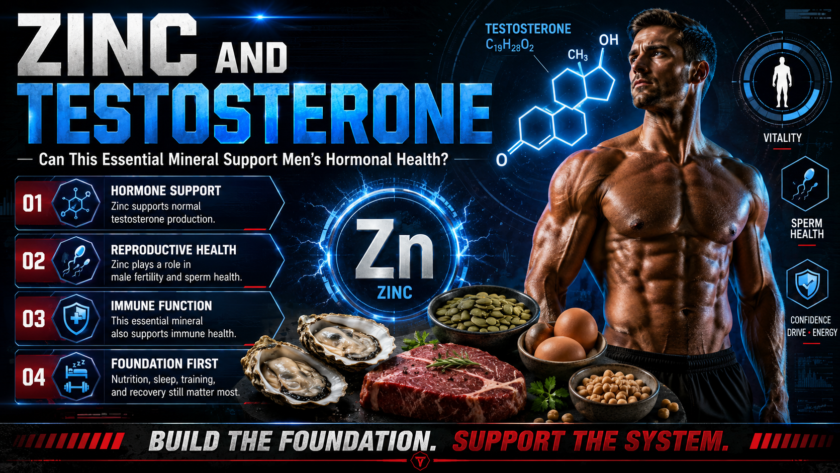
Zinc and testosterone is a subject every serious man should understand — not because zinc is a miracle testosterone booster, but because the male body cannot build strength, fertility, immunity, recovery, and hormonal resilience from a weak nutritional foundation.
Most men think about testosterone in loud terms.
Muscle.
Libido.
Strength.
Aggression.
Confidence.
Drive.
Masculine energy.
But the male body is not built only from loud things.
It is built from quiet foundations.
Minerals.
Sleep.
Recovery.
Food.
Sunlight.
Training.
Discipline.
That is where zinc enters the conversation.
Zinc does not have the hype of creatine, tongkat ali, fad testosterone boosters, or aggressive supplement marketing. But zinc is essential for men’s health. It is involved in immune function, protein synthesis, wound healing, DNA synthesis, cell division, and normal growth and development. It also plays an important role in reproductive health.
For men, this matters.
Because testosterone does not exist in isolation.
It is connected to fertility, sperm quality, immune strength, inflammation, recovery, body composition, nutrition, mineral status, sleep, training, and overall metabolic health.
Zinc is one of those minerals that works quietly behind the scenes.
If a man is low in zinc, eating poorly, training hard, drinking too much alcohol, rarely eating zinc-rich foods, or struggling with fertility, zinc may be one mineral he should not ignore.
But this needs to be said clearly:
Zinc is not magic.
Zinc is not a shortcut.
Zinc is not a guaranteed testosterone booster for every man.
Zinc may help restore what deficiency has weakened.
It does not override a broken lifestyle.
For Alpha Circle Club, the message is simple:
A man who wants strong hormones should not ignore the minerals that help build the system.

What Is Zinc?
Zinc is an essential mineral the body needs for many important functions.
The body does not store large amounts of zinc, so men need a steady intake from food or, in some cases, supplements.
Zinc supports:
Immune function
Protein synthesis
DNA synthesis
Wound healing
Cell division
Normal growth and development
Taste and smell
Male reproductive health
The NIH explains that zinc is required for the catalytic activity of many enzymes and plays a role in immune function, protein synthesis, wound healing, DNA synthesis, and cell division.
Zinc is not flashy.
But neither is discipline.
Both are quiet forces that support strength behind the scenes.
A man does not become stronger only from what looks impressive.
He becomes stronger by building the invisible systems that allow performance to happen.
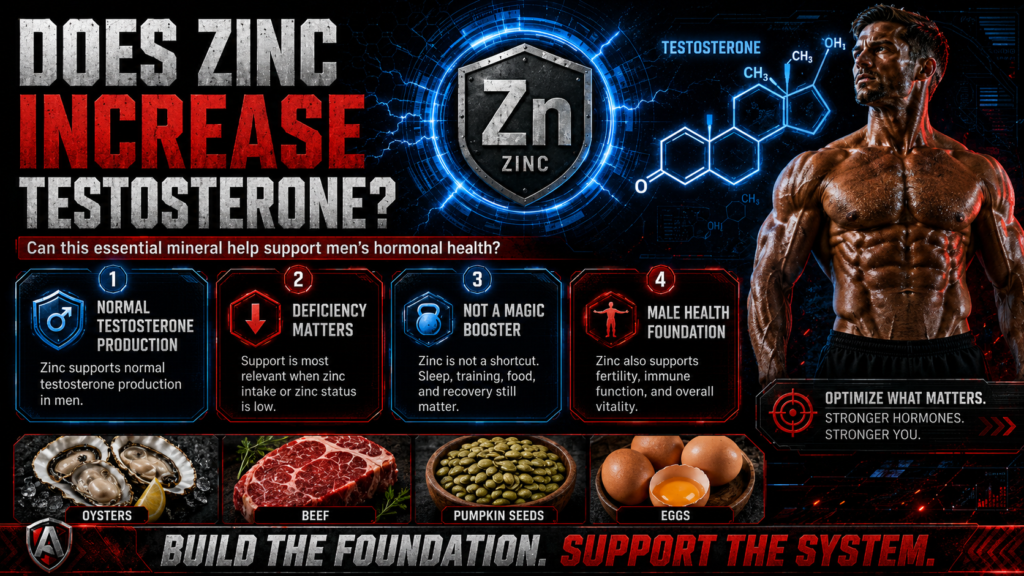
Does Zinc Increase Testosterone?
This is the main question men search for:
Does zinc increase testosterone?
The careful answer is this:
Zinc may support testosterone when zinc deficiency or low zinc intake is part of the problem. But zinc should not be sold as a guaranteed testosterone booster for every man.
A well-known study found that young men placed on a zinc-restricted diet had a significant decrease in serum testosterone after 20 weeks. The same study found that zinc supplementation in marginally zinc-deficient older men increased testosterone after six months.
That is important.
It suggests zinc status can matter for testosterone.
But it does not mean every man should start taking high-dose zinc.
It does not mean zinc will dramatically raise testosterone in men who already have enough zinc.
It does not mean zinc replaces medical testing or treatment for clinically low testosterone.
It means zinc is part of the hormonal foundation.
Zinc may support the environment testosterone needs.
But it does not replace:
Sleep
Strength training
Protein
Healthy fats
Magnesium
Vitamin D
Stress control
Healthy body composition
Medical testing
Proper treatment for clinically low testosterone
A man cannot sleep four hours, eat junk, drink heavily, skip training, live under stress, and expect zinc capsules to rebuild his masculinity.
Zinc may help restore what deficiency has weakened.
It does not override a broken lifestyle.

Zinc Deficiency and Testosterone
Zinc deficiency and testosterone are strongly connected in men’s health discussions.
The classic zinc study mentioned above showed that restricting zinc intake in healthy young men reduced testosterone, while supplementing marginally zinc-deficient older men increased testosterone.
Men at greater risk of low zinc intake may include those who:
Eat a low-quality processed diet
Rarely eat meat or seafood
Follow strict vegetarian or vegan diets without careful planning
Drink too much alcohol
Have digestive conditions affecting absorption
Have high sweat losses from heavy training
Have chronic illness or poor nutrition
Rely heavily on ultra-processed foods
Low zinc does not automatically mean low testosterone.
Low testosterone does not automatically mean low zinc.
But if a man has fatigue, low libido, poor recovery, fertility concerns, weak immunity, poor diet, and low intake of zinc-rich foods, zinc status may be worth paying attention to.
The point is not to guess.
The point is to look at the foundation.
A man cannot build strong hormones from a weak mineral foundation.
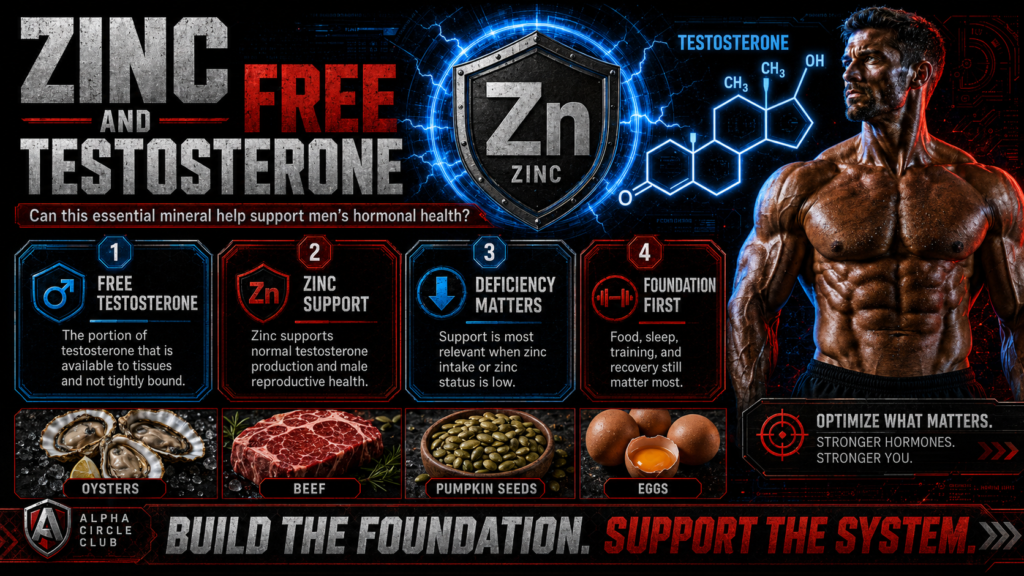
Zinc and Free Testosterone
Men often search for zinc and free testosterone because free testosterone is the portion of testosterone that is more available for tissues.
Total testosterone is the total amount measured in the blood.
Free testosterone is the portion not tightly bound to proteins.
Zinc may support testosterone production and hormonal health, but men should be careful not to obsess over one number.
A proper hormone picture may include:
Total testosterone
Free testosterone
SHBG
LH
FSH
Prolactin
Thyroid markers
Vitamin D
Metabolic health
Sleep quality
Body composition
This matters because a man can chase free testosterone while ignoring the habits that support the whole system.
He can obsess over one marker while sleeping badly.
He can worry about SHBG while drinking too much.
He can chase supplements while avoiding blood tests.
That is not discipline.
That is distraction.
The goal is not to chase one blood marker.
The goal is to build a body where hormones can function properly.
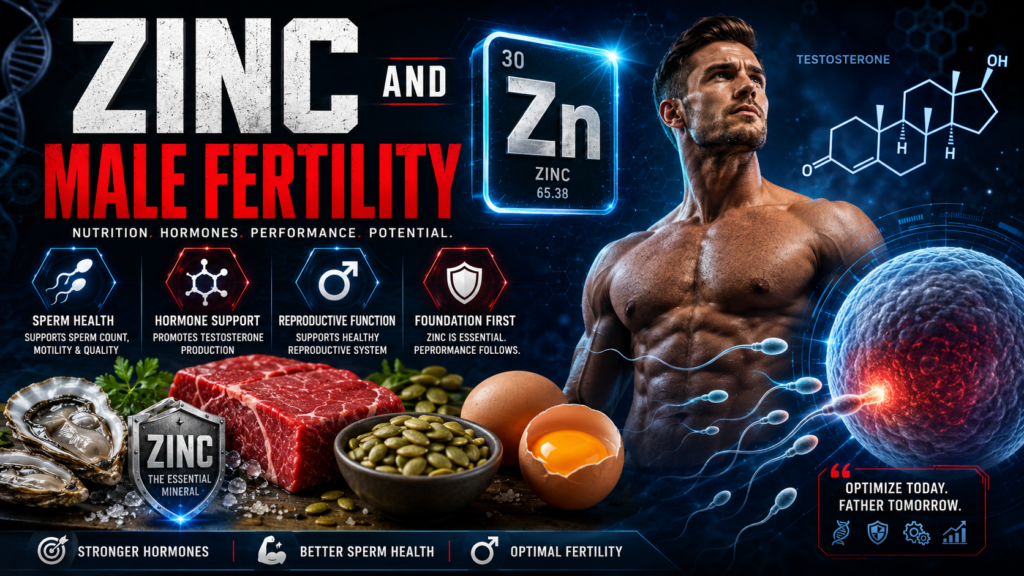
Zinc and Male Fertility
This is where zinc becomes especially important for Alpha Circle Club.
Zinc is not only about testosterone.
It is also closely connected with male fertility and sperm health.
A review on zinc and male fertility explains that zinc has physiological roles in sperm quality, fertilisation, and male reproductive health.
Another meta-analysis found that zinc levels in seminal plasma were significantly lower in infertile males compared with fertile males. It also reported that zinc supplementation was associated with improvements in semen volume, sperm motility, and normal sperm morphology in infertile men.
That does not mean zinc alone fixes infertility.
Male fertility can involve many factors, including:
Hormones
Varicocele
Heat exposure
Oxidative stress
Sperm DNA fragmentation
Infections
Lifestyle
Alcohol
Smoking
Sleep
Obesity
Medication
Female partner factors
But zinc may be one important piece of the male fertility foundation.
A man’s fertility is not built from one supplement.
It is built from the standard he gives his body every day.

Zinc and Sperm Count
Zinc is found in high concentrations in the male reproductive system and is involved in sperm development and sperm function.
Some research suggests zinc may be linked with sperm quality markers, especially in men with infertility or low zinc status. The 2016 meta-analysis found lower seminal plasma zinc in infertile men and reported that zinc supplementation was associated with improvements in several semen parameters.
But the message must stay balanced.
Zinc may support sperm health, especially when deficiency or low intake is present.
But sperm count is affected by many factors, including:
Sleep
Heat exposure
Smoking
Alcohol
Stress
Obesity
Hormones
Varicocele
Inflammation
Nutrition
Oxidative stress
Medications
Previous testosterone or steroid use
Zinc matters.
But the whole system matters more.
A man who wants stronger sperm should not only ask, “What supplement should I take?”
He should ask:
How do I sleep?
How do I eat?
How often do I drink?
Do I smoke?
Do I overheat my testes?
Do I train?
Do I recover?
Have I had a semen analysis?
Have I checked hormones if symptoms suggest a problem?
That is ownership.
Best Zinc for Testosterone
Many men search for the best zinc for testosterone.
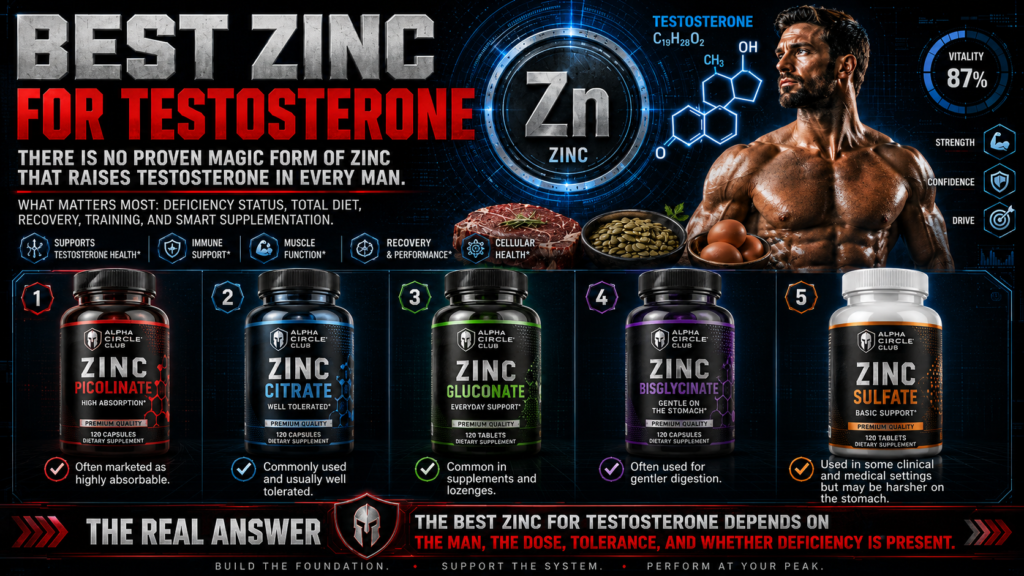
The truth is that there is no proven “best zinc” that magically raises testosterone in every man.
Common forms include:
Zinc picolinate — often marketed as highly absorbable.
Zinc citrate — commonly used and usually well tolerated.
Zinc gluconate — common in supplements and lozenges.
Zinc bisglycinate — often used for gentler digestion.
Zinc sulfate — used in some clinical and medical settings but may be harsher on the stomach.
The best zinc depends on the man.
It depends on:
Diet
Tolerance
Dose
Medical history
Digestive health
Medication use
Whether a healthcare professional has identified a need
The best zinc is not the one with the loudest marketing.
It is the one that fits your body, your diet, and your actual need.
Do not choose supplements by hype.
Choose them by purpose.
Zinc-Rich Foods for Men
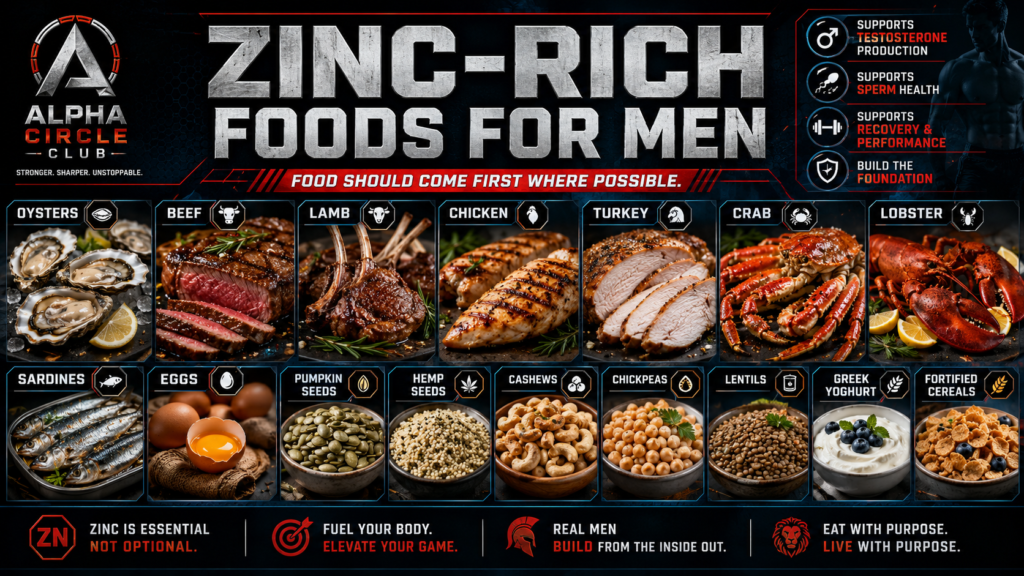
Food should come first where possible.
Zinc-rich foods include:
Oysters
Beef
Lamb
Chicken
Turkey
Crab
Lobster
Sardines
Eggs
Pumpkin seeds
Hemp seeds
Cashews
Chickpeas
Lentils
Greek yoghurt
Fortified cereals
Oysters are especially high in zinc, but men do not need oysters every day to improve zinc intake.
The stronger daily foundation is simple:
Quality protein.
Whole foods.
Mineral-rich meals.
Less ultra-processed junk.
Less alcohol overload.
More consistency.
A man should not eat like his body is an afterthought and then wonder why his energy, recovery, libido, and performance are inconsistent.
Build the foundation.

Zinc, Magnesium, and Testosterone
Zinc and magnesium are often discussed together because both support men’s health in different ways.
Zinc is strongly connected with reproductive health, immune function, and normal testosterone production.
Magnesium supports muscle function, nerve function, energy production, stress regulation, sleep, and recovery.
Together, they may support the foundation testosterone depends on.
But they are not magic.
A man still has to build.
Zinc and magnesium will not replace sleep.
They will not replace training.
They will not replace protein.
They will not replace sunlight.
They will not replace discipline.
They are building materials.
And building materials only matter when a man is willing to build.
Vitamin D, Zinc, and Testosterone
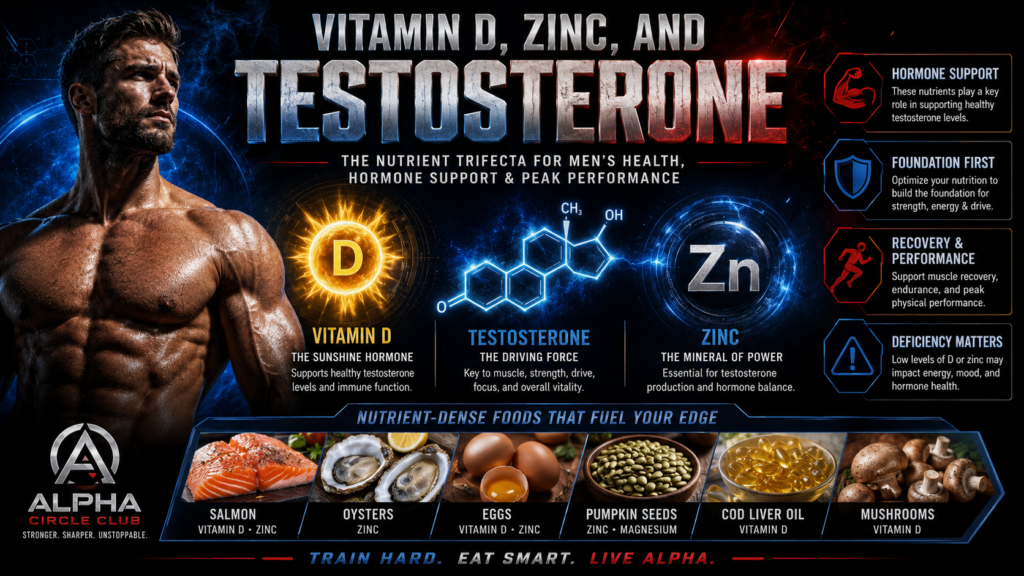
Vitamin D, zinc, and testosterone are often connected because many men want a simple hormone-support stack.
But the body does not work in single-nutrient isolation.
Vitamin D supports bone, muscle, immune health, and the broader hormonal foundation.
Zinc supports reproductive health and normal testosterone production.
Magnesium supports vitamin D metabolism, sleep, muscle function, and recovery.
Protein, healthy fats, training, sleep, sunlight, and stress control complete the system.
A man’s hormone health is not built from one capsule.
It is built from a lifestyle that gives the body what it needs to perform.
The stack only works if the standard is there.
Can You Take Too Much Zinc?
Yes.
This section matters because many men think more is better.
More is not always better.
High zinc intake from supplements can cause nausea, vomiting, loss of appetite, stomach cramps, diarrhoea, and headaches. Too much zinc can also interfere with copper absorption, and the NIH lists the adult tolerable upper intake level for zinc as 40 mg per day.
Long-term high-dose zinc can create problems.
This is why men should avoid reckless mega-dosing.
Zinc is essential.
But essential does not mean unlimited.
More zinc is not more masculine.
More than your body needs can become careless.
A disciplined man does not abuse supplements.
He uses them wisely.
When Should Men Consider Testing or Medical Advice?
A man may want to speak with a healthcare professional if he has:
Persistent fatigue
Low libido
Erectile issues
Poor recovery
Low mood
Infertility concerns
Abnormal semen analysis
Frequent illness
Very restricted diet
Digestive problems
Symptoms of low testosterone
Long-term supplement use
Previous steroid or TRT use
Testing may include:
Total testosterone
Free testosterone
SHBG
LH
FSH
Prolactin
Vitamin D
Full blood count
Thyroid markers
Metabolic markers
Semen analysis if fertility is a concern
A serious man does not guess forever.
He gets information.
He gets tested.
He acts with discipline.

The Alpha Circle Club Zinc Hormone Support Checklist
1. Eat Zinc-Rich Foods
Oysters, beef, lamb, chicken, seafood, eggs, pumpkin seeds, legumes, and quality whole foods.
Build the foundation with food first.
2. Support Testosterone With the Whole System
Sleep.
Strength training.
Walking.
Healthy fats.
Protein.
Sunlight.
Magnesium.
Stress control.
Hormones are not supported by one action.
They are supported by a system.
3. Protect Fertility
Avoid overheating the testes.
Avoid smoking.
Reduce heavy alcohol.
Avoid steroid abuse.
Protect sleep.
Reduce ultra-processed food overload.
Support sperm health over time.
4. Do Not Mega-Dose
Use zinc wisely.
More is not always better.
High-dose zinc without need can create problems.
5. Balance Zinc With Copper Awareness
Long-term high-dose zinc can interfere with copper status.
Supplement responsibly.
Do not create one imbalance while trying to fix another.
6. Test, Do Not Guess
If symptoms persist, discuss hormone testing or fertility testing with a professional.
A man who wants the truth must be willing to measure.
7. Build the Foundation First
Supplements support the man who already has standards.
They do not replace standards.
Food.
Sleep.
Training.
Recovery.
Sunlight.
Discipline.
That is the foundation.
What This Article Is Not Saying
This article is not saying zinc cures low testosterone.
It is not saying zinc boosts testosterone fast.
It is not saying every man with low testosterone needs zinc.
It is not saying zinc replaces TRT or medical treatment.
It is not saying zinc alone fixes male infertility.
What this article is saying is this:
Zinc is essential for men’s health.
Zinc deficiency may reduce testosterone.
Zinc supplementation may help when deficiency or low intake is present.
Zinc is relevant to sperm health and male fertility.
Too much zinc can be harmful.
Testing and medical guidance matter if symptoms persist.
That is the balanced position.
Not hype.
Not miracle claims.
Foundation.
Zinc Is Not Magic — It Is Foundation
Zinc will not turn a weak lifestyle into a strong one.
It will not replace sleep.
It will not replace strength training.
It will not replace protein.
It will not replace sunlight.
It will not replace magnesium or vitamin D.
It will not replace medical testing.
But zinc may support the foundation that male hormones and fertility depend on.
A man who wants stronger testosterone should stop chasing miracle boosters and start building the system.
Eat real food.
Lift weights.
Sleep properly.
Walk daily.
Manage stress.
Protect fertility.
Get minerals.
Test when needed.
Supplement wisely.
Zinc is not the whole answer.
But it may be one piece of the masculine health foundation.
A serious man does not chase shortcuts.
He builds the body, habits, and environment that hormones can respect.

Want to support testosterone, fertility, recovery, and long-term male vitality?
Explore more Alpha Circle Club guides built for men who want strength, discipline, and hormonal resilience.

No spam. Unsubscribe anytime.