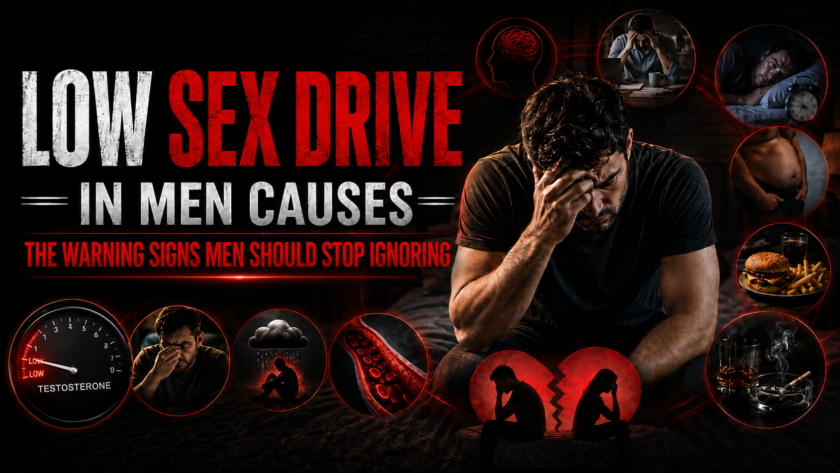
Low sex drive in men causes more silent frustration than most men admit.
A man can lose desire before he understands why.
At first, he ignores it.
He blames stress.
He blames age.
He blames tiredness.
He blames being busy.
He tells himself it will come back.
But then the pattern continues.
His desire drops.
His confidence takes a hit.
His relationship starts to feel different.
His energy feels lower.
His mood changes.
His body does not respond the way it used to.
His mind starts asking questions he does not want to face.
That is where many men start to panic.
They wonder if something is wrong with their testosterone.
They wonder if they are losing their edge.
They wonder if this is what ageing feels like.
They wonder if their partner notices.
They wonder if their masculinity is slipping away.
But low sex drive is not something to hide from.
It is something to investigate.
Because libido is not just about sex.
It can reflect testosterone, sleep, stress, mental health, relationship connection, blood flow, medication, nutrition, alcohol, body composition, metabolic health, and overall male vitality. The NHS lists several possible causes of low sex drive, including relationship problems, stress, anxiety, depression, erectile dysfunction, hormone changes, certain medicines, alcohol, and tiredness.
That means low libido is not always weakness.
Sometimes it is the body sending a warning signal that the system needs attention.
A serious man does not ignore the signal.
He studies it.
He gets information.
He rebuilds the foundation.

What Is Low Sex Drive in Men?
Low sex drive, also called low libido, means a reduced interest in sexual activity.
It may show up as:
Less desire for sex
Fewer sexual thoughts
Reduced arousal
Less interest in intimacy
Less motivation to initiate
Feeling disconnected from desire
Loss of sexual confidence
Avoiding sex because of pressure or performance anxiety
Sex drive naturally changes. A short temporary dip does not always mean something serious.
A man may have a difficult week.
He may be tired.
He may be stressed.
He may be under pressure.
He may not feel connected to his partner.
That can happen.
But if low libido becomes persistent, distressing, or appears alongside fatigue, erectile issues, low mood, low confidence, infertility concerns, or other symptoms, it is worth taking seriously.
Not with shame.
With ownership.
Low sex drive is information.
And information gives a man direction.

Low Testosterone and Low Sex Drive
One of the first things men think about is testosterone.
That makes sense.
Testosterone plays a major role in male sexual desire. Low testosterone can contribute to low libido, loss of morning or spontaneous erections, erectile difficulties, low energy, mood changes, reduced muscle, and other symptoms in some men. Cleveland Clinic lists low libido, loss of morning or spontaneous erections, and trouble attaining or maintaining an erection among the more specific sexual symptoms of low testosterone.
But this needs to be said clearly:
Low sex drive does not automatically mean low testosterone.
Testosterone may be one suspect.
It is not the only suspect.
A man can have low libido because of stress, poor sleep, relationship issues, depression, anxiety, medication, alcohol, obesity, diabetes, erectile dysfunction, overtraining, or burnout.
That is why guessing is dangerous.
A man should not diagnose himself from a social media post.
He should not immediately jump to testosterone replacement therapy because his libido has dropped.
He should ask better questions.
How is my sleep?
How is my stress?
How is my relationship?
How is my blood flow?
How is my training recovery?
How is my alcohol intake?
How is my mental health?
Have I had blood work?
A serious man does not guess forever.
He tests, reviews, and acts.
Stress and Low Libido in Men
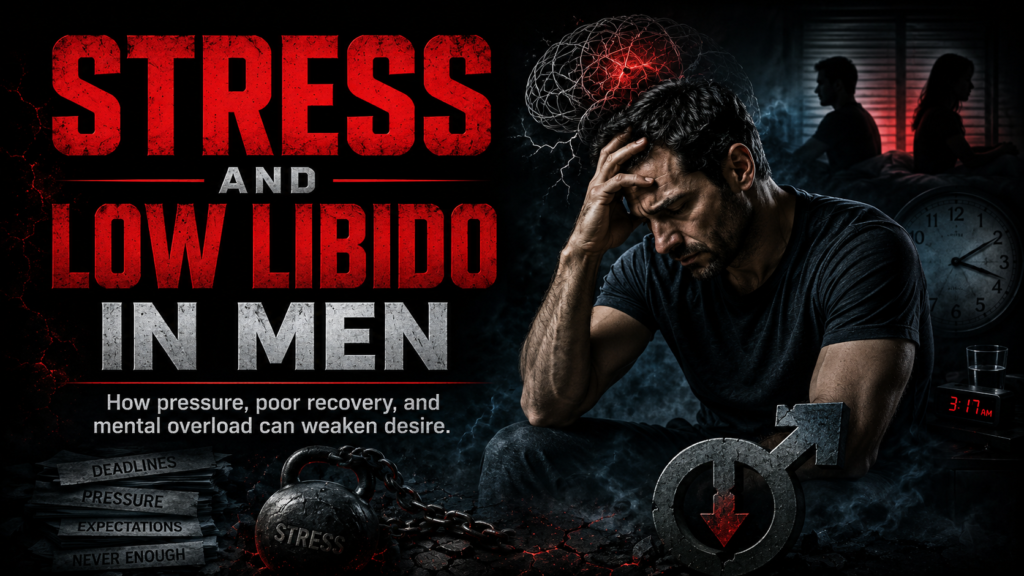
Stress is one of the biggest libido killers.
When a man is under pressure for too long, his body can shift into survival mode.
Business stress.
Money stress.
Relationship stress.
Family pressure.
Work overload.
Constant digital noise.
No recovery.
No silence.
No space to breathe.
When stress is high, desire can drop.
Not because the man is weak.
Because the nervous system is overloaded.
The body does not prioritise desire when it feels like it is constantly fighting, escaping, or surviving.
This is where many men misunderstand themselves.
They think, “I should want sex. What is wrong with me?”
But the deeper question may be:
“Is my body carrying too much pressure to feel desire properly?”
Mayo Clinic notes that decreased sex drive can be connected with stress, depression, some medicines, and medical conditions, and that treating the underlying issue may improve sex drive.
A man cannot build strong desire in a body that never feels safe enough to recover.
Recovery is not weakness.
Recovery is masculine maintenance.

Poor Sleep and Low Sex Drive
Poor sleep can weaken energy, mood, testosterone, motivation, focus, and sexual desire.
Men who sleep badly often feel tired, irritable, unfocused, emotionally flat, and less driven.
They may drink caffeine all day.
They may train hard but recover badly.
They may scroll late at night.
They may wake up already exhausted.
Then they wonder why their libido is gone.
A man cannot sleep like a wreck and expect his libido to operate like a machine.
Sleep apnea is especially important. Mayo Clinic notes that obstructive sleep apnea can cause unusually low testosterone and that treating sleep apnea may improve testosterone levels and sex drive.
A man should pay attention to:
Sleep duration
Sleep quality
Snoring
Waking tired
Morning headaches
Daytime sleepiness
Late caffeine
Alcohol before bed
Late-night scrolling
Waking up gasping or choking
Poor morning energy
Sleep is not just rest.
Sleep is repair.
Sleep is where the nervous system resets.
Sleep is where recovery happens.
Sleep is where the body rebuilds.
No libido survives long inside a destroyed sleep routine.

Depression, Anxiety, and Low Sex Drive
Mental health can strongly affect libido.
Depression can reduce desire, energy, motivation, confidence, and pleasure.
Anxiety can create pressure, overthinking, fear of performance, avoidance, and tension.
The NHS lists stress, anxiety, and depression as possible causes of low sex drive.
This matters because many men do not recognise depression in themselves.
They think depression only means crying or sadness.
But in men, it may show up differently.
It may look like:
Irritability
Flat mood
Withdrawal
Low motivation
Anger
Loss of interest
Porn escape
Alcohol use
Avoidance
Numbness
Constant tiredness
Feeling disconnected from life
A man can look strong on the outside while his mind is quietly draining his desire.
That is why low libido should not be treated only as a sexual problem.
Sometimes it is a mental health signal.
Sometimes the mind is tired.
Sometimes the nervous system is overloaded.
Sometimes the man has lost connection with himself before he loses connection with desire.
A serious man does not mock that.
He deals with it.
Erectile Dysfunction and Low Libido
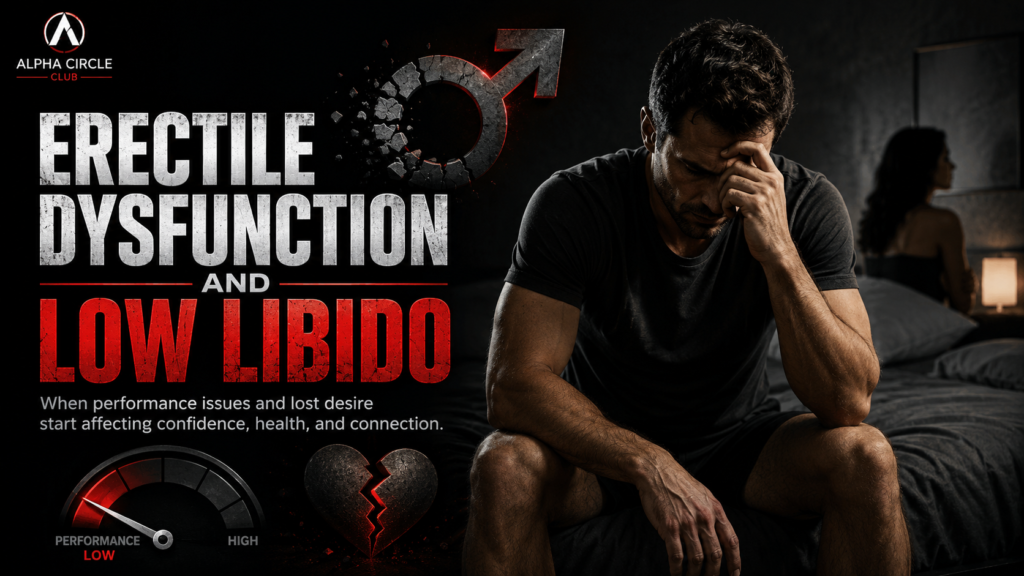
Erectile dysfunction and low sex drive are different, but they can feed each other.
A man may still have desire but avoid sex because he fears performance failure.
Or repeated erectile issues may damage confidence, which then lowers desire.
Sometimes the problem is not that desire is gone.
Sometimes confidence has been damaged.
The NHS explains that erectile dysfunction can be caused by stress, tiredness, drinking too much alcohol, certain medicines, and conditions such as high blood pressure, high cholesterol, diabetes, depression, anxiety, and hormone problems.
This is why ED should not be ignored.
Erections are connected to blood flow, nervous system function, hormone health, mental health, medication, metabolic health, and confidence.
A man should not reduce the issue to embarrassment.
He should treat it as information.
If ED happens occasionally, it may not be serious.
But if it happens often, it is worth getting assessed.
A man who takes ownership early gives himself more options.

Relationship Problems and Loss of Desire
Low sex drive is not always physical.
Sometimes the body is responding to emotional distance, conflict, resentment, lack of attraction, poor communication, pressure, boredom, or unresolved tension.
The NHS lists relationship problems as one possible cause of low sex drive.
This is uncomfortable for many men because it forces them to look beyond hormones.
But leadership includes honest communication.
Desire does not grow well in an environment filled with resentment, pressure, and silence.
Relationship factors may include:
Unresolved arguments
Emotional disconnection
Resentment
Pressure to perform
Lack of affection outside sex
Porn comparison
Loss of respect
Poor communication
Feeling criticised
Feeling unwanted
Feeling controlled
Lack of trust
A man should not avoid the relationship side just because it is harder to measure than testosterone.
Not everything important appears on a blood test.
Sometimes desire drops because the connection has been damaged.
Sometimes pressure replaces intimacy.
Sometimes silence replaces honesty.
A man who wants his desire back may need to rebuild more than his hormones.
He may need to rebuild trust, connection, and communication.
Medication and Low Sex Drive
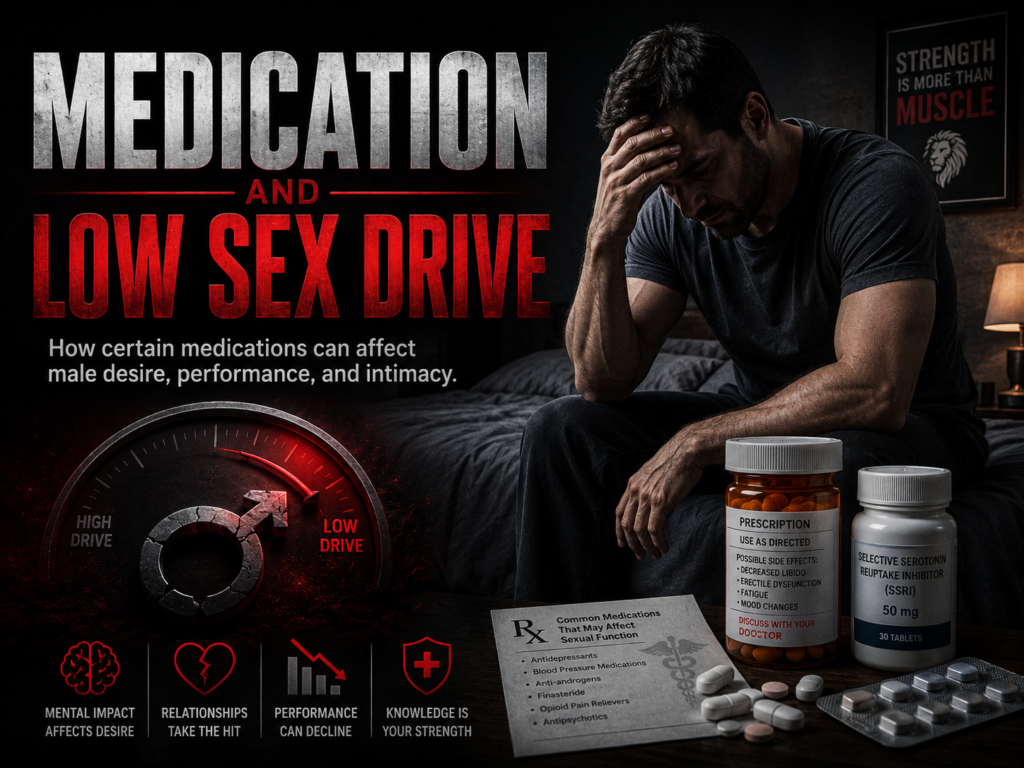
Many men do not realise medication can affect libido.
Some medicines may contribute to reduced sex drive, erectile problems, delayed orgasm, or changes in sexual response.
Possible examples can include some antidepressants, blood pressure medications, opioids, finasteride, and other medicines.
The key point is this:
Do not stop prescribed medication suddenly without speaking to a healthcare professional.
That is not discipline.
That is reckless.
The NHS lists certain medicines, including blood pressure medicines and antidepressants, as possible causes of low sex drive. Mayo Clinic Health System also notes that many medications used for anxiety and depression can lower libido in men and stresses that medication should not be stopped without first talking with a healthcare team.
A disciplined man does not stop medication recklessly.
He asks better questions.
He speaks to a professional.
He explores safer options.
He gets proper advice.
Alcohol, Smoking, and Low Libido
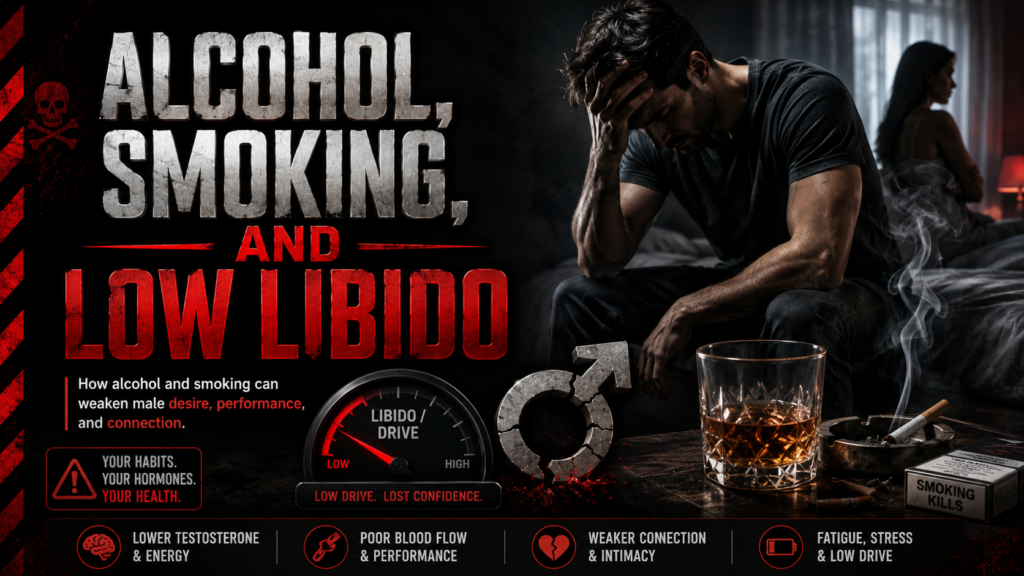
Alcohol may reduce inhibition in the short term, but heavy or regular alcohol use can weaken the systems that support libido.
Alcohol can affect sleep.
It can affect mood.
It can affect erections.
It can affect liver health.
It can affect body composition.
It can affect testosterone-supportive habits.
It can affect fertility.
Smoking can affect blood flow and sexual health.
This matters because libido is not isolated.
A man cannot keep poisoning his recovery and expect his desire to stay untouched.
He cannot drink heavily, sleep badly, avoid training, eat poorly, and then act shocked when his body stops performing.
This does not mean a man has to live perfectly.
But he has to be honest.
If alcohol is damaging sleep, performance, mood, erections, relationship connection, or fertility goals, then it is no longer harmless.
It is taking from him.
And a serious man pays attention to what takes from him.
Obesity, Diabetes, and Metabolic Health
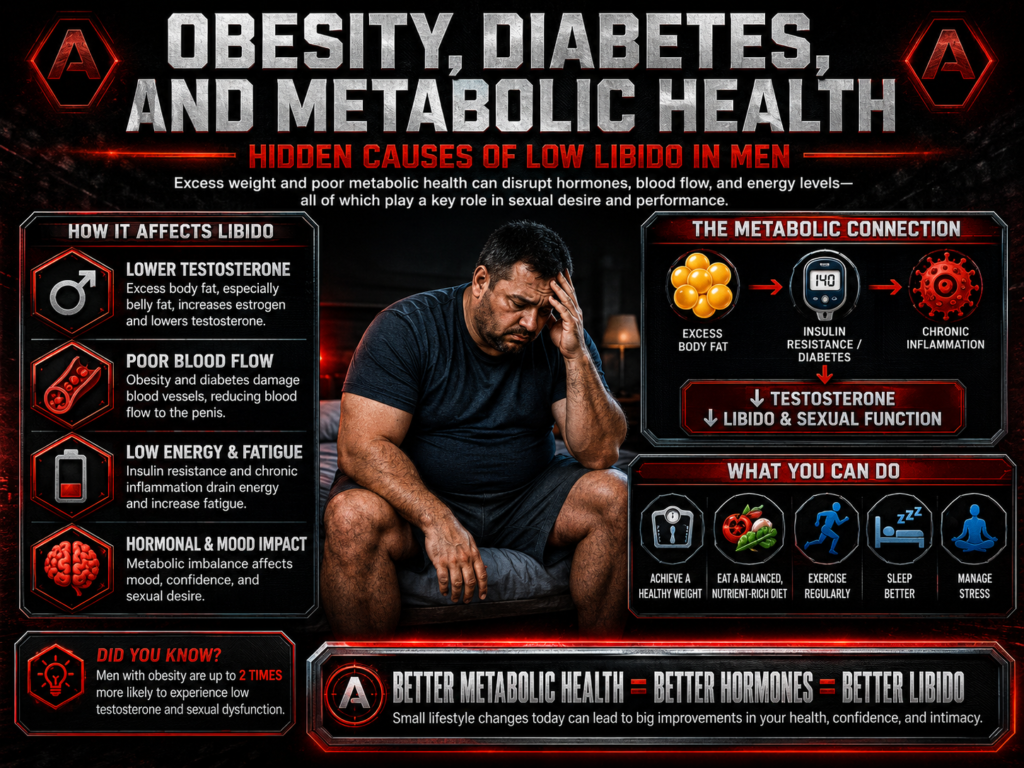
Low libido can be connected with metabolic health.
Belly fat, poor blood sugar control, high blood pressure, inflammation, low fitness, and poor circulation can all affect male vitality.
Mayo Clinic Health System lists physical issues such as increased weight, diabetes, high blood pressure, endocrine disorders, and high cholesterol among common causes of low libido in men.
This is where men need to understand something important:
Your libido is not separate from your metabolic health.
The body keeps score.
If a man is gaining belly fat, sleeping badly, eating ultra-processed food, drinking too much, rarely moving, and losing strength, libido can become one of the signals that his internal system is under pressure.
That does not mean shame.
It means direction.
Walk more.
Strength train.
Eat protein.
Lose excess fat if needed.
Improve sleep.
Reduce alcohol.
Get blood pressure checked.
Check glucose and metabolic markers.
Build the body back.
A man who improves metabolic health often improves more than appearance.
He improves the system his energy, confidence, erections, and desire depend on.

Overtraining and Under-Recovery
Training should sharpen a man.
It should build strength, confidence, energy, discipline, and resilience.
But too much intensity with poor recovery can lower energy, reduce libido, damage sleep, increase stress, and crush motivation.
This matters especially for men who think every workout has to be war.
Signs of under-recovery may include:
Poor sleep
Low libido
Irritability
Persistent soreness
Declining performance
Feeling wired but tired
Low motivation
More injuries
Low mood
Loss of training drive
If training is stealing your sex drive, your body may not be weak.
Your recovery may be failing.
A serious man trains hard, but he also recovers hard.
He lifts.
He walks.
He sleeps.
He eats.
He hydrates.
He takes recovery seriously.
Because adaptation does not happen only during the workout.
The workout creates the signal.
Recovery creates the result.
Porn, Dopamine, and Desire
This section needs balance.
Porn does not affect every man the same way.
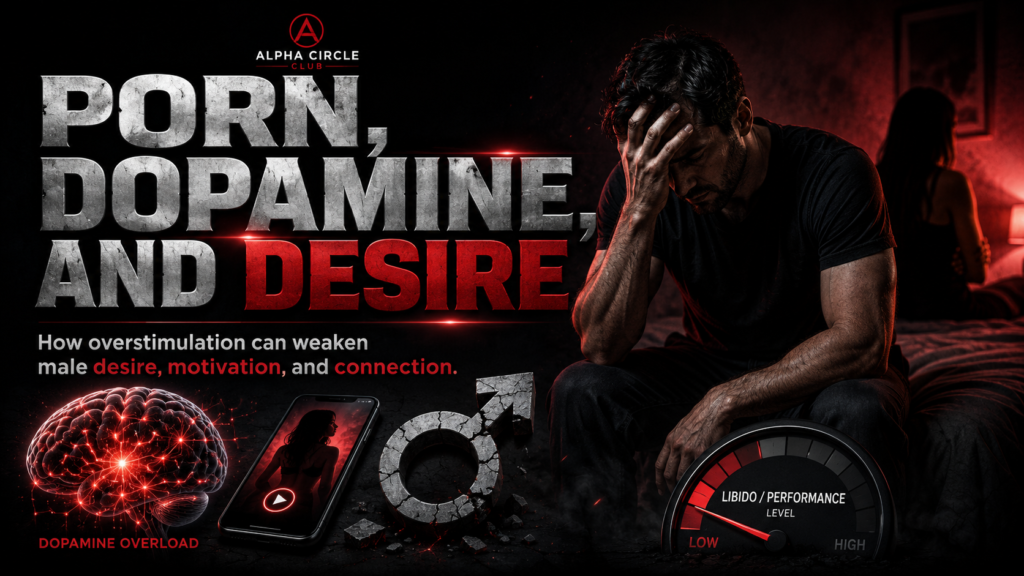
But for some men, heavy porn use may affect desire, arousal patterns, expectations, and real-life intimacy.
Mayo Clinic Health System includes pornography among common causes of low libido in men.
This is not about shame.
It is about honesty.
For some men, heavy porn use can train the brain toward novelty, fantasy, and screen-based stimulation. Over time, real-life intimacy may feel less stimulating, especially if the man is using porn to escape stress, boredom, loneliness, rejection, anxiety, or emotional discomfort.
A man should ask:
Is this habit building my real-life desire?
Is it improving my relationship?
Is it strengthening my self-control?
Is it helping intimacy?
Or is it draining my attention into a screen?
A man should ask whether his habits are building desire in real life — or draining it into a screen.
That question alone can wake a man up.
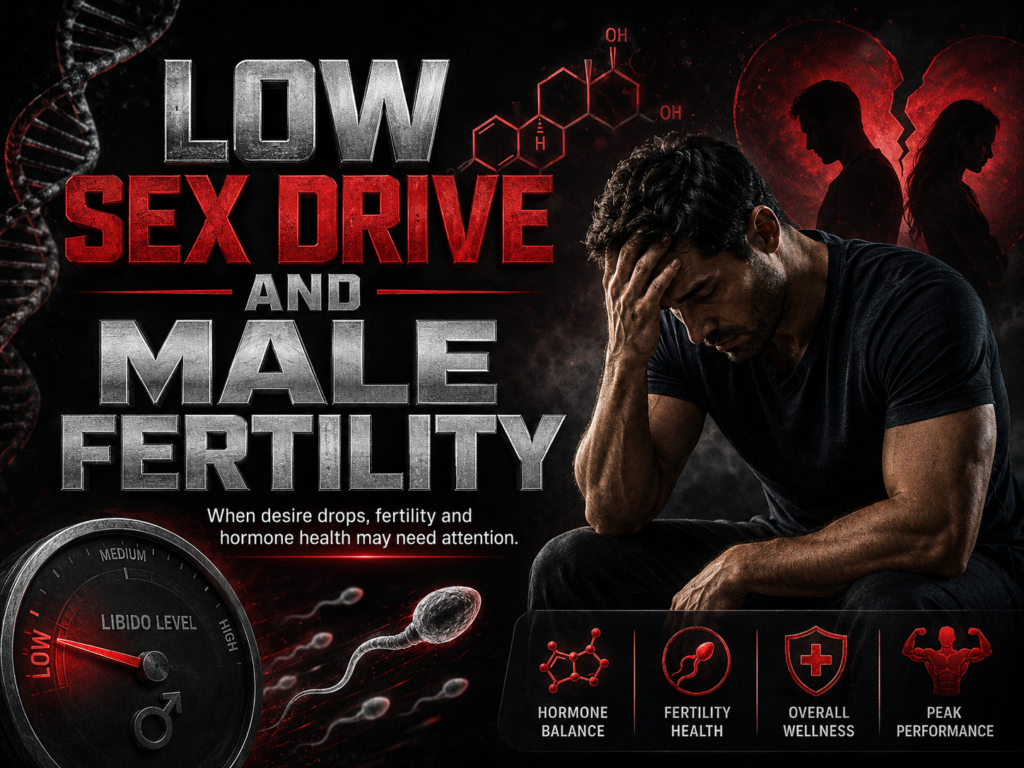
Low Sex Drive and Male Fertility
Low libido does not automatically mean infertility.
A man can have low sex drive and normal sperm.
He can have strong libido and poor sperm.
They are not the same thing.
But low sex drive can still affect fertility because it may reduce how often a couple has sex. It may also appear alongside hormone issues, erectile dysfunction, stress, poor sleep, overtraining, alcohol use, or poor health habits that also matter for fertility.
If fertility is a concern, a man may need:
Semen analysis
Hormone testing
Lifestyle review
Medical evaluation
Partner evaluation
Male fertility is not only about sperm numbers.
It is also about the health, desire, confidence, and consistency of the man behind them.
A man who wants to become a father should not ignore low libido if it is persistent or connected to other symptoms.
He should investigate.
He should build the foundation.
He should get tested if needed.
That is leadership.
When Should a Man Get Help?
A man should consider speaking to a healthcare professional if low sex drive is:
Persistent
Distressing
Affecting the relationship
Linked with erectile problems
Linked with depression or anxiety
Linked with fatigue or low testosterone symptoms
Linked with infertility concerns
Linked with medication side effects
Linked with pain, illness, or major health changes
Possible testing or evaluation may include:
Total testosterone
Free testosterone
SHBG
LH
FSH
Prolactin
Thyroid markers
Vitamin D
Full blood count
Metabolic markers
Diabetes screening
Blood pressure and cholesterol
Semen analysis if fertility is a concern
Cleveland Clinic explains that diagnosing low libido usually involves questions about symptoms, health, medications, sex life, relationships, stress levels, and thoughts or feelings about sex.
That is important because libido is not just one blood marker.
It is a full picture.
A serious man does not guess forever.
He gets information.
He takes responsibility.
He acts.

The Alpha Circle Club Male Libido Reset Checklist
This is the practical standard.
Not shame.
Not panic.
Not ego.
A reset.
1. Test, Do Not Guess
If symptoms persist, discuss blood work and medical evaluation.
Low testosterone is possible.
But so are thyroid issues, metabolic problems, sleep apnea, depression, medication effects, and other causes.
Find the truth.
2. Protect Sleep
No libido survives long inside a destroyed sleep routine.
Set a bedtime.
Reduce late-night scrolling.
Avoid late caffeine.
Keep the room cool and dark.
Treat sleep like masculine maintenance.
3. Strength Train
Build the body.
Improve confidence.
Support metabolic health.
A man who lifts often carries himself differently.
Strength changes more than muscle.
4. Walk Daily
Walking supports stress control, blood flow, body composition, and mental clarity.
Not every session needs to be brutal.
Some movement should restore you.
5. Eat Like Hormones Matter
Protein.
Healthy fats.
Minerals.
Whole foods.
Hydration.
A man cannot build strong vitality from weak fuel.
6. Reduce Alcohol and Smoking
Stop attacking recovery, blood flow, fertility, and sleep.
A man should question any habit that repeatedly weakens his body.
7. Control Stress
A nervous system stuck in survival mode will not prioritise desire.
Build quiet.
Create recovery.
Walk.
Pray.
Breathe.
Switch off.
Set boundaries.
8. Review Medication With a Professional
Never stop medication suddenly.
Ask whether libido side effects are possible.
Get proper advice.
Act with intelligence, not panic.
9. Rebuild Relationship Connection
Talk.
Listen.
Reduce pressure.
Build intimacy outside sex.
Deal with resentment.
Create space for trust again.
10. Control Porn Use
Protect real-life desire, attention, and arousal.
Do not let a screen train your appetite away from reality.
What This Article Is Not Saying
This article is not saying low sex drive always means low testosterone.
It is not saying TRT fixes every man’s libido.
It is not saying supplements cure low libido.
It is not saying porn is always the cause.
It is not saying stress is always the cause.
It is not saying a man is weak if his libido drops.
What this article is saying is this:
Low sex drive is a signal.
There are many possible causes.
Testosterone may be part of the picture.
Sleep, stress, mood, medication, relationship health, metabolic health, and lifestyle all matter.
Testing and medical advice are important when symptoms persist.
Men can take practical steps to rebuild the foundation.
That is the balanced position.
Not shame.
Not hype.
Ownership.
Low Libido Is a Signal, Not the End of Masculine Strength
Low sex drive in men is not something to mock, hide, or ignore.
It is a signal.
Sometimes it is testosterone.
Sometimes it is stress.
Sometimes it is poor sleep.
Sometimes it is depression, anxiety, medication, alcohol, porn habits, erectile dysfunction, relationship pressure, or metabolic health.
Sometimes it is several things at once.
The answer is not shame.
The answer is ownership.
A man should investigate the signal.
Rebuild the foundation.
Get tested where needed.
Speak to a professional when symptoms persist.
Take disciplined action.
Low libido is not the end of masculine strength.
It may be the wake-up call that forces a man to rebuild it properly.
Call to Action
Want to rebuild energy, confidence, testosterone-supportive habits, and long-term male vitality?
Explore more Alpha Circle Club guides built for men who want strength, discipline, fertility, and masculine health.



No spam. Unsubscribe anytime.