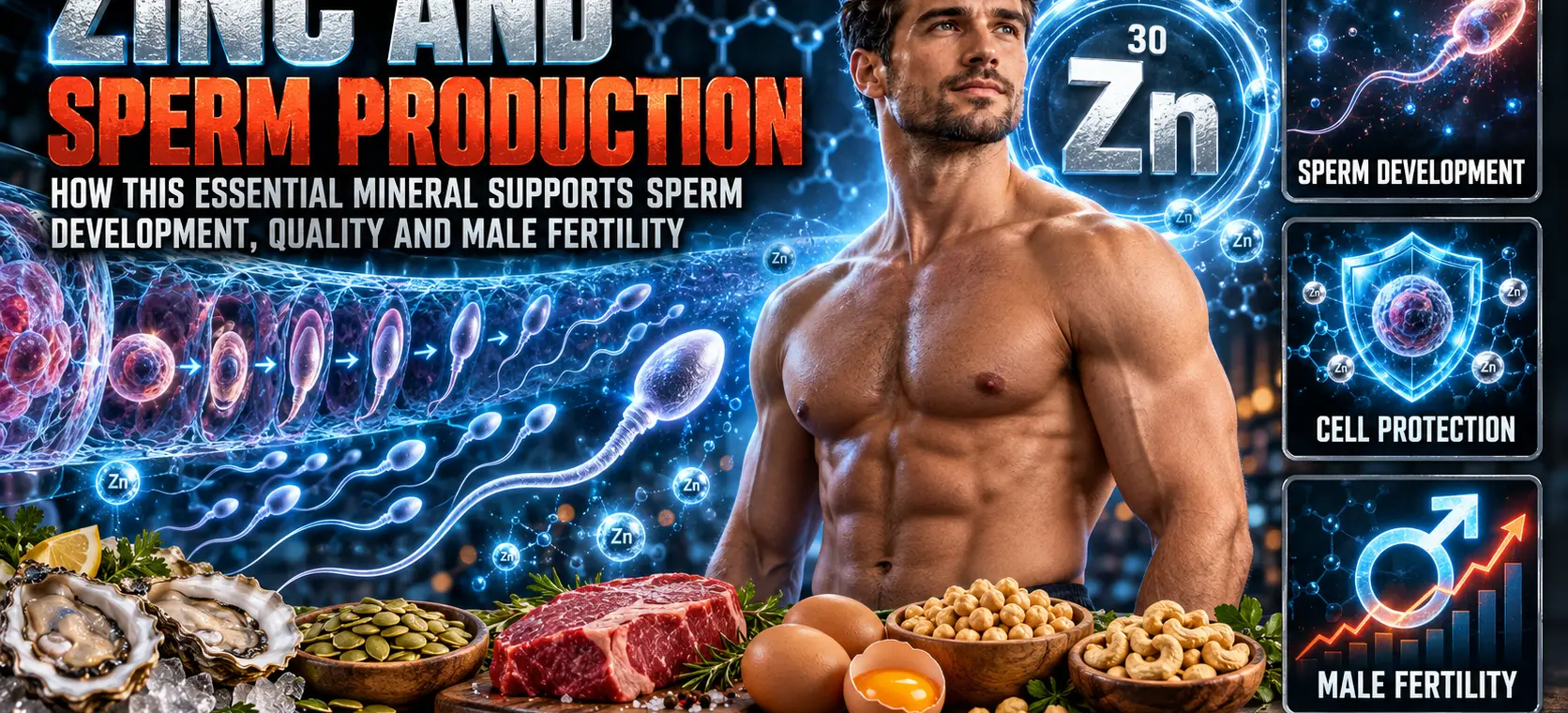
How This Essential Mineral Supports Sperm Development, Quality and Male Fertility
Core message:
Zinc contributes to the biological environment required for sperm production and function—but the objective is zinc sufficiency, not uncontrolled supplementation.
Sperm production requires far more than testosterone and protein.
Inside the testes, developing sperm depend on an intricate biological system involving hormonal signals, specialised cells, cell division, DNA organisation, energy production and a reliable supply of essential nutrients. The process must then continue beyond the testes as immature sperm move into the epididymis, where they undergo further maturation before ejaculation.
Zinc is one of the minerals involved in this wider system.
The body needs zinc to help make new cells and enzymes, process nutrients and support many fundamental biological reactions. Because sperm production requires continuous cell division, protein production and the development of highly specialised cells, it is understandable that zinc has attracted serious interest in male reproductive health.
Zinc is also found in the male reproductive tract and seminal fluid. Researchers have examined its relationship with sperm concentration, motility, morphology, membrane stability, DNA integrity and other features of sperm function.
This has given zinc a powerful reputation.
Unfortunately, that reputation is sometimes converted into a promise the evidence cannot support.
Men are told that taking a zinc supplement will automatically raise testosterone, increase sperm count, improve motility and strengthen fertility. When results do not appear, the suggested answer is often to take more.
But the body does not work that way.
If a man is not obtaining enough zinc, correcting the deficiency may help restore the nutritional conditions required for normal function. If he already receives sufficient zinc, adding a large dose may produce no fertility benefit. At excessive levels, zinc can cause adverse effects and interfere with copper absorption.
The goal is not maximum zinc.
The goal is adequate zinc, obtained safely and placed inside a complete fertility strategy.
Understanding zinc and sperm production therefore requires two ideas to remain true at the same time:
- Zinc is genuinely important.
- Zinc is not a guaranteed treatment for male infertility.
An honest article must protect both truths.
This guide will explain what zinc does, how sperm are produced, what human studies have found, how much zinc UK men are advised to obtain, which foods provide it and when supplements deserve greater caution. It will also show why a semen problem should be investigated rather than automatically blamed on one nutrient.
Respect zinc as an essential part of male reproductive health—but never confuse an essential nutrient with a licence to megadose.
1. What Zinc Actually Is
Zinc is an essential trace mineral. “Trace” means the body needs it in relatively small quantities—not that its importance is small.
Unlike a substance the body can manufacture when required, zinc must come from food, supplements or medically directed treatment. It is used throughout the body and contributes to the activity of numerous enzymes and proteins.
The NHS identifies zinc as helping the body make new cells and enzymes, process carbohydrate, fat and protein, and support wound healing. Wider biological roles include DNA synthesis, protein synthesis, immune function and normal growth and development.
These functions matter when discussing fertility because sperm production is an unusually active developmental process.
The testes do not store one permanent group of sperm for life. They continually produce new sperm through repeated rounds of cell division and transformation. Developing sperm must organise their genetic material, build a compact head, form a midpiece containing energy-producing structures and develop the tail required for movement.
That construction requires a properly functioning body and an adequate supply of raw materials.
Zinc does not perform every task. It operates within a network that also depends on:
- Hormonal signalling
- Adequate energy and protein
- Folate and other B vitamins
- Selenium
- Iron and copper balance
- Healthy fats
- Antioxidant systems
- Testicular temperature regulation
- General metabolic and vascular health
This is why isolating one nutrient can create a distorted picture.
If zinc intake is inadequate, the body may not have ideal conditions for processes in which zinc participates. But increasing zinc cannot compensate for every other missing nutrient, hormonal disorder, blockage, genetic condition, varicocele, testicular injury or harmful exposure.
Think of zinc as one essential member of a large production team. Removing that member may affect performance. Hiring the same member repeatedly does not replace everyone else.
Alpha Fertility Insight
Zinc is not a fertility trick. It is one of the raw materials the male body requires to function properly.
2. How Sperm Production Works
To understand zinc and sperm production, it helps to understand what the body is attempting to produce.
Sperm begin as germ cells inside the seminiferous tubules of the testes. These tubules contain a highly organised environment in which developing cells are supported by Sertoli cells and influenced by reproductive hormones.
The process can be viewed in several broad stages.
Stage 1: Germ-cell renewal and division
Spermatogonial stem cells maintain the production line. Some remain available for future cycles, while others begin dividing and developing towards mature sperm.
Stage 2: Meiosis
Developing cells go through specialised divisions that reduce the normal chromosome number by half. This is essential because the sperm’s genetic material may later combine with the genetic material of an egg.
Stage 3: Spermiogenesis
Round developing cells undergo a dramatic structural transformation. The nucleus becomes tightly organised, the acrosomal region forms over the head, the midpiece develops and the tail is assembled.
Stage 4: Release from the testes
Newly formed sperm are released from their supporting environment. At this point, they are not yet fully equipped for their reproductive role.
Stage 5: Epididymal maturation
Sperm pass into the epididymis, a long coiled structure attached to the testis. During transit, they continue maturing and acquire important functional characteristics, including improved capacity for movement.
Stage 6: Ejaculation and seminal-fluid contribution
During ejaculation, sperm mix with fluids from glands including the seminal vesicles and prostate. Semen is therefore not simply a collection of sperm. It is a complex fluid that helps transport and support them.
This entire journey takes weeks and months rather than days. That matters because a dietary or lifestyle change made today should not be expected to transform tomorrow’s semen analysis.
A semen sample reflects development and exposures across an extended period. Illness, high fever, medication, steroid use, nutritional problems and other factors may influence sperm at different stages.
Zinc potentially intersects with several parts of this journey because it is involved in fundamental cell biology and is present within the reproductive system. But it is not the master switch. Hormones must signal correctly, testicular tissue must function, temperature must remain suitable and the reproductive tract must allow sperm to move through it.
This explains why a supplement-only approach is too narrow. A man can consume abundant zinc while another part of the production system remains impaired.
Alpha Fertility Insight
Sperm production is a coordinated biological process. No single mineral can replace the entire system supporting it.
3. Where Zinc Enters the Sperm-Production Story
Zinc’s connection with male fertility is biologically plausible and actively studied.
First, zinc contributes to processes that developing cells require, including DNA synthesis, protein production and cell division. Sperm development involves all three.
Second, zinc is present within the testes, prostate and seminal fluid. The concentration found in semen is not identical to the zinc measured in blood, and the relationship between different zinc measurements and fertility is complex.
Third, zinc has been studied in relation to several properties of mature sperm, including:
- Organisation and stability of genetic material
- Cell-membrane stability
- Oxidative balance
- Motility
- Events involved in capacitation
- The acrosome reaction required during fertilisation
These mechanisms are more complicated than “zinc makes sperm swim”. Zinc levels and movement between cellular compartments may change during the sequence that prepares sperm to fertilise an egg. This means both deficiency and inappropriate excess could theoretically disturb balance.
Human research supports interest, but it does not turn the relationship into a simple cause-and-effect formula.
A 2021 human study comparing seminal and serum zinc with semen quality reported higher average seminal zinc in men with normal semen quality than in men with reduced semen quality. The findings contribute useful evidence of an association, but they do not prove that a zinc supplement will correct the underlying cause in every man. The study can be reviewed through PubMed.
This distinction is essential:
A biological relationship does not automatically prove a treatment effect.
Men with poorer semen quality may have different diets, health conditions, inflammation, lifestyle exposures or reproductive disorders. Seminal zinc may also reflect prostatic contribution and other features of semen, not merely dietary intake.
Research can therefore tell us that zinc deserves attention. It cannot tell every reader to buy the same dose.
The responsible conclusion is that adequate zinc belongs within a fertility-supportive nutritional foundation. Men at risk of poor intake or deficiency deserve appropriate assessment. Men with abnormal semen results deserve a wider investigation.
Alpha Fertility Insight
Zinc helps support the environment in which sperm develop, mature and function—but support is not the same as guaranteed success.
4. Zinc Deficiency and Male Reproductive Health
There is an important difference between zinc being essential and zinc supplements being beneficial for everyone.
An essential nutrient matters most clearly when intake or absorption is inadequate.
Zinc deficiency can develop when a person consumes too little, absorbs too little or loses more than the body can replace. Severe deficiency is not something a man should diagnose from a list of vague symptoms on social media.
Possible risk factors include:
- A severely restricted or very low-calorie diet
- Limited access to varied, nutritious food
- A poorly planned plant-based diet
- Conditions that affect digestion or absorption
- Previous gastrointestinal or bariatric surgery
- Chronic diarrhoea or other ongoing digestive problems
- Heavy or prolonged alcohol use
- Certain long-term health conditions
- Medicines or treatments that alter nutritional status
Vegetarian and vegan diets can contain zinc through beans, lentils, nuts, seeds, wholegrains and fortified foods. However, plant foods may also contain phytates, compounds that bind zinc and can reduce absorption. This does not make plant-based eating incompatible with male fertility. It means food selection, preparation, quantity and overall dietary quality deserve attention.
Testing zinc status is not always straightforward. Blood zinc may be used in clinical assessment, but it can be influenced by factors such as recent meals, time of day, inflammation and illness. A result must be interpreted alongside diet, symptoms, medical history and other findings.
Nor should an abnormal semen analysis be treated as proof of zinc deficiency.
A man can have a low sperm concentration while consuming enough zinc. He can also have inadequate zinc without an obvious fertility symptom. These questions overlap, but they are not interchangeable.
If a clinician identifies deficiency, treatment may involve dietary improvement, a supplement or investigation of the reason the deficiency developed. The objective is correction—not indefinite high-dose use without review.
Food-first advice is appropriate for many men, but it must not become dogma. Someone with malabsorption, medically confirmed deficiency or a restricted therapeutic diet may need professional support that food changes alone cannot provide.
Alpha Fertility Insight
If a nutritional deficiency is restricting normal function, correcting it matters. Guessing and megadosing are not substitutes for assessment.
5. Zinc, Sperm Count, Motility, Morphology and DNA
Male fertility cannot be described by sperm count alone.
A standard semen analysis may assess several parameters:
Semen volume
The amount of fluid produced in the sample. Most semen volume comes from reproductive glands rather than the sperm themselves.
Sperm concentration
The number of sperm within each millilitre of semen.
Total sperm number
An estimate of the total number of sperm across the entire ejaculate.
Motility
The proportion of sperm that move and the quality of their movement. Progressive motility describes sperm moving forward rather than merely vibrating or travelling without effective progression.
Morphology
The proportion of sperm meeting strict criteria for shape and structure.
Vitality
The proportion of sperm that are alive, particularly relevant when motility is low.
DNA fragmentation
A separate measurement used in selected situations to estimate damage or breaks within sperm DNA. It is not included in every routine semen analysis.
Research on zinc has examined several of these areas. Lower seminal zinc has sometimes been associated with poorer count, motility or morphology. Other studies have produced different relationships, and supplementation trials have not generated one consistent answer.
This variability should not be surprising. Semen quality can be influenced by:
- Genetics
- Hormones
- Varicocele
- Testicular injury or disease
- Infection
- Fever
- Medication
- External testosterone or anabolic steroids
- Smoking
- Heavy alcohol consumption
- Recreational drugs
- Heat exposure
- Body weight and metabolic health
- Environmental or occupational exposure
- Collection conditions and natural variation
The World Health Organization notes that male infertility may involve absent or low sperm levels, abnormal morphology, impaired motility, obstruction, hormonal disorders or testicular failure. Zinc is one possible piece of a much larger clinical picture.
A single result should also be interpreted carefully. Semen parameters naturally vary, which is why repeat analysis is often required. The NHS states that when an initial semen analysis identifies a possible problem, another analysis is usually performed around three months later.
Do not turn “zinc may influence sperm quality” into “zinc caused my result”. That conclusion requires evidence the test alone cannot provide.
Alpha Fertility Insight
A low sperm count is a finding to investigate—not permission to assume that one missing supplement caused it.
6. Adequate Zinc and Excessive Zinc Are Not the Same
Nutrition often follows a curve rather than a straight line.
When intake is inadequate, increasing it towards sufficiency can improve the body’s ability to perform normal functions. Once requirements are met, taking more does not necessarily create more benefit. Eventually, excessive intake may introduce harm.
Imagine a vehicle with an almost empty fuel tank.
Adding fuel allows it to continue its journey. Once the tank is full, pouring more fuel over the vehicle does not make the engine faster. It creates waste and new problems.
Zinc works differently from fuel, but the principle is useful: correcting insufficiency and pursuing excess are not the same action.
This matters because fertility anxiety can make “more” feel safer.
A man receives an abnormal semen result. He buys a male multivitamin, a fertility formula and an individual zinc supplement. He may also use a cold remedy containing zinc. Each label appears reasonable when viewed alone, but the combined total may be far higher than he realises.
He may continue the stack for months because sperm development takes time. When the result does not improve, he increases the dose again rather than questioning the assumption.
The problem is not zinc. The problem is using quantity as a substitute for diagnosis.
Adequate zinc supports normal biology. Excess zinc cannot force the testes to overcome a blocked reproductive tract, suppressed hormonal signalling, genetic abnormality or ongoing anabolic-steroid exposure.
It is also possible that a nutrient behaves differently at different concentrations and locations. The balance of zinc within seminal fluid and sperm biology is regulated; flooding the whole body with supplements does not allow a man to control those processes precisely.
The target should therefore be:
- Sufficient dietary intake
- Correction of genuine deficiency
- A clear reason for supplementation
- Awareness of total dose
- A defined review point
- Professional guidance when doses or circumstances require it
Alpha Fertility Insight
The body needs enough zinc. “Enough” and “as much as possible” are not the same instruction.
7. The Best Food Sources of Zinc
For most men, food should form the foundation of zinc intake.
The NHS lists meat, shellfish, dairy foods, bread and cereal products such as wheatgerm among useful sources. A broader varied diet can also include poultry, eggs, beans, lentils, nuts, seeds, wholegrains and fortified cereals.
Shellfish
Oysters are famously rich in zinc, but they are not compulsory for male fertility. Other shellfish can contribute. Food safety, allergies, cost and personal preference still matter. Raw shellfish can carry infection risks, so safe sourcing and preparation are important.
Meat and poultry
Beef, lamb, pork and poultry can contribute zinc alongside protein, iron, vitamin B12 and other nutrients. The objective is not to consume excessive processed meat. Choose a varied dietary pattern and appropriate portions.
Dairy foods and eggs
Milk, yoghurt, cheese and eggs can add zinc and high-quality protein. Men who avoid dairy or eggs can meet requirements through other foods, but should ensure replacements are nutritionally useful rather than merely similar in appearance.
Beans and lentils
These foods provide zinc alongside fibre, plant protein and other micronutrients. Soaking dried pulses, sprouting and fermentation can reduce phytate content and may improve mineral availability, although ordinary cooked beans and lentils remain valuable foods.
Nuts and seeds
Pumpkin seeds, sesame seeds, cashews and other nuts and seeds can contribute to overall zinc intake. They are energy-dense, so a sensible serving is more useful than treating an entire bag as medicine.
Wholegrains and fortified cereals
Bread, oats, wheatgerm and fortified breakfast cereals can contribute. Check labels because nutritional content and added sugar vary widely between products.
A Practical Zinc-Supportive Day
One ordinary food pattern might include:
- Eggs with wholegrain toast at breakfast
- Yoghurt with pumpkin seeds and fruit
- Beef, chicken, beans or lentils with vegetables and a wholegrain at lunch or dinner
- Milk, cheese, nuts or another balanced snack according to individual needs
This is not a prescription and it is not the only way to eat. It demonstrates that zinc can be distributed across a normal diet rather than pursued through one “superfood”.
Food also provides nutrients in context. A fertility-supportive meal can supply protein, healthy fats, vitamins, minerals and energy together. That is a stronger foundation than expecting one capsule to rescue an otherwise poor diet.
Alpha Fertility Insight
A fertility-supportive diet supplies zinc alongside protein, healthy fats and other micronutrients—not as an isolated promise inside a capsule.
8. Can Zinc Supplements Increase Sperm Production?
This is the question many readers will want answered with a simple yes or no.
The honest answer is more conditional.
If a man has inadequate zinc intake or confirmed deficiency, correcting that problem is biologically and medically reasonable. Whether supplementation increases his sperm production will depend on the cause of the fertility problem, the severity and duration of deficiency, his wider health and other factors.
If a man already obtains sufficient zinc, evidence does not support promising that additional zinc will raise his sperm count or improve pregnancy outcomes.
Earlier small trials created optimism. A double-blind randomised study published in 2002 reported an increase in total normal sperm count after combined folic acid and zinc treatment in subfertile and fertile men. The study is available through PubMed.
However, later evidence has been less encouraging.
A much larger multicentre randomised clinical trial enrolled 2,370 couples seeking infertility treatment. Men received either a daily combination of 5 mg folic acid and 30 mg elemental zinc or placebo for six months. The intervention did not significantly improve sperm concentration, motility, morphology, semen volume, total motile sperm count or couples’ live-birth rates. Gastrointestinal symptoms were more common in the supplement group, and the study observed a small but statistically significant increase in sperm DNA fragmentation. The full results can be reviewed through PubMed.
The trial studied zinc combined with folic acid, so it cannot answer every question about zinc alone, every dose or every deficient subgroup. It does, however, provide strong evidence against presenting zinc-plus-folic-acid supplementation as a universal infertility treatment.
This is a valuable lesson in honest marketing.
“Zinc is essential for reproductive biology” is not the same claim as “this zinc supplement will increase your sperm count”.
The first describes a nutrient’s role. The second promises a treatment outcome and requires much stronger evidence.
Supplements may still be appropriate when:
- Dietary intake is insufficient
- Deficiency is identified or strongly suspected by a clinician
- Malabsorption or another medical issue affects nutrition
- A qualified professional recommends a defined dose and duration
- A restrictive diet makes requirements difficult to meet consistently
But every supplement should have a reason, not merely a reputation.
Alpha Fertility Insight
An essential nutrient can be biologically important without becoming an effective high-dose treatment for every man.
9. How Much Zinc Do Men Need?
UK guidance provides a useful starting point.
According to the NHS, men aged 19 to 64 need approximately 9.5 mg of zinc per day. The NHS states that most people should be able to obtain the zinc they need through a varied and balanced diet.
The same guidance advises:
Do not take more than 25 mg of zinc supplements per day unless advised by a doctor.
This 25 mg figure refers to supplements, not a target men should try to reach. A supplement providing 25 mg is already well above the daily dietary requirement stated for UK men.
Men using fertility products should calculate their combined intake carefully.
Conduct a Supplement-Stack Check
Write down every product you use, including:
- Individual zinc tablets
- Multivitamins
- Male-fertility formulas
- Testosterone-support products
- Immune-support supplements
- Cold lozenges or remedies
- Mineral combinations
For each product, record:
- The serving size
- The amount of zinc supplied per serving
- How many servings you actually take
- How frequently you use it
- The total zinc across all products
Pay attention to elemental zinc—the amount of zinc the product contributes—not merely the total weight of a compound such as zinc citrate, zinc gluconate or zinc sulphate. A reputable label should state the zinc amount clearly, but unclear labels deserve caution.
Different zinc forms are marketed as though one possesses extraordinary fertility power. Absorption can vary, but the evidence does not justify treating one commercial form as a guaranteed sperm-production solution. Dose, need, product quality, tolerance and the total regimen matter more than fashionable language.
Do not copy a research dose without considering the study population, formulation, duration or outcome. A dose investigated under research supervision is not automatically suitable for indefinite self-use.
If you are already taking several products, have a health condition, use prescribed medicines or are considering a high dose, ask a pharmacist, dietitian or doctor to review the complete stack.
Alpha Fertility Insight
Before adding another supplement, calculate what your current stack already contains.
10. Too Much Zinc Can Create New Problems
Supplements feel harmless because they are sold without prescription, but dose and duration still matter.
High zinc intake can cause immediate problems such as:
- Nausea
- Vomiting
- Abdominal discomfort
- Reduced appetite
- Headache
- Diarrhoea
The more serious concern with prolonged excessive intake is nutrient interference.
Zinc and copper interact during absorption. High doses of zinc can reduce the amount of copper the body absorbs. The NHS warns that this can lead to anaemia and weakening of the bones. The US National Institutes of Health Office of Dietary Supplements also describes copper deficiency as a recognised risk of chronic excessive zinc use.
Copper is itself an essential nutrient. A fertility strategy that tries to optimise one mineral while unknowingly creating another deficiency has missed the meaning of balance.
Zinc supplements can also interact with certain medicines. These include some quinolone and tetracycline antibiotics and penicillamine. Timing the doses apart may be required, but the correct instruction depends on the medicine and should come from a pharmacist or prescriber.
Do not stop prescribed medication or alter its schedule based solely on an article. Take the supplement list to the professional managing your treatment.
Extra caution is appropriate when a man:
- Uses high-dose zinc for several months
- Combines multiple zinc-containing products
- Has unexplained anaemia or neurological symptoms
- Has digestive disease or previous gastrointestinal surgery
- Takes medicines known to interact
- Is receiving treatment for a diagnosed deficiency
The answer is not to add copper blindly to “balance” excessive zinc. That can create a more complicated and potentially unsafe stack. Review the reason for the zinc dose first.
Use the lowest sensible intervention that meets the identified need, and define when it will be reviewed.
Alpha Fertility Insight
A supplement intended to correct one imbalance should not be used carelessly enough to create another.
11. Zinc Cannot Overcome an Uninvestigated Fertility Problem
When a man receives an abnormal semen result, supplements can feel like immediate control.
He can buy something today. Medical appointments may take time, tests may feel uncomfortable and the possibility of a deeper problem may be frightening. A supplement allows action without confrontation.
But action is only useful when it does not replace investigation.
Poor sperm production or semen quality may relate to:
- Hormonal abnormalities
- Varicocele
- Genetic conditions
- Testicular injury, infection or disease
- An undescended testis history
- Obstruction within the reproductive tract
- Ejaculation difficulties
- Medication
- Chemotherapy or radiotherapy
- External testosterone
- Anabolic-steroid use
- Smoking
- Excessive alcohol
- Recreational drugs
- Heat or occupational exposures
- Metabolic disease
- Unexplained factors
The NHS identifies poor-quality semen as a common male-factor cause of infertility and notes that problems may involve sperm number, movement or shape. It also lists possible effects from testicular damage, hypogonadism, medicines, anabolic steroids, chemotherapy and recreational drugs.
A fertility assessment may involve:
- Medical, sexual and reproductive history
- Semen analysis
- Repeat semen analysis
- Physical examination
- Hormone testing
- Ultrasound or other imaging
- Urine testing
- Genetic testing in selected situations
- Review of medicines, supplements and substance use
The NHS low-sperm-count guidance advises seeing a GP when a couple has had regular sex without contraception for more than one year without conceiving, or after six months when the female partner is aged 36 or over. Earlier medical advice may be appropriate when there are known testicular concerns, sexual-function problems, previous cancer treatment or other reasons to suspect impaired fertility.
Bring supplement bottles or photographs of their labels to the appointment. “I take zinc” is less useful than knowing the exact form, dose, frequency and duration.
Zinc can be part of responsible care. It should not become a hiding place from responsible care.
Alpha Fertility Insight
Do not allow a supplement to delay the investigation that could reveal what your fertility actually needs.
12. Build a Complete Sperm-Production Strategy
The strongest understanding of zinc and sperm production places the mineral inside the health of the whole man.
Eat enough nutritious food
Extreme calorie restriction and highly repetitive diets can make it harder to obtain the energy, protein and micronutrients required for normal function. Build meals around varied whole foods and a realistic pattern you can sustain.
Include regular zinc sources
Choose foods that fit your dietary pattern: meat, shellfish, poultry, dairy, eggs, beans, lentils, nuts, seeds, bread, wholegrains or fortified cereals. Variety reduces dependence on one food.
Protect sleep
Sleep supports wider hormonal, metabolic and mental health. A zinc supplement cannot repair a lifestyle built around chronic sleep deprivation.
Exercise consistently without abusing hormones
Resistance training and cardiovascular activity can support general health. External testosterone and anabolic steroids can suppress the hormonal signals required for sperm production. Never assume a substance that increases muscle will also increase fertility.
Avoid smoking and recreational drugs
Reduce exposures that can undermine health and semen quality. Seek cessation support when required rather than relying on willpower alone.
Manage alcohol responsibly
Excessive drinking can affect health, nutrition and fertility. If alcohol is difficult to control, obtain professional support.
Maintain an appropriate body weight
Both significant undernutrition and excess body fat can interact with metabolic and reproductive health. Focus on sustainable change rather than crash diets.
Reduce unnecessary testicular heat
Avoid repeated, prolonged heat exposure when practical. Do not become obsessive about ordinary warmth; concentrate on controllable, repeated exposures.
Review medicines and supplements
Never stop prescribed treatment without advice. Ask whether any medicine, hormone, herb or supplement could affect fertility or interact with zinc.
Test when appropriate
Semen analysis provides information that appearance, libido and ejaculation cannot. Follow up abnormal findings instead of assuming sexual performance proves fertility.
Give change enough time
Because sperm develop over an extended period, consistent habits matter more than one perfect meal or one week of supplements. Progress should be reviewed without expecting guaranteed outcomes.
The aim is not to control every biological result. It is to stop leaving every controllable foundation to chance.
Alpha Fertility Insight
Zinc can support the system, but the system still depends on the health of the whole man.
Zinc-Rich Foods at a Glance
| Food group | Examples | Wider contribution |
|---|---|---|
| Shellfish | Oysters, crab, mussels | Zinc, protein and other minerals |
| Meat | Beef, lamb, pork | Zinc, protein, iron and vitamin B12 |
| Poultry | Chicken, turkey | Protein and variable amounts of zinc |
| Dairy | Milk, yoghurt, cheese | Zinc, protein and calcium |
| Eggs | Whole eggs | Protein and multiple micronutrients |
| Pulses | Beans, chickpeas, lentils | Zinc, fibre and plant protein |
| Nuts and seeds | Pumpkin seeds, sesame, cashews | Zinc, healthy fats and minerals |
| Grains | Wholegrain bread, oats, wheatgerm | Zinc, carbohydrate and fibre |
| Fortified foods | Selected breakfast cereals | Added zinc; check the label and sugar content |
The table is not a ranking and does not provide fixed amounts because zinc content varies by product, serving size, farming conditions and preparation. Use it to build variety, not to create a rigid fertility diet.
The Zinc and Sperm Production Audit
Answer each question honestly.
Food
- Do I regularly eat any recognised zinc-containing foods?
- Is my diet varied or built around the same few foods?
- Do I severely restrict calories or whole food groups?
- If I eat a plant-based diet, have I planned reliable zinc sources?
- Do most of my meals contain useful protein and micronutrients?
Absorption and Health
- Do I have a digestive condition that may affect absorption?
- Have I had gastrointestinal or bariatric surgery?
- Do I experience persistent diarrhoea or unexplained weight loss?
- Is heavy alcohol use affecting my nutrition?
- Have I discussed these issues with a qualified professional?
Supplements
- Which products in my stack contain zinc?
- What is the total supplemental amount per day?
- Am I reading the actual zinc contribution rather than the compound’s total weight?
- Have I exceeded 25 mg per day from supplements without medical advice?
- How long have I used the current dose?
- Do I know why I am taking it?
- Have I defined a review date?
Fertility
- Have I had a semen analysis?
- Was an abnormal result repeated or professionally reviewed?
- Am I assuming zinc caused a problem that has not been investigated?
- Have I disclosed testosterone, steroids, medicines and recreational drugs?
- Is there a testicular symptom or medical history that requires earlier attention?
Next Decision
- Can food reasonably meet my needs?
- Do I need a dietitian, pharmacist, GP or fertility specialist?
- What is the safest evidence-based action available now?
The 30-Day Food-First Zinc Plan
This plan is designed to strengthen dietary awareness—not promise a measurable sperm change within thirty days.
Week 1: Calculate and Observe
- Record food intake for three ordinary days.
- Identify existing zinc-containing foods.
- Photograph every supplement label.
- Calculate total supplemental zinc.
- Note any risk factors for poor intake or absorption.
Week 2: Build Reliable Meals
- Choose three zinc-containing foods you enjoy.
- Add one reliable protein source to each main meal.
- Replace one highly processed meal with a varied whole-food meal.
- If plant-based, include pulses, seeds, wholegrains and fortified foods deliberately.
- Prepare tomorrow’s food before hunger controls the decision.
Week 3: Remove Overlap
- Compare multivitamin, fertility and individual supplement labels.
- Identify duplicate ingredients.
- Ask a pharmacist or clinician about unnecessary overlap.
- Do not stop medically prescribed treatment without advice.
- Simplify the stack where professionally appropriate.
Week 4: Connect Zinc to the Whole System
- Protect a consistent sleep schedule.
- Complete regular exercise without extreme overtraining.
- Reduce excessive alcohol.
- Avoid smoking, recreational drugs and anabolic steroids.
- Decide whether semen analysis or professional review is needed.
At the end of thirty days, review adherence rather than hunting for immediate biological proof. Nutritional foundations are built through repetition.
The Food-First Zinc Action Plan
Complete the following:
- Three zinc-containing foods I will eat regularly:
- One balanced breakfast I will prepare:
- One zinc-supportive main meal I will repeat:
- One overlapping supplement I need to review:
- My current total supplemental zinc:
- One question for a pharmacist, dietitian or doctor:
- One fertility test or appointment to consider:
- My review date:
Do not merely complete the form. Choose the first physical action and schedule it.
Frequently Asked Questions About Zinc and Sperm Production
Does zinc increase sperm production?
Zinc is required for normal biological processes involved in cell development and male reproductive function. Correcting insufficient intake or deficiency may support normal function, but supplementation does not reliably increase sperm production in every man. The effect depends on nutritional status and the underlying cause of any fertility problem.
Can zinc increase sperm count?
Some smaller studies have reported improvements in selected semen outcomes, but results are inconsistent. A large randomised trial of folic acid plus 30 mg elemental zinc found no significant improvement in sperm concentration or other main semen parameters. Zinc should not be presented as a guaranteed sperm-count treatment.
How much zinc should a man take for fertility?
There is no universal “fertility dose” suitable for every man. UK guidance states that men aged 19 to 64 need approximately 9.5 mg per day and advises against taking more than 25 mg per day from supplements unless directed by a doctor. Individual treatment should reflect diet, health, deficiency risk and professional advice.
Is 50 mg of zinc too much?
Fifty milligrams from a supplement exceeds the NHS limit of 25 mg per day unless medically advised. Do not use that dose indefinitely based on fertility marketing. Ask a doctor or pharmacist to review the reason, duration and total intake from all products.
Which zinc is best for sperm?
Different forms include zinc citrate, gluconate, picolinate and sulphate. Evidence does not establish one commercial form as a guaranteed option for improving sperm. The appropriate choice depends on the actual need, elemental amount, tolerability, product quality and professional advice.
Are oysters the best food for male fertility?
Oysters are rich in zinc, but no single food can guarantee fertility. A varied dietary pattern is more important. Men who do not eat oysters can obtain zinc from meat, dairy, poultry, eggs, pulses, nuts, seeds, bread, wholegrains and fortified foods.
Can vegetarians and vegans obtain enough zinc?
Yes, but planning may require greater attention because phytates in plant foods can reduce zinc absorption. Beans, lentils, nuts, seeds, wholegrains and fortified foods can contribute. A registered dietitian can help when the diet is highly restricted or deficiency risk is present.
Should I take zinc with copper?
Do not automatically add copper to compensate for a high zinc dose. Excess zinc can impair copper absorption, but adding another mineral without assessment may create a more complicated imbalance. Review the zinc dose and seek professional advice.
How quickly will zinc change a semen analysis?
There is no guaranteed timeline or response. Sperm develop over an extended period, and semen quality varies naturally. If an initial semen analysis is abnormal, follow clinical advice regarding repeat testing and investigation rather than using a short supplement trial as proof.
Can zinc reverse infertility caused by testosterone or anabolic steroids?
Zinc cannot be expected to overcome the suppression of sperm production caused by external testosterone or anabolic steroids. Men using these substances who want children should seek qualified medical advice and should not stop prescribed hormones without guidance.
Can I diagnose zinc deficiency from low sperm count?
No. Low sperm count has many possible causes, and semen analysis does not diagnose zinc deficiency. A clinician may consider diet, symptoms, medical history and appropriate tests when assessing nutritional status.
When should a man seek fertility help?
NHS guidance advises seeing a GP after more than one year of regular sex without contraception without conception, or after six months when the female partner is aged 36 or over. Seek advice earlier when there are testicular concerns, sexual-function problems, previous cancer treatment, hormone or steroid use, or another reason to suspect impaired fertility.
Closing Declaration
I will respect zinc as an essential nutrient without treating it as a miracle.
I will build my fertility foundations through food before chasing increasingly large doses.
I will check every product in my supplement stack.
I will not assume that more zinc automatically means more sperm.
I will not diagnose a nutritional deficiency from one semen result.
I will investigate abnormal fertility findings rather than hiding behind supplements.
I will support my reproductive health through nutrition, sleep, movement and responsible medical care.
I will control the actions within my power without pretending I can guarantee every outcome.
I will pursue zinc sufficiency—not reckless excess.
Final Line
Healthy sperm production needs zinc, but it also needs balance. Supply the body with what it requires—without believing that more must always mean better.
Medical Disclaimer
This article provides general education and is not a diagnosis or personalised medical treatment plan. Do not begin high-dose zinc, stop prescribed medication or delay fertility assessment based solely on this information. Speak with a GP, pharmacist, registered dietitian or qualified fertility specialist about your circumstances.



No spam. Unsubscribe anytime.