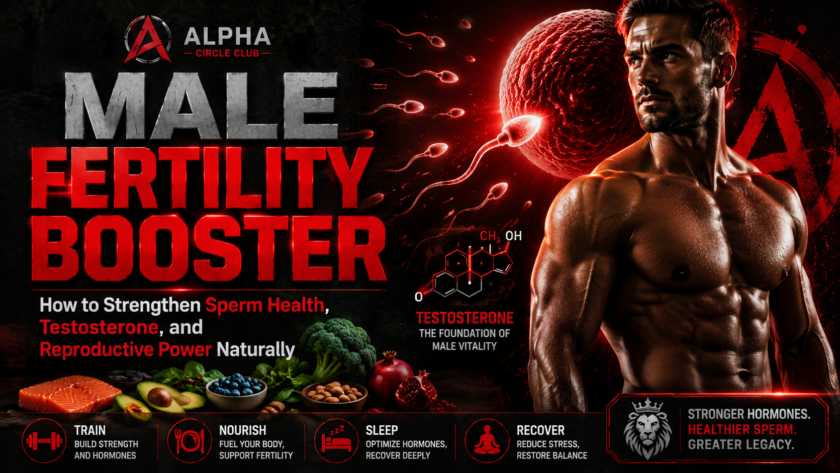
A male fertility booster is not just a pill, powder, or quick supplement stack.
That needs to be clear from the start.
Male fertility is deeper than one product. It is connected to sperm count, sperm movement, sperm shape, testosterone, oxidative stress, sleep, nutrition, body weight, training, stress, alcohol, smoking, heat exposure, and overall health.
For men, fertility is not only about having children.
It is also a sign of deeper biological strength.
A man’s reproductive health can reflect how well his body is functioning. If his sleep is poor, his stress is high, his diet is weak, his body is inflamed, his training is inconsistent, and his lifestyle is full of bad habits, his fertility may suffer.
That is why a true male fertility booster should be understood as a lifestyle standard first.
At Alpha Circle Club, the message is about men raising their standards physically, mentally, emotionally, and spiritually. Fertility belongs in that conversation because a man who cares about strength should also care about his health, hormones, future family, and reproductive power.
A disciplined man does not wait until there is a problem before he starts respecting his body.
He builds the foundation now.
What Does Male Fertility Really Mean?
Male fertility is the ability of a man to contribute to conception.
That may sound simple, but the process is complex. Fertility depends on sperm production, sperm quality, hormone signals, sexual function, reproductive anatomy, lifestyle, and the health of both partners.
When people talk about male fertility, they often focus only on sperm count. Sperm count matters, but it is not the full picture.
A fertility assessment may look at several sperm factors, including:
- Sperm count: how many sperm are present
- Sperm motility: how well sperm move
- Sperm morphology: the shape and structure of sperm
- Semen volume: how much fluid is produced
- Sperm DNA health: whether sperm DNA is damaged
- Hormone health: including testosterone and other reproductive hormones
This is why a male fertility booster should not be treated like a simple shortcut. A man must think about sperm quality, not only sperm quantity.
If a couple has been trying to conceive without success, proper medical evaluation matters. A man should not assume fertility is only a woman’s issue. Male factors can play a major role, and responsible testing is part of masculine ownership.

Fertility Is a Sign of Deeper Health
Male fertility is not separate from the rest of the body.
The body does not create healthy sperm in isolation. Sperm production is affected by overall health, hormone balance, nutrition, sleep, stress, inflammation, body temperature, and lifestyle habits.
That is why a man should see fertility as part of his whole health.
A man with poor energy, poor sleep, high stress, excess alcohol, smoking, poor diet, and low physical fitness may also be creating a weaker internal environment for sperm production.
This does not mean every fertility issue is caused by lifestyle. Some men have medical, genetic, hormonal, anatomical, or unexplained causes that require specialist care.
But lifestyle still matters.
A strong male fertility booster approach starts with the areas a man can control.
He cannot control everything.
But he can control more than he thinks.
Testosterone and Male Fertility
Testosterone is important for male reproductive health, but men need to understand it correctly.
Testosterone supports libido, muscle, mood, energy, and male sexual function. It also plays a role in sperm production, but sperm production depends on a wider hormonal system, including signals from the brain to the testes.
This is why men must be careful with hormone decisions.
Some men think more testosterone always means better fertility. That is not always true. In fact, external testosterone use or testosterone replacement therapy can reduce sperm production because it can suppress the body’s own reproductive hormone signals.
That is why men who want children should never make hormone decisions casually.
Alpha Circle Club has already covered this important topic in Testosterone and Fertility: What Men Need to Know Before Using TRT, and it matters here too.
A male fertility booster should support reproductive health, not damage it through reckless shortcuts.
A strong man thinks long term.
Sperm Count, Motility, and Morphology
Sperm health is usually discussed in three key areas: count, motility, and morphology.
Sperm count is the number of sperm present. Motility is the ability of sperm to move properly. Morphology refers to sperm shape and structure.
All three can matter.
A man may have enough sperm, but if they do not move well, fertility can still be affected. Another man may have movement but poor sperm shape. Another may have multiple factors at the same time.
This is why testing is important.
Guessing is not discipline.
If a man is serious about fertility, he should understand his numbers through semen analysis instead of relying only on symptoms or assumptions.
For men who want to learn more about sperm movement, Alpha Circle Club’s guide on sperm motility connects directly with this topic.
A real male fertility booster strategy should support sperm production, sperm movement, and sperm protection.
Oxidative Stress and Sperm Health
Oxidative stress is one of the major topics in male fertility.
Oxidative stress happens when there is an imbalance between free radicals and the body’s antioxidant defences. In simple terms, too much oxidative pressure can damage cells, including sperm cells.
Sperm are sensitive.
They can be affected by inflammation, toxins, smoking, poor diet, obesity, heat, infections, stress, and environmental exposure.
This is one reason antioxidants are often discussed in male fertility. Nutrients such as vitamin C, vitamin E, selenium, zinc, CoQ10, omega-3, and folate are often included in fertility support conversations because they may help support sperm protection and overall reproductive health.
But men must stay realistic.
Antioxidants are not magic.
They work best when combined with better sleep, training, nutrition, stress control, reduced alcohol, no smoking, and proper medical evaluation where needed.
A male fertility booster should not be a cover for weak habits.
It should support a stronger lifestyle.
Nutrition: Eat Like Fertility Matters
A man’s diet can support or weaken his reproductive health.
Sperm production requires nutrients. The body needs protein, healthy fats, vitamins, minerals, antioxidants, and enough total energy to function properly.
A man eating mostly processed food, sugar, fried meals, low-quality fats, and very little nutrient-rich food may not be giving his body the best foundation.
A fertility-supportive diet should focus on whole foods and consistency.
Strong choices include:
- Eggs, fish, lean meats, poultry, or other quality protein sources
- Fruits and vegetables for antioxidants and micronutrients
- Nuts and seeds for minerals and healthy fats
- Olive oil, avocado, and fatty fish for healthy fats
- Whole grains, potatoes, oats, and rice for quality carbohydrates
- Water and electrolytes for hydration
- Less ultra-processed food
- Less alcohol and sugar-heavy eating
This is not about perfection.
It is about direction.
A man who wants a natural male fertility booster should first ask whether his daily food choices support the body he wants.
Zinc for Male Fertility
Zinc is one of the most important minerals in male reproductive health.
It supports immune function, cell growth, wound healing, and reproductive function. Zinc is also involved in sperm development and testosterone health.
Men with low zinc intake may benefit from improving zinc through food or supplementation where needed.
Food sources include oysters, beef, lamb, poultry, pumpkin seeds, beans, nuts, and some whole grains.
However, more is not always better.
Taking too much zinc can create problems, including copper imbalance. A responsible man does not blindly take high doses because the internet told him to.
Zinc can be part of a male fertility booster plan, but it should be used intelligently.
The goal is to correct gaps, not create new problems.
Selenium for Sperm Health
Selenium is another nutrient often connected with male fertility.
It plays a role in antioxidant defence and normal reproductive function. Selenium is found in foods such as Brazil nuts, fish, eggs, meat, and whole grains, depending on soil and food sources.
Selenium may support sperm health, especially when intake is low, but it must be handled carefully.
Too much selenium can be harmful.
This is why food-first nutrition and sensible supplementation matter. A man should not treat selenium like a more-is-better fertility hack.
A true male fertility booster approach respects balance.
The body needs enough, not excess.
Folate, Vitamin C, and Vitamin E
Folate, vitamin C, and vitamin E are commonly discussed in fertility support because of their roles in cell function and antioxidant protection.
Vitamin C is found in citrus fruits, berries, peppers, kiwi, and many vegetables. Vitamin E is found in nuts, seeds, and plant oils. Folate is found in leafy greens, beans, lentils, asparagus, and fortified foods.
These nutrients may support a healthier internal environment for sperm.
But again, they are not magic.
A man cannot eat badly all week, sleep poorly, smoke, drink heavily, and then expect vitamins to reverse everything.
That is not discipline.
The male fertility booster mindset means using nutrients as part of a full health system.
Food first.
Supplements when needed.
Testing and professional guidance when there are real concerns.
CoQ10 and Omega-3
CoQ10 is often discussed in male fertility because it plays a role in cellular energy and antioxidant defence. Sperm movement requires energy, so CoQ10 is commonly included in fertility supplement formulas.
Omega-3 fatty acids are also important for general health, inflammation balance, cell membranes, and overall wellbeing. Fatty fish such as salmon, sardines, mackerel, and anchovies are good sources.
Some men may benefit from CoQ10 or omega-3 supplementation, especially if their diet is low or their health professional recommends it.
But these should not be treated like guaranteed fertility fixes.
A stronger approach is to combine nutrient support with better training, sleep, stress control, body weight management, and reduced toxin exposure.
A male fertility booster is strongest when the whole lifestyle is moving in the right direction.
Vitamin D and Fertility
Vitamin D supports bone health, immune function, muscle function, and overall wellbeing. Many men spend too much time indoors and may have low vitamin D, depending on sun exposure, diet, skin tone, and location.
Some research has connected vitamin D status with male reproductive health, but the most responsible approach is simple: if a man may be low, testing can help.
Sunlight, outdoor walks, fatty fish, eggs, and responsible supplementation can help support vitamin D status.
A man should not blindly take high doses without understanding his levels.
Vitamin D can be part of a male fertility booster strategy when it supports a real need, but it is still one part of a bigger foundation.
Sleep and Sperm Production
Sleep is one of the most underrated fertility habits.
A man who sleeps poorly may struggle with energy, testosterone rhythm, mood, libido, appetite, recovery, and discipline.
Sleep is when the body repairs and regulates itself. If a man keeps sacrificing sleep, he weakens more than his morning energy. He may weaken his overall performance and reproductive health too.
A stronger sleep standard includes:
- Sleeping and waking at consistent times
- Reducing screens before bed
- Avoiding late caffeine
- Keeping the room dark and cool
- Preparing for the next day before bedtime
- Praying or reading instead of scrolling
- Protecting seven to nine hours where possible
Sleep is not soft.
Sleep is biological discipline.
A man who wants a natural male fertility booster should protect sleep like it matters.
Because it does.

Exercise, Body Weight, and Fertility
Exercise supports male health, but balance matters.
Regular movement, resistance training, walking, and better fitness can support body composition, insulin sensitivity, mood, confidence, testosterone health, and overall wellbeing.
A man carrying excess body fat may benefit from improving body composition because healthy weight is connected with better sperm health and hormone balance.
But extremes can also backfire.
Overtraining, crash dieting, severe calorie restriction, and poor recovery can increase stress and weaken the body.
The alpha standard is not abuse.
It is disciplined training.
A good starting point may include:
- Strength training three to five times per week
- Daily walking or light movement
- Mobility work when needed
- Enough food to support recovery
- Rest days when appropriate
- Tracking progress without obsession
A man does not need to destroy himself to improve fertility.
He needs consistency.
Alcohol, Smoking, and Fertility
Alcohol and smoking can weaken male fertility.
Smoking is connected with poorer sperm health and increased oxidative stress. Excessive alcohol can affect hormones, sleep, liver health, body composition, and sexual function.
A man who wants children should be honest about these habits.
He should not ask for the best male fertility booster while ignoring the habits that are damaging his fertility in the first place.
This is where discipline becomes real.
If smoking is a problem, quitting support may be needed.
If alcohol is affecting sleep, training, relationships, or self-control, it must be reduced or removed.
A stronger man does not protect habits that weaken his future.
He corrects them.
Heat Exposure and Sperm Health
The testes are outside the body for a reason.
Sperm production is sensitive to heat.
Frequent heat exposure may affect sperm production or sperm quality in some men. This can include regular hot tubs, saunas, very hot baths, tight underwear, laptops on the lap, or work environments with high heat.
This does not mean a man must live in fear.
It means he should be sensible.
If a man is actively trying to improve fertility, reducing repeated heat exposure can be a practical step.
Simple changes may include looser underwear, avoiding laptops directly on the lap, reducing hot tub use, and being mindful of heat-heavy routines.
A natural male fertility booster plan should include temperature awareness because sperm health is sensitive.
Stress and Male Fertility
Stress affects more than the mind.
Chronic stress can affect sleep, libido, hormones, appetite, training, inflammation, and emotional control. It can also push men into bad habits like drinking, smoking, overeating, scrolling, poor sleep, and skipping training.
That is why stress management matters for fertility.
A man does not need to pretend pressure does not exist. He needs to respond with discipline.
Useful stress-control habits include:
- Prayer and reflection
- Walking outside
- Resistance training
- Better planning
- Deep breathing
- Journaling
- Reducing digital noise
- Speaking with someone wise when needed
- Getting professional support when stress becomes too heavy
The male fertility booster mindset is not only physical.
It is mental and spiritual too.
A man’s body responds to the life he is living.
When to Get Tested
A man should not wait too long to investigate fertility concerns.
If a couple has been trying to conceive without success, medical evaluation may be needed. The timing can depend on age, health history, and circumstances, but men should not assume testing is only for women.
A semen analysis is one of the key tests for male fertility. It can show sperm count, motility, morphology, semen volume, and other details depending on the lab.
A doctor may also check hormones, medical history, medications, infections, varicocele, lifestyle factors, and other possible causes.
Testing is not weakness.
Testing is information.
A disciplined man uses information to make better decisions.
The Male Fertility Booster Lifestyle
A real male fertility booster lifestyle brings the main foundations together.
| Area | Fertility-Supporting Standard |
| Nutrition | Whole foods, protein, healthy fats, antioxidants, minerals |
| Sleep | Consistent, high-quality rest and recovery |
| Training | Strength work, walking, movement, and recovery |
| Body weight | Healthy body composition without crash dieting |
| Stress | Prayer, planning, walking, and emotional control |
| Toxins | Avoid smoking, reduce alcohol, limit harmful exposures |
| Heat | Avoid repeated overheating of the testes |
| Testing | Use semen analysis and medical guidance when needed |
| Supplements | Use nutrients to support gaps, not replace discipline |
This is the stronger approach.
Not one magic pill.
Not one miracle herb.
Not one desperate shortcut.
A system.
How This Connects to Alpha Fertility Circle
Male fertility is not a weak topic.
It is a masculine health topic.
A man who wants to become stronger should care about his reproductive health, especially if he wants a family now or in the future.
That is why this topic connects naturally to Alpha Fertility Circle.
Men need serious education around sperm health, testosterone, fertility testing, lifestyle, nutrition, stress, and long-term reproductive responsibility. Too many men avoid the topic until pressure appears.
A stronger man takes ownership earlier.
He learns.
He tests when needed.
He corrects weak habits.
He protects his future.
He does not treat fertility as something outside his responsibility.
A male fertility booster is not only about conception.
It is about becoming a healthier, more disciplined, more aware man.

Final Thoughts
A male fertility booster is not just a supplement.
It is a full standard of living.
A man who wants stronger sperm health should look at his whole life: sleep, nutrition, training, stress, alcohol, smoking, heat exposure, body weight, testosterone, oxidative stress, and medical testing.
Supplements like zinc, selenium, folate, vitamin C, vitamin E, CoQ10, omega-3, and vitamin D may support some men, especially when there are gaps or deficiencies.
But supplements cannot replace discipline.
They cannot replace sleep.
They cannot replace better food.
They cannot replace quitting smoking.
They cannot replace reducing alcohol.
They cannot replace stress control.
They cannot replace semen analysis when testing is needed.
The stronger path is ownership.
Eat better.
Sleep better.
Train consistently.
Pray daily.
Reduce stress.
Protect your body from heat and toxins.
Support nutrients intelligently.
Get tested when needed.
Speak with qualified professionals when there are concerns.
Male fertility is not just about having children.
It is a sign of deeper biological health.
A man with an alpha mindset does not ignore that.
He builds it.
FAQs
What is a male fertility booster?
A male fertility booster can refer to habits, nutrients, supplements, and lifestyle changes that support sperm health, testosterone, and reproductive function. The strongest approach includes sleep, nutrition, training, stress control, avoiding smoking, reducing alcohol, and proper testing.
How can men improve sperm health naturally?
Men can support sperm health naturally by eating a nutrient-rich diet, sleeping well, exercising regularly, maintaining a healthy weight, reducing stress, avoiding smoking, limiting alcohol, reducing heat exposure, and correcting nutrient deficiencies where needed.
What nutrients support male fertility?
Common fertility-supporting nutrients include zinc, selenium, folate, vitamin C, vitamin E, CoQ10, omega-3, and vitamin D. These may support sperm health, especially when the diet is weak or deficiencies exist.
Does testosterone improve male fertility?
Testosterone is important for male health, but more testosterone does not always mean better fertility. External testosterone or TRT can reduce sperm production, so men who want children should speak with a qualified professional before using hormone treatment.
Can stress affect male fertility?
Yes, chronic stress can affect sleep, hormones, libido, training, eating habits, and overall reproductive health. Stress can also push men toward habits that weaken fertility, such as drinking, smoking, poor sleep, and poor diet.
Does heat exposure affect sperm count?
Repeated heat exposure may affect sperm production or sperm quality in some men. Men trying to support fertility may benefit from reducing hot tubs, very hot baths, tight underwear, and direct laptop heat on the lap.
When should a man get fertility testing?
A man should consider fertility testing if a couple has been trying to conceive without success or if there are known concerns such as low libido, testicular issues, hormone problems, prior infections, or abnormal semen results. A semen analysis is usually an important first step.



No spam. Unsubscribe anytime.