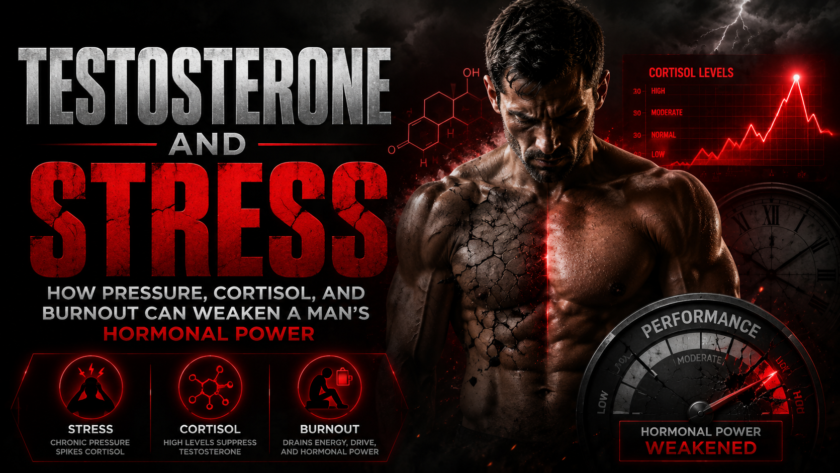
Testosterone and stress are connected more deeply than many men realise.
Stress is not just “feeling busy.”
It is not just having a hard week at work or feeling mentally overloaded for a few days. When stress becomes constant, it can start affecting the way a man thinks, sleeps, trains, eats, leads, works, and performs.
For men, chronic stress can become more than an emotional problem.
It can become a biological problem.
A man may start feeling tired, unfocused, irritated, unmotivated, less confident, and less disciplined. His sleep may get worse. His training may suffer. His libido may drop. His body may feel heavier. His mind may feel weaker. He may still look fine from the outside, but inside, he knows something is off.
That is why testosterone and stress should be taken seriously.
A strong man does not ignore pressure until it breaks him. He learns how stress affects his body, his hormones, his mind, and his discipline. Then he takes responsibility for rebuilding control.
At Alpha Circle Club, the message is about men raising their standards physically, mentally, spiritually, and emotionally. Managing stress is part of that standard because a man cannot build strength while constantly living in survival mode.
What Is the Link Between Testosterone and Stress?
The connection between testosterone and stress often comes down to how the body responds to pressure.
When a man is under stress, the body releases stress hormones such as cortisol. Cortisol is not always bad. In the right amount, it helps the body respond to pressure, wake up, perform, and survive difficult situations.
The problem begins when stress does not switch off.
If a man is constantly under pressure, constantly overthinking, constantly sleeping poorly, constantly reacting emotionally, and constantly living in a tense state, the body may stay in a stressed pattern for too long.
That can affect energy, recovery, sleep, mood, training performance, appetite, focus, and sexual health.
This is why testosterone and stress must be looked at as part of the bigger picture. A man’s hormone health is not separate from the way he lives. His sleep, diet, body fat, training, stress level, alcohol use, spiritual life, and discipline all matter.
A man cannot live in chaos every day and expect his body to perform at its best.
Cortisol: The Stress Hormone Men Need to Understand
Cortisol is often called the stress hormone.
That does not mean cortisol is evil. A man needs cortisol to function. It helps with alertness, energy, metabolism, and the body’s response to challenges.
But when cortisol stays high for too long, it can become a problem.
The body was not designed to stay in fight-or-flight mode every hour of every day. A man may be sitting at a desk, but his body may be acting like it is under attack because of deadlines, money pressure, relationship stress, poor sleep, emotional conflict, overthinking, and constant digital stimulation.
Over time, this can weaken the systems that support strength and performance.
This is where testosterone and stress become important. When stress is constant, the body may prioritise survival over reproduction, recovery, muscle growth, libido, and long-term vitality.
A man may begin to feel like he is losing his edge.
He may not immediately know why.

Signs Stress May Be Weakening a Man
Stress does not always show up as panic or emotional breakdown.
Sometimes it shows up quietly.
A man may keep working, keep showing up, keep pushing, and keep pretending he is fine. But his body and mind may be sending warning signs.
Common signs that stress may be affecting a man include:
- Low energy even after sleeping
- Poor focus and mental fog
- Irritability or emotional reactions
- Lower libido
- Poor sleep quality
- Reduced motivation to train
- More cravings for sugar or junk food
- Increased belly fat
- Lower confidence
- Feeling burned out or disconnected
- Difficulty recovering from workouts
- Loss of drive and discipline
These signs do not automatically mean a man has low testosterone. They can have many causes. But they are signs that a man should pay attention to his lifestyle, stress levels, sleep, and overall health.
A man with discipline does not ignore the warning lights.
He investigates them.
Testosterone and Stress: What Happens When Pressure Becomes Chronic?
Short-term pressure can sometimes sharpen a man.
A difficult workout, a hard conversation, a business challenge, or a serious responsibility can push a man to grow. Not all stress is bad.
But chronic stress is different.
Chronic stress is the kind that follows a man everywhere. It affects his mornings, his evenings, his sleep, his thoughts, his relationships, and his body.
When pressure becomes chronic, a man may start living in a constant state of tension. His nervous system does not relax properly. His sleep becomes lighter. His training becomes less effective. His mood becomes unstable. His eating becomes emotional. His recovery becomes weaker.
This can create a cycle.
Stress affects sleep.
Poor sleep affects testosterone health.
Lower energy affects training.
Poor training affects confidence.
Low confidence creates more stress.
That is why testosterone and stress cannot be separated from daily discipline.
A man has to interrupt the cycle.
Stress Can Attack Sleep First
Sleep is one of the first areas stress attacks.
A stressed man may struggle to fall asleep because his mind is still racing. He may wake up during the night. He may wake up early with pressure already sitting on his chest. He may sleep for enough hours but still feel tired because the quality of sleep is poor.
This matters because sleep is deeply connected to male hormone health.
A man who does not sleep well may struggle with energy, recovery, libido, mood, and focus. He may also find it harder to train, eat with discipline, and control emotions.
That is why testosterone and stress often become a sleep issue too.
A man cannot keep sacrificing sleep and expect peak performance.
Sleep is not weakness.
Recovery is not laziness.
A disciplined man protects sleep because he understands that his body repairs, restores, and regulates itself during rest.
Burnout Can Make a Man Feel Like He Is Losing Himself
Burnout is not just being tired.
Burnout is what happens when pressure keeps taking more from a man than he is recovering.
A burned-out man may still function, but he does not feel strong. He may feel flat, disconnected, irritated, unmotivated, and mentally drained. He may stop enjoying things that used to matter. He may avoid training, eat poorly, scroll more, and isolate himself.
This is dangerous because burnout can make weakness feel normal.
A man may start saying, “This is just life.”
No.
That may be a sign that his body, mind, and spirit need correction.
The connection between testosterone and stress becomes serious here because burnout can affect many areas of masculine performance: energy, libido, discipline, confidence, mood, physical strength, and focus.
A man must not wait until he crashes before he takes action.
Bad Habits Under Stress Make the Problem Worse
Stress often exposes a man’s habits.
When pressure rises, some men train harder, pray more, eat cleaner, sleep better, and become more focused.
Other men collapse into weak habits.
They overeat.
They drink more.
They scroll for hours.
They watch explicit content.
They skip training.
They sleep late.
They avoid responsibility.
They react emotionally.
They isolate themselves.
They complain instead of correcting the problem.
This is why testosterone and stress are also connected to discipline. Stress itself is not always the only issue. The habits a man chooses under stress can either protect him or weaken him further.
A strong man does not use stress as permission to destroy himself.
He uses stress as a signal to tighten his standards.
The Role of Training in Managing Testosterone and Stress
Training is one of the strongest tools a man can use to rebuild control.
Resistance training, walking, conditioning, and regular movement can help a man manage stress, improve confidence, support better sleep, and build physical strength.
Training also gives a man a place to release pressure in a disciplined way.
Instead of carrying anger, frustration, and stress into poor habits, he puts that energy into movement. He lifts. He walks. He runs. He sweats. He forces the body to become stronger instead of weaker.
This is not about training recklessly.
A stressed man should not punish his body with extreme workouts while ignoring sleep and recovery. That can make things worse. The goal is structured training, not chaos.
A balanced approach may include:
- Resistance training three to five times per week
- Daily walking or light movement
- Mobility work when needed
- Rest days for recovery
- Tracking progress instead of training randomly
- Avoiding overtraining when sleep and recovery are poor
The alpha mindset does not abuse the body.
It disciplines the body.
Nutrition Matters More Under Stress
When stress rises, many men eat worse.
They skip meals, rely on caffeine, eat late at night, choose processed foods, overeat sugar, or use food as comfort. This may feel good for a moment, but it usually makes energy, mood, body composition, and discipline worse over time.
A man who cares about testosterone and stress must take nutrition seriously.
Food is not just about appearance. Food affects energy, recovery, mood, training performance, and long-term health.
A stronger nutrition foundation includes:
- Enough protein
- Healthy fats
- Whole foods
- Fruits and vegetables
- Quality carbohydrates
- Water and electrolytes
- Less alcohol
- Less ultra-processed food
- Fewer late-night junk meals
A man does not need to be perfect.
But he does need standards.
If stress keeps pushing him into poor eating habits, he must stop acting surprised when his body feels weak.

Prayer and Spiritual Discipline Help a Man Regain Control
A man is not only a body.
He is also mind and spirit.
Stress does not only affect muscles, sleep, and hormones. It can attack a man’s faith, patience, gratitude, emotional control, and sense of purpose.
That is why prayer matters.
Prayer gives a man space to slow down, reflect, submit his fear, and remember that he is not meant to carry every burden through ego alone. It helps him stop reacting and start responding. It helps him become grounded instead of scattered.
For men building an alpha mindset, prayer is not weakness.
It is alignment.
A man who prays consistently becomes more aware of his own thoughts, habits, anger, pride, lust, fear, and excuses. That awareness helps him correct himself before life corrects him harder.
When discussing testosterone and stress, this spiritual side should not be ignored. A man under constant pressure needs more than gym discipline. He needs internal discipline too.
Reduce the Noise That Keeps Stress Alive
Modern men are often overstimulated.
Phones, messages, social media, news, comparison, work pressure, entertainment, and digital temptation keep the mind constantly active. Many men never experience real quiet.
That matters.
A man cannot recover properly if his mind is always being attacked by noise.
If he wants to improve testosterone and stress, he must create boundaries around his attention. His attention is not unlimited. His nervous system needs space to calm down.
Practical ways to reduce noise include:
- No phone for the first hour of the morning
- Less screen time before bed
- Scheduled work blocks
- More quiet walks
- Less negative content
- Fewer pointless arguments online
- More reading and prayer
- Time away from constant notifications
A man who protects his attention protects his energy.
A man who protects his energy protects his discipline.
When Should a Man Test His Testosterone?
A man should not guess his testosterone level based only on mood, confidence, or social media content.
Symptoms matter, but blood testing matters too.
If a man has ongoing symptoms such as low libido, persistent fatigue, erectile issues, low mood, reduced strength, poor recovery, or other concerns, he should speak with a qualified health professional and ask about proper testing.
Testosterone is usually checked with blood tests, often in the morning when levels are typically higher. A proper diagnosis should not be based on one random number or online assumptions.
This is important because testosterone and stress can overlap with many other issues.
Poor sleep can cause symptoms.
Depression can cause symptoms.
Thyroid problems can cause symptoms.
Nutrient deficiencies can cause symptoms.
Overtraining can cause symptoms.
Relationship stress can cause symptoms.
Work burnout can cause symptoms.
A disciplined man does not panic.
He investigates properly.
How Men Can Rebuild Control
If stress has been weakening a man, the answer is not to complain or surrender.
The answer is to rebuild control one standard at a time.
A man should not try to fix everything in one day. He should create a simple structure and follow it consistently.
| Area | Stronger Standard |
| Sleep | Keep a consistent bedtime and reduce screens before bed |
| Training | Lift weights, walk daily, and avoid reckless overtraining |
| Nutrition | Eat enough protein, whole foods, and healthy fats |
| Stress | Use prayer, planning, quiet walks, and controlled breathing |
| Work | Prioritise key tasks instead of reacting all day |
| Mind | Reduce digital noise and consume better content |
| Health | Get proper testing if symptoms continue |
| Discipline | Keep promises to yourself daily |
This is how a man starts taking his power back.
Not through panic.
Not through shortcuts.
Not through excuses.
Through standards.
The Alpha Way to Handle Stress
The alpha way to handle stress is not to pretend stress does not exist.
It is to face it with discipline.
A man with an alpha mindset does not collapse under every pressure. He does not use stress as an excuse to abandon his standards. He does not let burnout become his identity. He does not ignore his health until his body forces him to listen.
He becomes proactive.
He trains.
He prays.
He sleeps.
He eats better.
He plans.
He reduces distractions.
He speaks to professionals when needed.
He takes responsibility for what he can control.
For men who want consistent mindset and discipline content, The Alpha Reports can support the mental side of this process. A man must be intentional about what he feeds his mind,
especially when life is already heavy.

Final Thoughts
Testosterone and stress are not separate from a man’s daily life.
A man’s body responds to how he lives.
If he is constantly stressed, sleeping poorly, eating carelessly, skipping training, overthinking, drinking too much, living in digital noise, and ignoring recovery, he should not be surprised when his energy and discipline suffer.
This does not mean every tired man has low testosterone.
It means a man should take his lifestyle seriously.
Stress can weaken a man when he refuses to manage it. But pressure can also sharpen a man when he responds with discipline.
That is the difference.
A weak mindset complains about stress.
An alpha mindset asks, “What must I correct?”
The answer often starts with the basics.
Sleep better.
Train consistently.
Eat with discipline.
Pray daily.
Reduce distractions.
Control emotional reactions.
Recover properly.
Get tested if symptoms continue.
Speak with a qualified professional when needed.
A man does not become stronger by ignoring the pressure.
He becomes stronger by taking ownership of how he responds to it.
That is how he protects his energy, his focus, his discipline, and his hormonal power.
FAQs
How are testosterone and stress connected?
Testosterone and stress are connected because chronic stress can affect sleep, energy, mood, recovery, training, libido, and overall hormone health. Stress hormones such as cortisol are useful in the right amount, but long-term pressure can create problems when the body does not recover properly.
Can stress lower testosterone?
Chronic stress may contribute to lower testosterone or symptoms that feel similar to low testosterone, especially when it damages sleep, training, nutrition, recovery, and body composition. However, a man should not guess. Proper blood testing and professional advice are important.
What are signs stress is affecting a man’s hormones?
Possible signs include low energy, poor sleep, low libido, weaker motivation, irritability, poor workout recovery, belly fat gain, mental fog, and reduced confidence. These symptoms can have many causes, so they should be taken seriously but not self-diagnosed.
Does cortisol affect testosterone?
Cortisol is the body’s main stress hormone. Short-term cortisol is normal and necessary, but chronically high stress may interfere with recovery, sleep, and hormone balance. This is one reason men should manage stress through discipline, sleep, training, nutrition, and recovery.
How can men reduce stress naturally?
Men can reduce stress naturally by training consistently, walking more, sleeping better, praying, eating whole foods, reducing alcohol, limiting screen time, planning the day, and creating stronger boundaries around work and distractions.
Should I test my testosterone if I feel burned out?
If symptoms continue, testing can be useful. A man should speak with a qualified health professional, especially if he has ongoing low libido, fatigue, erectile issues, low mood, poor recovery, or other concerning symptoms.
Can better sleep improve testosterone and stress?
Better sleep can support recovery, mood, focus, energy, and hormone health. Since poor sleep and stress often feed each other, improving sleep is one of the most important steps for men who want better control over stress and performance.

No spam. Unsubscribe anytime.