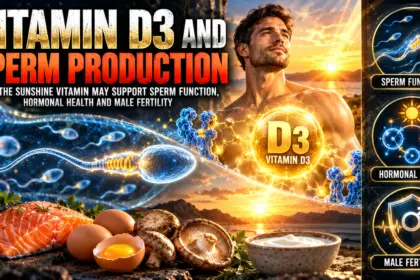
Testosterone and fertility are closely connected—but not always in the way men expect.
Testosterone is often presented as the ultimate symbol of male strength. More muscle. Greater energy. A stronger sex drive. Sharper confidence. Better performance.
However, there is a side of testosterone replacement therapy that every man should understand before using his first injection, gel, patch, or prescription:
The treatment that makes you feel stronger today could weaken your ability to become a father tomorrow.
When discussing testosterone and fertility, many men assume that higher testosterone levels must automatically improve reproductive health. In reality, external testosterone can have the opposite effect.
A man may have more testosterone circulating in his bloodstream, feel stronger in the gym, and experience an improved libido—while the hormonal signals responsible for producing sperm are being suppressed inside his body.
That is the hidden conflict many men are never properly warned about.
TRT may be a legitimate medical treatment for men with clinically confirmed testosterone deficiency, but it should never be treated as a casual performance upgrade. Testosterone therapy can affect sperm production, testicular function, fertility, and future family plans.
Before beginning TRT, every man should ask a question that is bigger than muscle, energy, appearance, or performance:
“Could I want biological children now—or at any point in the future?”
This guide explores the connection between testosterone and fertility, explains why external testosterone can reduce sperm production, outlines the tests men should consider before treatment, and examines fertility-conscious options to discuss with a qualified medical professional.
Because real masculine strength is not blindly chasing a higher number on a blood test.
It is having the discipline to improve the man you are today without unknowingly sacrificing the future you may want tomorrow.
Testosterone is important for male health, but external testosterone such as TRT can reduce LH and FSH, suppress sperm production, and lower male fertility. Men who want children should speak with a doctor and consider semen analysis before starting TRT.
Most men hear the word testosterone and think of strength, muscle, libido, confidence, aggression, performance, and masculine energy.
That connection is understandable.
Testosterone matters for male health.
But when it comes to fatherhood, sperm production, and long-term reproductive strength, the conversation is more careful.
Higher testosterone does not always mean better fertility.
In fact, taking testosterone from outside the body can reduce sperm production and may make it harder to get a partner pregnant.
That surprises many men.
Some men start testosterone therapy because they feel tired, weak, low in libido, or less driven. Others use anabolic steroids for muscle and performance.
They may feel stronger on the outside while their sperm production is being suppressed on the inside.
That is why men need to understand testosterone and fertility before using hormones.
At Alpha Circle Club, the message is built around discipline, standards, and masculine responsibility. Hormone health fits directly into that because a man should not gamble with his future for short-term confidence or appearance.
If fatherhood matters now or may matter later, this guide is essential.

Why Testosterone Matters for Men
Testosterone is the main male sex hormone.
It plays a role in libido, erections, sperm production, muscle mass, bone density, mood, energy, red blood cell production, and overall male function.
Healthy testosterone levels matter.
A man with true low testosterone may experience symptoms that affect his quality of life.
These may include reduced libido, fatigue, low mood, weaker erections, loss of muscle, increased body fat, poor motivation, and lower confidence.
But testosterone should not be treated casually.
It is not just a “more is better” hormone.
The male body works through a system.
When you change one part of that system, other parts respond.
That is where testosterone and fertility become complicated.
Testosterone Is Not the Same as Fertility
Many men assume that if testosterone is high, fertility must be high.
That is not always true.
Fertility depends on sperm production, sperm count, sperm movement, sperm shape, semen volume, hormone signaling, reproductive anatomy, and sperm delivery.
Testosterone is only one part of the picture.
A man may have normal testosterone but poor sperm quality.
A man may have low testosterone and still have sperm.
A man may use external testosterone and feel stronger while his sperm count drops.
That is why male fertility cannot be judged by energy, libido, muscle, or sexual performance alone.
A man who wants the truth needs testing.
Not ego.
How Sperm Production Works
Sperm production happens inside the testicles.
The process depends on communication between the brain and the testicles.
The hypothalamus in the brain releases signals that tell the pituitary gland to produce hormones.
The pituitary releases LH and FSH.
LH helps stimulate the testicles to produce testosterone.
FSH helps support sperm production.
The testicles then produce sperm through a process called spermatogenesis.
This process takes time.
That is why changes in lifestyle, hormones, illness, or medications may take weeks or months to show up in semen results.
For fertility, the important point is simple.
The body needs the right internal hormone signals to produce sperm.
External testosterone can disrupt those signals.

The Male Fertility Hormone System
| Hormone or Signal | Main Role | Why It Matters for Fertility |
| GnRH | Signal from the brain to the pituitary gland | Starts the hormone chain needed for testicular function |
| LH | Stimulates testosterone production in the testicles | Supports internal testosterone production |
| FSH | Supports sperm production | Important for spermatogenesis |
| Testosterone | Supports male sexual function and sperm production inside the testicles | Needed locally in the testicles for fertility |
| Prolactin | Can affect sexual and hormone function when abnormal | High levels may disrupt reproductive health |
| Estradiol | A form of estrogen in men | Balance matters for hormones and symptoms |
| Inhibin B | Related to sperm production activity | Sometimes used in fertility evaluation |
Why External Testosterone Can Lower Sperm Count
This is the part every man needs to understand.
When a man takes testosterone from outside the body, the brain senses that testosterone levels are higher.
The brain may then reduce its own signaling to the testicles.
LH and FSH can drop.
When LH and FSH drop, the testicles receive less stimulation.
That can reduce sperm production.
In some men, sperm count can become very low.
In others, sperm may disappear from the semen completely while using testosterone or anabolic steroids.
This is why TRT and fertility can conflict.
A man may feel better in some ways while becoming less fertile.
That is the trade-off many men do not understand before starting treatment.
Testosterone Inside the Testicles vs Testosterone in the Blood
There is another important point.
Blood testosterone and testicular testosterone are not the same thing.
A blood test can show testosterone levels in circulation.
But sperm production depends heavily on the local hormone environment inside the testicles.
When external testosterone suppresses LH and FSH, the testicles may reduce their own internal testosterone production.
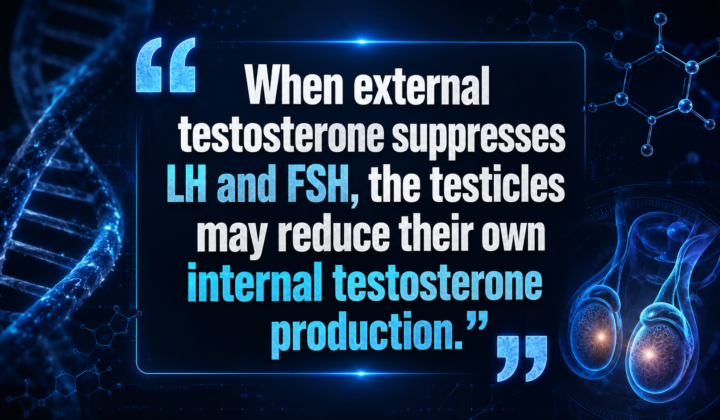
That local drop can hurt sperm production.
So a man may see a good testosterone number on a blood test while his fertility is getting worse.
This is why hormone numbers must be interpreted carefully.
Feeling masculine is not the same as being fertile.
TRT and Fertility: The Main Risk
TRT and fertility should always be discussed before treatment begins.
Testosterone replacement therapy can be appropriate for some men with medically confirmed hypogonadism.
But it is not usually a fertility-friendly option for men actively trying to conceive.
A man who wants children soon should tell his doctor before starting testosterone.
This is not a small detail.
It can change the treatment plan.
There may be other options for some men, depending on the cause of symptoms and test results.
But those options must be handled by a qualified clinician, ideally one familiar with male reproductive medicine.
A man should never self-prescribe hormones.
And he should never hide fertility goals from his doctor.
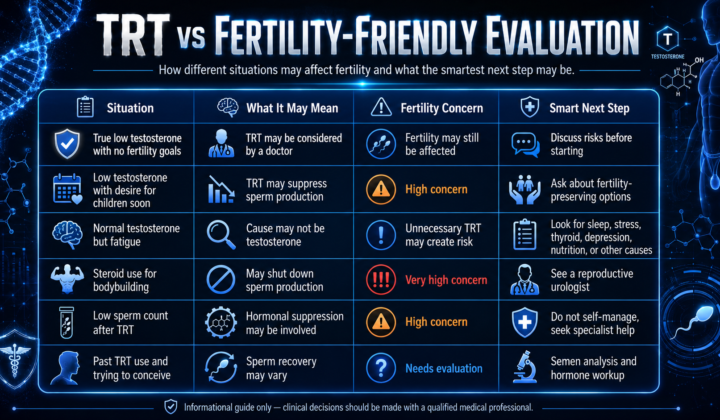
TRT vs Fertility-Friendly Evaluation
| Situation | What It May Mean | Fertility Concern | Smart Next Step |
| True low testosterone with no fertility goals | TRT may be considered by a doctor | Fertility may still be affected | Discuss risks before starting |
| Low testosterone with desire for children soon | TRT may suppress sperm production | High concern | Ask about fertility-preserving options |
| Normal testosterone but fatigue | Cause may not be testosterone | Unnecessary TRT may create risk | Look for sleep, stress, thyroid, depression, nutrition, or other causes |
| Steroid use for bodybuilding | May shut down sperm production | Very high concern | See a reproductive urologist |
| Low sperm count after TRT | Hormonal suppression may be involved | High concern | Do not self-manage, seek specialist help |
| Past TRT use and trying to conceive | Sperm recovery may vary | Needs evaluation | Semen analysis and hormone workup |
Low Testosterone and Fertility
Low testosterone can also affect fertility.
This is where the topic becomes more complex.
Natural testosterone production is important for normal male reproductive function.
Men with true hormone disorders may have reduced sperm production, low libido, sexual function issues, and other symptoms.
But the solution is not always simple testosterone replacement.
If a man wants children, doctors may evaluate why testosterone is low.
Is the problem in the testicles?
Is it in the pituitary or hypothalamus?
Is it related to obesity, sleep apnea, medications, stress, illness, or lifestyle?
Is there another hormone issue?
The cause matters.
Treatment should be based on diagnosis, not guesswork.

Symptoms of Low Testosterone
Some symptoms may suggest low testosterone, but symptoms alone are not enough for diagnosis.
Many problems can look like low testosterone.
Poor sleep, depression, anxiety, overtraining, obesity, thyroid disease, chronic stress, medication side effects, and poor nutrition can all cause similar symptoms.
That is why blood testing and proper medical evaluation matter.
A man should not diagnose himself from social media clips.
He should get facts.
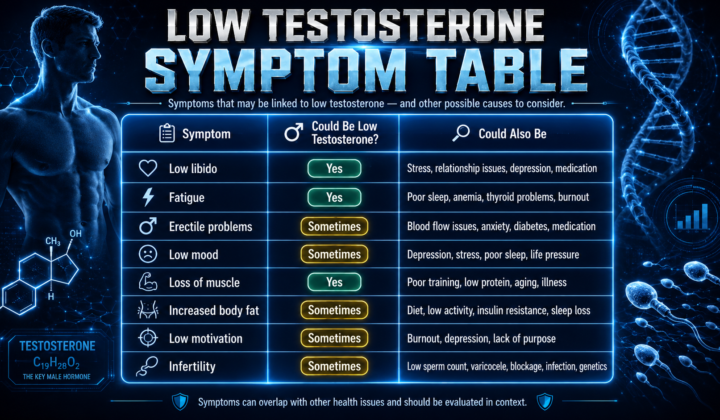
Low Testosterone Symptom Table
| Symptom | Could Be Low Testosterone? | Could Also Be |
| Low libido | Yes | Stress, relationship issues, depression, medication |
| Fatigue | Yes | Poor sleep, anemia, thyroid problems, burnout |
| Erectile problems | Sometimes | Blood flow issues, anxiety, diabetes, medication |
| Low mood | Sometimes | Depression, stress, poor sleep, life pressure |
| Loss of muscle | Yes | Poor training, low protein, aging, illness |
| Increased body fat | Sometimes | Diet, low activity, insulin resistance, sleep loss |
| Low motivation | Sometimes | Burnout, depression, lack of purpose |
| Infertility | Sometimes | Low sperm count, varicocele, blockage, infection, genetics |
Why Men Should Not Chase Testosterone Blindly
Modern male culture talks about testosterone constantly.
Some of that is useful.
Men should care about strength, energy, libido, discipline, and health.
But the online hormone conversation can also become reckless.
Men are told that every problem is low testosterone.
Tired?
Low testosterone.
Less motivated?
Low testosterone.
Not gaining muscle?
Low testosterone.
Low mood?
Low testosterone.
This is too simple.
A man may need sleep, better food, weight loss, sunlight, stress control, less alcohol, better training, or treatment for another medical issue.
If he jumps straight to testosterone without diagnosis, he may create fertility problems that were avoidable.
Masculinity is not taking shortcuts.
Masculinity is making informed decisions.
Testosterone Boosters and Fertility
Many over-the-counter “testosterone boosters” are marketed to men who want strength, libido, and performance.
Some are harmless but ineffective.
Some may contain ingredients that are poorly studied.
Some may carry contamination risks.
Some may encourage men to delay proper medical testing.
A man should be careful with any product promising dramatic hormone changes.
If a product truly changes hormones strongly, it may also carry real risks.
If it does not change hormones, the marketing may be exaggerating.
Either way, a man should not build his fertility plan around hype.
He should build it around sleep, nutrition, training, medical testing, and responsible care.
Anabolic Steroids and Male Fertility
Anabolic steroids are a major fertility risk.
Many men use them to build muscle, improve performance, or change their appearance.
They may look stronger while their reproductive system becomes weaker.
Steroids can suppress the hormone signals needed for sperm production.
This can lead to low sperm count or no sperm in the semen.
Recovery may take time.
Some men recover sperm production after stopping under medical guidance.
Some may take many months.
Some may not fully recover.
This is not fear-based messaging.
It is reality.
A man who wants children should think very carefully before using anything that can suppress fertility.
Can Fertility Return After Stopping Testosterone?
Fertility may return after stopping testosterone or anabolic steroids, but recovery is not guaranteed in the same way for every man.
Some men recover sperm production over time.
Others recover slowly.
Some may need medical treatment.
Some may remain subfertile.
Recovery can depend on age, duration of use, dose, baseline fertility, testicular function, health status, and whether other drugs were used.
This is why men should not stop or start hormones without a doctor.
If a man is on TRT and wants children, he should speak with a reproductive urologist or qualified clinician.
The goal is to protect fertility while handling hormone health properly.
Do Not Stop Medication Without Medical Guidance
This matters.
A man should not read one article and suddenly stop prescribed testosterone, psychiatric medication, blood pressure medication, or any other treatment.
Medication changes can have consequences.
The right move is to speak with a doctor, explain fertility goals, and ask for a fertility-aware plan.
A disciplined man does not act impulsively.
He acts strategically.
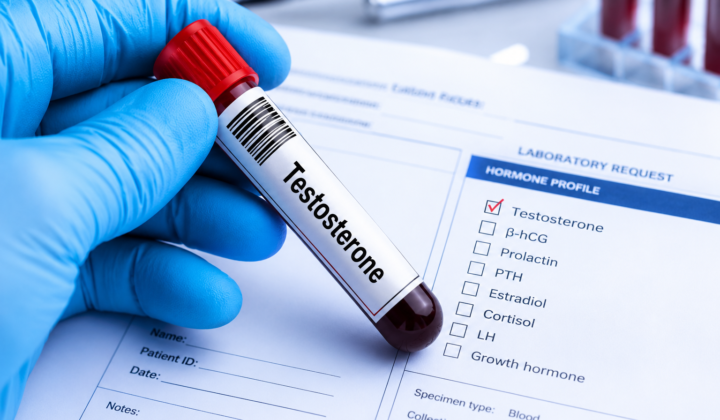
Testosterone Testing: What Men Should Know
Testing testosterone properly matters.
One random blood test does not always tell the whole story.
Doctors often consider symptoms, morning testosterone levels, repeat testing, free testosterone, SHBG, LH, FSH, prolactin, estradiol, thyroid function, and other factors depending on the case.
For fertility, semen analysis is also important.
A man can have hormone symptoms and abnormal semen.
He can also have normal testosterone and abnormal semen.
That is why testosterone and fertility should be evaluated together when fatherhood is a goal.
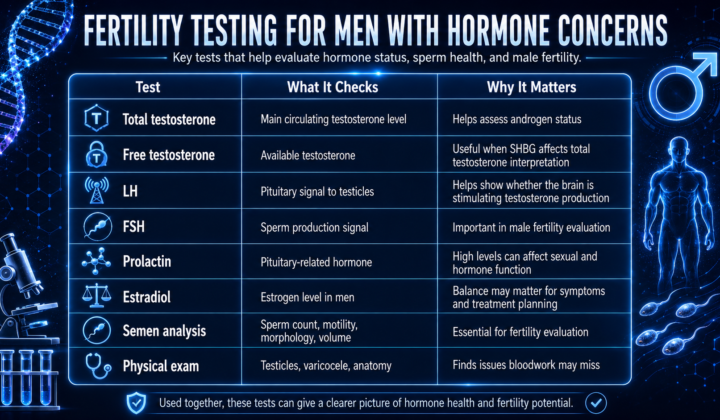
Fertility Testing for Men With Hormone Concerns
| Test | What It Checks | Why It Matters |
| Total testosterone | Main circulating testosterone level | Helps assess androgen status |
| Free testosterone | Available testosterone | Useful when SHBG affects total testosterone interpretation |
| LH | Pituitary signal to testicles | Helps show whether the brain is stimulating testosterone production |
| FSH | Sperm production signal | Important in male fertility evaluation |
| Prolactin | Pituitary-related hormone | High levels can affect sexual and hormone function |
| Estradiol | Estrogen level in men | Balance may matter for symptoms and treatment planning |
| Semen analysis | Sperm count, motility, morphology, volume | Essential for fertility evaluation |
| Physical exam | Testicles, varicocele, anatomy | Finds issues bloodwork may miss |
Semen Analysis Still Matters
A man cannot know his fertility from testosterone alone.
He needs semen data.
A semen analysis can show sperm count, sperm concentration, sperm movement, sperm shape, semen volume, and other markers.
This is especially important for men using or considering TRT.
If a man wants children, baseline semen analysis may be useful before hormone treatment.
If he has already used testosterone and is struggling to conceive, semen analysis becomes even more important.
A man cannot manage what he refuses to measure.
What Men Should Discuss Before Starting TRT
Before starting testosterone therapy, a man should be clear about his fertility goals.
Does he want children now?
Does he want children in the next year?
Does he want children later?
Has he had a semen analysis?
Does he have a partner already trying to conceive?
Has he used steroids before?
Does he have low sperm count?
Does he have testicular issues?
Does he have a varicocele?
Has he frozen sperm?
These are not small questions.
They can shape the entire treatment decision.

TRT Decision Table for Men Who May Want Children
| Question | Why It Matters |
| Do I want biological children soon? | TRT may suppress sperm production |
| Have I had a semen analysis? | Gives a fertility baseline |
| Is my testosterone truly low on repeat testing? | Prevents unnecessary treatment |
| Do I know why testosterone is low? | Cause affects treatment options |
| Have I discussed fertility-preserving alternatives? | Some men may have options other than TRT |
| Should I freeze sperm before treatment? | May protect future family planning |
| Am I using steroids or nonmedical hormones? | Fertility risk may be higher |
| Have I seen a reproductive urologist? | Specialist care may be needed |
Sperm Freezing Before Hormone Treatment
For some men, sperm freezing may be discussed before starting testosterone or other treatments that may affect fertility.
This is also called sperm banking or sperm cryopreservation.
It may be especially important for men who are about to receive cancer treatment, use medical therapies that may affect sperm production, or begin treatment that could compromise fertility.
Not every man needs it.
But every man who wants future biological children should know the option exists.
Future fatherhood deserves planning.
A man plans his business, training, finances, and home.
He should also plan his fertility.
Fertility-Friendly Alternatives to TRT
Some men with low testosterone symptoms and fertility goals may be evaluated for options that support the body’s own hormone signaling rather than replacing testosterone directly.
These may include medications that stimulate natural testosterone production or sperm production in selected cases.
The exact option depends on the cause of low testosterone, hormone labs, semen results, age, fertility timeline, and medical history.
This should only be handled by a qualified doctor.
The important message is not to self-treat.
The important message is to ask the right question:
“How can we support my hormone health without damaging my fertility goals?”
That question can change everything.
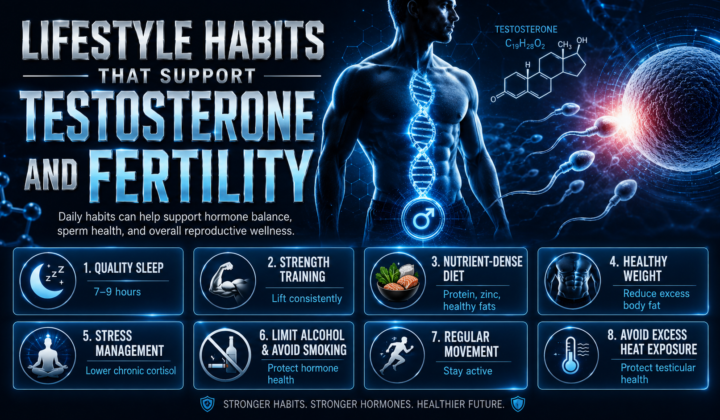
Lifestyle Habits That Support Testosterone and Fertility
Lifestyle cannot fix every hormone problem.
But it can support natural hormone health and male fertility.
A man should build the basics before chasing advanced treatments.
Sleep properly.
Train consistently.
Eat enough protein.
Maintain a healthy weight.
Reduce alcohol.
Quit smoking.
Avoid anabolic steroids.
Manage stress.
Treat sleep apnea if present.
Get sunlight.
Correct nutrient deficiencies when confirmed.
These are not exciting, but they are powerful.
A man who ignores the basics while chasing hormones is not disciplined.
He is impatient.
Sleep and Testosterone
Sleep plays an important role in hormone health.
Poor sleep can weaken energy, libido, recovery, mood, appetite, and training performance.
It may also affect testosterone patterns.
If a man sleeps five hours a night, drinks heavily, works under constant stress, and eats poorly, jumping straight to TRT is not the first sign of wisdom.
The first sign of wisdom is fixing the system.
A disciplined sleep routine can support both hormone health and fertility habits.
Keep the room cool.
Use a consistent bedtime.
Reduce screens before sleep.
Avoid alcohol close to bedtime.
Treat sleep like recovery, not laziness.
Body Fat, Testosterone, and Fertility
Excess body fat can affect testosterone, estrogen balance, inflammation, insulin sensitivity, and sperm quality.
Men who are overweight may improve hormone and fertility markers by losing fat gradually.
This does not mean extreme dieting.
Crash dieting can damage energy, libido, mood, and training recovery.
A smarter plan includes protein, walking, strength training, better sleep, and steady calorie control.
The goal is not punishment.
The goal is building a healthier male body.
Strength Training and Hormone Health
Strength training can support male health, body composition, confidence, insulin sensitivity, and long-term function.
But training must be intelligent.
Overtraining, poor recovery, under-eating, and constant exhaustion can work against the body.
Train hard, but recover harder.
A strong body is not built only in the gym.
It is built through food, sleep, consistency, and restraint.
That message fits the mindset behind Alpha Male Mindset, where discipline is not about chaos. It is about control.
Alcohol, Smoking, and Hormone Health
Alcohol and smoking can both weaken male health.
Heavy alcohol can affect sleep, testosterone, liver function, sexual performance, and discipline.
Smoking can harm blood vessels, sperm quality, lungs, stamina, and overall health.
A man who wants both testosterone health and fertility should not protect these habits.
He should remove them.
The future requires sacrifice. Your future children deserve that.
The body respects discipline.
Nutrition for Testosterone and Fertility
Nutrition supports hormone health, sperm production, recovery, and overall performance.
Men should focus on real food.
High-quality protein supports muscle and recovery.
Healthy fats support hormone production and cell health.
Fruits and vegetables provide antioxidants and micronutrients.
Whole-food carbohydrates support training and energy.
Minerals like zinc and selenium may support male reproductive health.
Vitamin D, omega-3 fats, and folate may matter for some men.
Supplements can help when needed, but food comes first.

Nutrition Table for Hormone and Fertility Support
| Nutrition Focus | Food Examples | Why It Matters |
| Protein | Eggs, fish, poultry, lean beef, Greek yogurt, lentils | Supports muscle, recovery, and metabolism |
| Healthy fats | Olive oil, avocado, nuts, seeds, eggs, fatty fish | Supports hormone and cell health |
| Zinc | Oysters, beef, pumpkin seeds, eggs | Supports male reproductive health |
| Selenium | Brazil nuts, seafood, eggs | Supports antioxidant systems |
| Vitamin D | Sunlight, fatty fish, fortified foods | May support hormone and immune health |
| Omega-3 fats | Salmon, sardines, walnuts, chia seeds | Supports cell membranes and inflammation balance |
| Antioxidants | Berries, citrus, leafy greens, tomatoes, peppers | Supports defense against oxidative stress |
| Hydration | Water, mineral water, water-rich foods | Supports overall health and semen volume |
The 90-Day Testosterone and Fertility Reset
A 90-day reset gives men a practical structure.
It does not promise to fix every problem.
It does not replace medical care.
But it can support better habits before retesting testosterone and semen parameters.
Sperm production takes time, so a 90-day window makes sense for many lifestyle changes.
The goal is simple.
Build a stronger body and get better data.
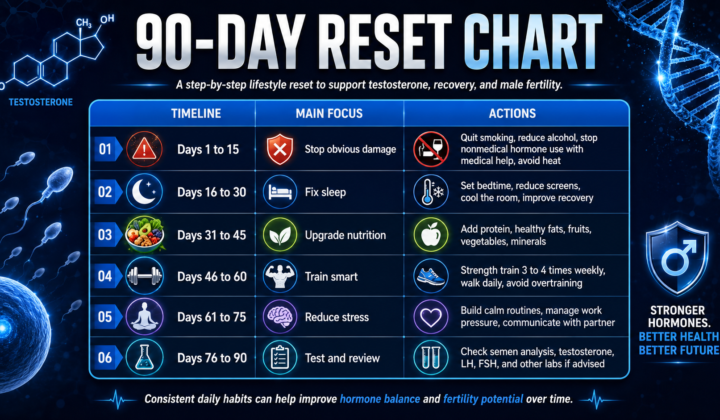
90-Day Reset Chart
| Timeline | Main Focus | Actions |
| Days 1 to 15 | Stop obvious damage | Quit smoking, reduce alcohol, stop nonmedical hormone use with medical help, avoid heat |
| Days 16 to 30 | Fix sleep | Set bedtime, reduce screens, cool the room, improve recovery |
| Days 31 to 45 | Upgrade nutrition | Add protein, healthy fats, fruits, vegetables, minerals |
| Days 46 to 60 | Train smart | Strength train 3 to 4 times weekly, walk daily, avoid overtraining |
| Days 61 to 75 | Reduce stress | Build calm routines, manage work pressure, communicate with partner |
| Days 76 to 90 | Test and review | Check semen analysis, testosterone, LH, FSH, and other labs if advised |
When Men Should See a Doctor
A man should see a doctor if he has symptoms of low testosterone, fertility struggles, abnormal semen results, testicular pain, swelling, erectile problems, very low libido, breast tissue growth, or a history of steroid use.
He should also seek help if he is on TRT and wants children.
The right specialist may be a urologist, reproductive urologist, endocrinologist, or fertility-focused clinician.
A primary care doctor can also help begin testing.
The key is not to wait in silence.
A man should handle reality early.

Questions to Ask Your Doctor
| Question | Why It Helps |
| Is my testosterone truly low based on proper testing? | Prevents overdiagnosis |
| What is causing my low testosterone? | Treatment depends on cause |
| Will TRT affect my fertility? | Essential for family planning |
| Should I get a semen analysis before treatment? | Establishes baseline fertility |
| Are there fertility-preserving options? | Helps protect fatherhood goals |
| Should I see a reproductive urologist? | Specialist care may improve planning |
| Should I freeze sperm first? | Protects future options |
| How will we monitor hormones and sperm? | Keeps treatment accountable |

What Men Get Wrong About Testosterone and Fertility
Many men make the same mistakes.
They think testosterone equals fertility.
They believe sexual performance proves sperm health.
They start TRT without semen analysis.
They use steroids without thinking about fatherhood.
They trust gym advice over medical guidance.
They assume low energy always means low testosterone.
They chase quick fixes before fixing sleep and body fat.
They do not tell their doctor they want children.
They panic after one abnormal result.
They delay testing out of pride.
These mistakes are avoidable.
The solution is education, testing, and disciplined action.
Testosterone and Masculinity
A man’s masculinity is not measured by a lab number alone.
Testosterone matters, but it is not the whole identity of a man.
A man is also measured by responsibility, courage, consistency, protection, patience, restraint, and leadership.
Using hormones recklessly is not masculine.
Ignoring fertility is not masculine.
Avoiding a semen analysis is not masculine.
Blaming a partner without getting tested is not masculine.
Real masculinity is controlled strength.
It is the ability to make hard decisions today to protect tomorrow.
This is the same standard behind Alpha Circle Club, where strength is not only about appearance. It is about ownership.
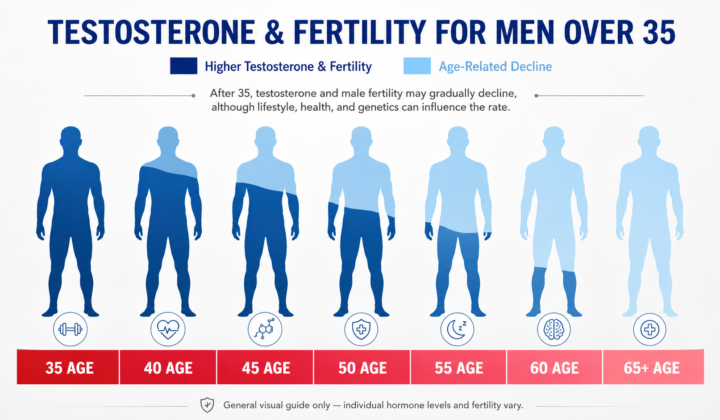
Testosterone and Fertility for Men Over 35
Men can produce sperm later in life, but age still matters.
As men get older, testosterone may decline in some cases, sexual function may change, and sperm DNA quality may become a bigger concern.
This does not mean men should panic after 35 or 40.
It means they should be proactive.
If a man wants children later, he should protect his health earlier.
He should avoid smoking, obesity, steroid use, heavy drinking, poor sleep, and unmanaged stress.
He should also consider semen analysis if he is planning fatherhood and wants real information.
Waiting is a choice.
Neglect is also a choice.
Testosterone, Fertility, and Relationships
Hormone and fertility struggles can affect relationships.
A man may feel embarrassed, defensive, or frustrated.
He may withdraw or become angry.
That usually makes things worse.
A better response is honesty.
Tell your partner what is happening.
Get tested.
Do not make fertility her burden alone.
Ask questions together.
Build better habits together.
Keep intimacy human, not mechanical.
A man who leads well does not hide when the issue is uncomfortable.
He steps forward.
FAQs About Testosterone and Fertility
Does testosterone increase fertility?
Not always.
Natural testosterone production inside the testicles supports sperm production, but taking external testosterone can suppress the hormone signals needed to make sperm.
This means testosterone therapy may reduce fertility in men who want biological children.
Can TRT lower sperm count?
Yes, TRT can lower sperm count in some men.
External testosterone can reduce LH and FSH signaling from the brain, which can suppress sperm production inside the testicles.
Can low testosterone cause infertility?
Low testosterone may be part of a fertility problem, depending on the cause.
However, treating it with external testosterone may not be the right choice for men trying to conceive.
A fertility-aware doctor should evaluate hormone levels, semen analysis, and overall health.
Can sperm production recover after stopping TRT?
Some men recover sperm production after stopping TRT, but recovery varies.
It may take months, and some men may need medical treatment. Men should not stop or change testosterone therapy without medical guidance.
Should I get a semen analysis before starting testosterone?
If you want children now or in the future, a semen analysis before testosterone treatment may be a smart discussion with your doctor.
It gives a baseline and helps guide fertility planning.
Are anabolic steroids bad for fertility?
Yes, anabolic steroids can suppress sperm production and may cause very low sperm count or no sperm in semen.
Men who want children should avoid nonmedical steroid use and seek medical help if they have used steroids.
Are there alternatives to TRT for men who want fertility?
Some men may have fertility-preserving options depending on the cause of low testosterone and their hormone profile.
These decisions should be made with a qualified doctor, often a reproductive urologist or endocrinologist.
Can lifestyle improve testosterone and fertility?
Lifestyle can support natural hormone health and fertility.
Sleep, weight management, strength training, better nutrition, quitting smoking, limiting alcohol, and managing stress can all help build a stronger foundation.
Does good libido mean I am fertile?
No.
Libido and fertility are not the same.
A man can have strong libido and still have low sperm count or poor sperm movement.
Testing is the only way to know.
Final Thoughts
Testosterone and fertility should never be treated casually.
Testosterone matters for men.
It affects energy, libido, strength, mood, body composition, and health.
But fertility is not as simple as raising testosterone.
A man who wants children must understand the difference between natural hormone function and external hormone use.
TRT can help some men with true hypogonadism, but it can also reduce sperm production.
Anabolic steroids can create serious fertility problems.
Low testosterone may need evaluation, but the treatment should match the man’s fertility goals.
That is the key.
Do not guess.
Do not self-prescribe.
Do not follow gym advice with your future family.
Do not assume sexual performance means sperm health.
Do not start hormones without discussing fatherhood.
A serious man gets tested.
He asks better questions.
He protects his fertility.
He builds lifestyle discipline.
He seeks medical guidance when needed.
That is not weakness.
That is responsibility.
And responsibility is the real mark of a man building a future.
Your future bloodline depends on your actions today.
Medical note: This article is for educational purposes only and is not medical advice. Men concerned about fertility, testosterone, semen quality, or conception should speak with a qualified healthcare professional or fertility specialist.



No spam. Unsubscribe anytime.