Men are constantly told what to eat to increase testosterone.
Eggs. Steak. Oysters. Garlic. Ginger. Avocados. Supplements with aggressive labels, masculine branding, and impossible promises.
But many men overlook the other side of the equation: the foods and drinks they consume every day that steadily create the wrong environment for healthy hormone production.
One takeaway will not destroy your testosterone.
One dessert will not erase your masculinity.
One fizzy drink will not shut down your testes.
But when sugar, alcohol, fried food, and ultra-processed meals become your normal diet, the consequences can begin to accumulate.
Body fat rises.
Blood-sugar control deteriorates.
Sleep becomes weaker.
Energy falls.
Training consistency suffers.
Nutrient-dense foods disappear from the diet.
And the biological environment that supports healthy testosterone production begins to break down.
The truth is simple:
One bad meal will not destroy your testosterone. But a bad diet repeated every day can create the biological environment in which testosterone struggles.
This article is not about making men afraid of food.
It is about helping men recognise the dietary patterns that can undermine their hormones, metabolic health, fertility, energy, and long-term physical performance.
What Does “Destroy Testosterone” Actually Mean?
The title of this article is intentionally powerful, but it needs to be understood correctly.
Most individual foods do not permanently destroy testosterone production.
A temporary fall in a testosterone blood measurement after eating is not the same as clinically diagnosed testosterone deficiency. Testosterone naturally fluctuates throughout the day and can also be influenced by food intake, sleep, illness, medication, calorie restriction, body weight, and the timing of a blood test.
The Endocrine Society recommends diagnosing male hypogonadism only when a man has relevant symptoms alongside consistently and unequivocally low testosterone levels. A low result should normally be confirmed with a repeat morning fasting measurement, followed by investigation of the underlying cause.
In this article, “destroy testosterone” refers to foods and dietary patterns that may:
- Encourage excessive calorie intake
- Promote weight gain and abdominal fat
- Weaken insulin sensitivity
- Displace nutrient-dense foods
- Damage sleep and training consistency
- Expose men to excessive alcohol
- Create nutritional imbalances
- Contribute to poor metabolic or reproductive health
The greatest danger is rarely one ingredient.
It is the pattern repeated for months and years.
Testosterone Is Built by Your Entire Lifestyle
Testosterone production does not depend on one miracle food.
It reflects the condition of the entire system.
The hypothalamus in the brain sends hormonal signals to the pituitary gland. The pituitary releases luteinising hormone, which then signals the Leydig cells inside the testes to produce testosterone.
That system can be influenced by:
- Age
- Genetics
- Body composition
- Sleep
- Illness
- Medication
- Alcohol consumption
- Calorie intake
- Nutrient deficiencies
- Physical activity
- Stress
- Testicular health
- Pituitary function
Diet matters because it influences several of these areas simultaneously.
A poor diet can increase body fat, weaken blood-sugar control, reduce micronutrient intake, worsen energy levels, and make disciplined training harder to maintain.
A healthy diet does not guarantee exceptionally high testosterone.
But an unhealthy diet can create multiple obstacles to normal hormone function.
This is why men should stop looking for one food that will “boost” testosterone and begin looking at the environment their daily choices are creating.
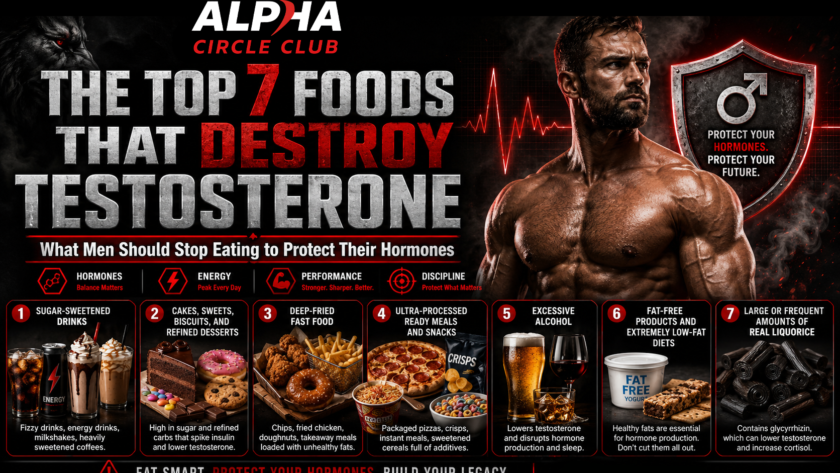
1. Sugar-Sweetened Drinks
Fizzy drinks, energy drinks, sweetened coffees, milkshakes, fruit-flavoured drinks, and heavily sweetened teas can deliver hundreds of calories without providing the fullness of a proper meal.
Liquid calories are easy to consume and easy to forget.
A man may avoid eating a large dessert but drink the equivalent amount of sugar without thinking about it.
This can become especially damaging when sweetened drinks are consumed several times per day.
The Immediate Testosterone Effect
In one study, glucose ingestion caused a substantial temporary reduction in total and free testosterone measurements in men. The researchers emphasised that men with low non-fasting testosterone results should be tested again while fasting.
This does not mean that one sugary drink permanently damages testosterone.
It means that food intake can temporarily influence a hormone measurement and that testing conditions matter.
The long-term concern is more indirect.
Habitual consumption of high-calorie sugary drinks can make it easier to gain weight, particularly when the calories are added on top of an already excessive diet.
As waist size increases and metabolic health deteriorates, testosterone can become part of the problem.
The Energy-Drink Trap
Many energy drinks create the impression of performance.
The can is aggressive.
The branding promises power.
The caffeine creates temporary stimulation.
But stimulation is not the same as biological energy.
A drink loaded with sugar may create a short-lived rise in alertness while adding calories that do little to support satiety, recovery, muscle growth, or hormone production.
Some men then use more caffeine to compensate for poor sleep, creating another cycle:
Poor sleep → low energy → energy drink → disrupted sleep → more low energy
A man cannot continually borrow energy from tomorrow and call it performance.
The Alpha Replacement
Replace frequent sugary drinks with:
- Water
- Sparkling water
- Unsweetened tea
- Coffee without large amounts of sugar
- Milk when appropriate for your diet
- Low-sugar electrolyte drinks during genuinely demanding activity
You do not have to swear off every sweet drink for life.
But it should not be your main source of hydration.
Do not drink hundreds of empty calories while expecting a testosterone supplement to repair the consequences.
2. Cakes, Sweets, Biscuits, and Refined Desserts
Cakes, doughnuts, biscuits, sweets, pastries, and refined desserts often combine several qualities that make overconsumption easy:
- Added sugar
- Refined flour
- High calorie density
- Poor satiety
- Low protein
- Low fibre
- Limited micronutrient value
- Highly rewarding flavours and textures
The problem is not enjoying a slice of birthday cake.
The problem is when sweet foods stop being occasional and become a daily foundation.
A biscuit with every cup of tea.
A pastry every morning.
A dessert every evening.
Sweets throughout the working day.
A large weekend binge after five days of restriction.
The damage comes from repetition.
What These Foods Replace
Every diet has a limited amount of room.
When refined desserts dominate that space, more valuable foods are often pushed out.
Instead of consuming:
- Eggs
- Fish
- Meat
- Greek yoghurt
- Fruit
- Vegetables
- Beans
- Nuts
- Seeds
- Whole-food carbohydrates
A man may obtain much of his daily energy from sugar, flour, and added fats.
Calories remain high, but nutrition becomes weak.
This creates a situation in which the body has abundant energy available while still receiving an inadequate range of vitamins, minerals, protein, fibre, and essential fats.
The Reward-System Problem
Many refined foods are designed to be easy to continue eating.
A man may be physically capable of finishing an entire packet even when he did not intend to eat more than one or two portions.
This is not simply a lack of willpower.
Highly rewarding foods can make natural appetite control harder to follow, especially when a man is tired, stressed, lonely, bored, or emotionally overwhelmed.
Discipline therefore begins before the craving.
Do not rely entirely on self-control while surrounding yourself with foods engineered to trigger repeated consumption.
Control the environment.
Buy smaller amounts.
Choose individual portions.
Stop storing large supplies of your weakest foods within immediate reach.
A man protects his discipline by designing his surroundings—not by pretending temptation has no effect on him.
3. Deep-Fried Fast Food
Fried chicken, chips, burgers, doughnuts, takeaway pizzas, battered foods, and other fast-food meals can deliver a powerful combination of:
- Excessive calories
- Refined carbohydrates
- Low fibre
- High salt
- Poor-quality dietary patterns
- Large portion sizes
- Limited micronutrient density
Not every fried food contains industrial trans fats, and not every takeaway meal has the same nutritional composition.
But a diet dominated by deep-fried fast food is rarely a diet built around metabolic health.
Trans Fats and Testosterone
In an observational study of young men, greater trans-fat intake was associated with lower total and calculated free testosterone concentrations. Because the study was observational, it could not prove that trans fats directly caused the hormonal differences.
This distinction matters.
Nutrition research is often more complicated than a headline suggests.
Men who consume more trans fats may also differ in body weight, activity, food quality, smoking, alcohol intake, and other behaviours.
The evidence does not justify claiming that one portion of chips directly destroys testosterone.
It does support reducing dietary patterns dominated by poor-quality processed foods.
The Greater Threat: Excess Calories
Many fast-food meals provide a full day’s worth of energy in a short period.
A burger, large chips, sugary drink, dessert, and additional side can easily exceed what a man realises he is consuming.
Because these foods are often low in fibre and easy to eat quickly, the body may not register fullness until a very large amount has already been consumed.
Repeated several times per week, this can drive gradual weight gain.
That weight gain may become more important to testosterone than the individual ingredients inside the meal.
Testosterone Does Not Thrive in a Body Fighting Poor Metabolic Health
The body is not divided into separate departments.
Heart health, blood-sugar control, liver function, body composition, sleep, fertility, and hormone function influence one another.
A man cannot damage every major foundation of health and expect testosterone to remain untouched.
The goal is not to fear fat or never eat fried food.
The goal is to stop making deep-fried takeaway food your normal source of nutrition.
4. Ultra-Processed Ready Meals and Snacks
Ultra-processed foods can include many:
- Packaged pizzas
- Crisps
- Instant noodles
- Sweetened breakfast cereals
- Processed desserts
- Snack bars
- Ready meals
- Reconstituted meat products
- Sugary drinks
- Packaged baked goods
Not every packaged food is automatically harmful.
Frozen vegetables, canned beans, plain yoghurt, tinned fish, and minimally processed foods can be convenient and nutritious.
The concern is a diet dominated by industrial products that are easy to eat, heavily marketed, highly rewarding, and often poor in protein, fibre, and overall nutritional quality.
Ultra-Processed Food Can Encourage Overeating
In a controlled inpatient trial, adults ate more calories and gained weight while following an ultra-processed diet compared with an unprocessed diet, even though the meals presented to them had been designed to match several nutritional characteristics.
The participants were allowed to eat as much or as little as they wanted.
They consumed more during the ultra-processed phase.
This matters because appetite is not governed by mathematics alone.
Food texture, eating speed, energy density, convenience, palatability, and processing can influence how much a person consumes before feeling satisfied.
The 2025 Male Reproductive-Health Trial
A controlled crossover trial published in 2025 compared unprocessed and ultra-processed dietary patterns in men under different calorie conditions.
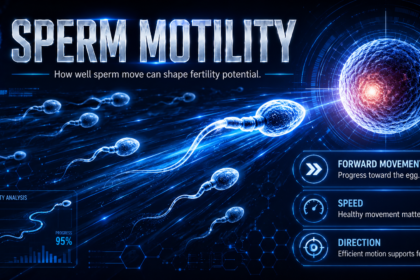
The ultra-processed diet increased body weight and worsened the ratio of LDL to HDL cholesterol independently of calorie load. It also affected hormones connected to energy metabolism and spermatogenesis, while sperm motility showed a downward trend. The study did not demonstrate that every ultra-processed food directly lowers testosterone, but it raised important concerns about cardiometabolic and reproductive health.
That distinction must be preserved.
The finding was not:
“One packaged meal destroys testosterone.”
The finding was that a highly processed dietary pattern produced unfavourable changes even under controlled conditions.
Food engineered to override your appetite can eventually undermine the body responsible for producing your hormones.
Learn to Read the Pattern
A food does not become dangerous merely because it comes in packaging.
Ask better questions:
- Does this food provide meaningful protein?
- Does it contain fibre?
- Will it keep me full?
- Is it replacing a more nutritious meal?
- Am I eating one serving or the entire packet?
- Is this occasional convenience or my daily foundation?
- Do most of my calories come from foods that still resemble their original ingredients?
The objective is not dietary perfection.
It is to make minimally processed, nutrient-dense foods the default.
5. Excessive Alcohol
Alcohol is a drink rather than a food, but leaving it out of this list would make the article incomplete.
Excessive alcohol consumption can affect almost every part of the system a man is trying to protect:
- Testosterone
- Liver function
- Sleep
- Fertility
- Training recovery
- Decision-making
- Body composition
- Sexual function
- Mental health
- Nutrient intake
Alcohol can deliver significant calories while reducing judgement around food.
The first drinks add calories.
The later drinks weaken restraint.
The takeaway follows.
Sleep quality deteriorates.
Training is missed the next morning.
The damage is rarely limited to the alcohol itself.
Alcohol and the Male Hormonal System
The hypothalamic-pituitary-gonadal axis controls reproductive hormone signalling.
The hypothalamus communicates with the pituitary gland. The pituitary releases luteinising hormone and follicle-stimulating hormone. Luteinising hormone stimulates testosterone production, while follicle-stimulating hormone contributes to sperm production.
Research reviewed by the US National Institute on Alcohol Abuse and Alcoholism describes how acute and chronic alcohol exposure can disrupt this hormonal system. Chronic alcohol exposure has been linked with reduced testosterone and reproductive dysfunction, particularly in men with alcohol-use disorder.
Possible mechanisms include:
- Disrupted hypothalamic signalling
- Altered luteinising hormone function
- Direct effects on the testes
- Increased oxidative stress
- Liver damage
- Changes in oestrogen metabolism
- Interference with testosterone synthesis
The clearest danger concerns repeated heavy or chronic drinking.
This should not be exaggerated into a claim that one occasional drink permanently shuts down testosterone.
But men should also stop pretending that regular heavy drinking is compatible with optimal hormonal health.
Alcohol and Fertility
Chronic alcohol consumption has also been associated with poorer semen quality, including changes in semen volume, sperm count, motility, and normal morphology.
For a man preparing for conception, alcohol is not only a liver or testosterone issue.
It is a reproductive-health issue.
The Masculinity Illusion
Alcohol is often marketed around confidence, brotherhood, celebration, toughness, and male identity.
But there is nothing masculine about repeatedly consuming a substance that damages your sleep, weakens your discipline, lowers your training consistency, and causes you to lose control of your decisions.
Masculinity is not measured by how much alcohol you can tolerate.
It is measured by how firmly you can protect your purpose.
6. Fat-Free Products and Extremely Low-Fat Diets
For years, dietary fat was treated as the enemy.
Men were encouraged to choose fat-free yoghurt, low-fat meals, fat-free dressings, and heavily refined alternatives to naturally fatty whole foods.
Some men then took this principle to the extreme, reducing dietary fat to very low levels in an attempt to become leaner.
That approach can create problems.
Testosterone Is a Steroid Hormone
Testosterone is produced from cholesterol through a complex sequence of biological processes.
This does not mean eating unlimited cholesterol or saturated fat will automatically raise testosterone.
The body regulates cholesterol production and hormone synthesis carefully.
However, it does mean that men should not treat all dietary fat as unnecessary.
A systematic review and meta-analysis concluded that low-fat diets appeared to reduce testosterone modestly in men, although the researchers stressed that more randomised controlled trials were needed to confirm the effect.
This is not permission to build a diet around bacon, butter, fried food, and cheese.
The lesson is balance.
The Fat-Free Marketing Trap
When fat is removed from a product, manufacturers may change the texture and flavour by adding:
- Sugar
- Refined starch
- Thickeners
- Flavourings
- Sweeteners
- Other processed ingredients
A fat-free label does not automatically mean a food is healthier.
It may simply mean that one nutrient was removed while the product remained highly processed.
Better Sources of Dietary Fat
Men can obtain fat from foods such as:
- Eggs
- Extra-virgin olive oil
- Avocado
- Nuts
- Seeds
- Oily fish
- Natural yoghurt
- Appropriate portions of meat
- Appropriate portions of dairy
The exact amount a man needs will depend on his total calorie intake, health, food preferences, training, and individual circumstances.
The goal is not a high-fat diet.
It is not a fat-free diet.
It is a balanced diet containing enough essential fats, protein, fibre, carbohydrates, and micronutrients to support the entire body.
7. Large or Frequent Amounts of Real Liquorice
Liquorice is the surprising food on this list.
Most men do not think of it as something that could influence hormones.
However, real liquorice root contains active compounds, including glycyrrhizin, that can affect several biological systems.
What the Human Research Found
In a small study, healthy men who consumed liquorice experienced an average reduction in testosterone after one week. The reported decrease was approximately 26%.
That result sounds dramatic, but it must be interpreted carefully.
The study was small.
The intervention was short.
The evidence base is limited.
Not all subsequent findings have been consistent.
It would therefore be misleading to claim that an occasional liquorice sweet will destroy a man’s testosterone.
Real Liquorice Is Different From Liquorice Flavour
Some sweets use real liquorice extract.
Others use flavourings and contain little or no meaningful liquorice root.
The concern is more relevant to:
- Frequent consumption of real liquorice
- Concentrated liquorice extracts
- Liquorice-root supplements
- Herbal products containing substantial glycyrrhizin
- Regular high-dose use
Men should also be aware that excessive real-liquorice consumption can affect blood pressure and potassium balance, making concentrated use inappropriate for some people.
Natural does not automatically mean harmless.
A plant can be natural and still contain biologically powerful compounds.
The Hidden Testosterone Destroyer: Excess Body Fat
The strongest part of this discussion is not any one food.
It is the relationship between diet, body fat, and hormone function.
Obesity is frequently associated with reduced testosterone in men.
This relationship can become a cycle:
Weight gain contributes to lower testosterone → lower energy and reduced activity make weight management harder → additional weight gain places more pressure on the hormonal system
Body fat is metabolically active tissue.
It influences inflammation, insulin sensitivity, sex-hormone-binding globulin, oestrogen metabolism, sleep-apnoea risk, and several other factors connected with testosterone.
Evidence indicates that weight loss can increase both total and free testosterone in men with obesity-related hormonal suppression.
This does not mean every overweight man has low testosterone.
It also does not mean every man with low testosterone simply needs to lose weight.
Pituitary disorders, testicular conditions, medication, genetic factors, chronic disease, sleep disorders, and other causes must be considered.
But for many men, improving body composition and metabolic health is one of the most meaningful natural steps available.
Stop Asking Only What a Food Does to Testosterone
Ask what the food does to the entire body.
Does it help maintain a healthy waist size?
Does it support blood-sugar control?
Does it provide protein and micronutrients?
Does it make overeating more likely?
Does it improve or damage sleep?
Does it support training?
Does it replace more nutritious options?
The indirect effect may be more important than an immediate hormonal response.
Alpha Circle Club should not repeat a claim merely because it sounds masculine.
Strength requires the discipline to reject myths, even when those myths support the conclusion you expected.
What About Mint?
Mint is another food frequently accused of lowering testosterone.
Most of the alarming claims come from animal research or studies involving women with specific hormonal conditions.
That is not enough to conclude that ordinary peppermint tea or mint used in food significantly lowers testosterone in healthy men.
The dose, species, health condition, and form of the substance all matter.
Until strong human evidence shows otherwise, mint does not deserve to be presented as a proven testosterone destroyer.
What About Flaxseed?
Flaxseed also appears on many internet lists.
It contains lignans and fibre, leading to speculation about hormone effects.
A few limited studies and case reports have produced interesting findings, but the evidence is not strong or consistent enough to label normal dietary flaxseed consumption a major testosterone threat for healthy men.
A man should evaluate his whole diet rather than panic over individual seeds.
An Occasional Treat Is Not the Enemy
Men often fall into one of two extremes.
The first man eats whatever he wants and assumes supplements will repair the consequences.
The second becomes terrified of every ingredient and tries to maintain a biologically “perfect” diet.
Neither approach is healthy.
A disciplined diet can still include:
- A dessert
- A takeaway
- A celebration meal
- A piece of chocolate
- A restaurant meal
- An occasional drink for men who choose to consume alcohol
The question is frequency.
Is the food an exception, or has it become the system?
One indulgence inside an otherwise strong lifestyle is very different from a poor lifestyle interrupted by one healthy meal.
Do not judge your diet by its best day.
Judge it by what you repeat.
What Men Should Eat Instead
There is no single scientifically proven “testosterone diet” that works identically for every man.
A strong foundation should generally prioritise nutrient density, adequate protein, appropriate calories, sufficient healthy fats, fibre, and a wide variety of whole foods.
Protein-Rich Foods
Protein supports muscle maintenance, recovery, satiety, and body composition.
Useful options can include:
- Eggs
- Fish
- Chicken
- Turkey
- Lean beef
- Lamb
- Greek yoghurt
- Cottage cheese
- Beans
- Lentils
- Tofu
- Tempeh
The right amount depends on body size, training, health, and total calorie intake.
Healthy Fat Sources
Dietary fat should not be eliminated.
Better sources include:
- Extra-virgin olive oil
- Avocado
- Oily fish
- Eggs
- Nuts
- Seeds
- Natural dairy products
- Appropriate portions of meat
Minimally Processed Carbohydrates
Carbohydrates are not automatically testosterone-destroying.
They provide energy for training and physical activity.
Better sources include:
- Potatoes
- Sweet potatoes
- Oats
- Rice
- Whole grains
- Beans
- Lentils
- Fruit
- Vegetables
The problem is not carbohydrate itself.
It is excessive calories, poor food quality, low fibre, and uncontrolled portion sizes.
Zinc-Containing Foods
Zinc contributes to normal reproductive and immune function.
Food sources include:
- Oysters
- Beef
- Lamb
- Pumpkin seeds
- Dairy
- Eggs
- Beans
More zinc is not always better. Excessive supplemental zinc can cause problems, including copper deficiency.
Magnesium-Containing Foods
Magnesium supports hundreds of biological processes.
Sources include:
- Pumpkin seeds
- Almonds
- Cashews
- Dark-green vegetables
- Beans
- Whole grains
- Dark chocolate in sensible portions
Selenium-Containing Foods
Selenium contributes to antioxidant systems and reproductive biology.
Sources include:
- Fish
- Eggs
- Meat
- Dairy
- Brazil nuts
Brazil nuts can contain very high and variable amounts of selenium, so eating large quantities every day is unnecessary and may cause excessive intake.
Vitamin-D Sources
Vitamin D can be obtained through sunlight exposure, food, and supplements when clinically appropriate.
Food sources include:
- Oily fish
- Egg yolks
- Fortified foods
Men concerned about vitamin-D status should consider testing rather than assuming that extremely high-dose supplementation is safe.
The Testosterone Protection Standard
Protecting testosterone is not about chasing perfection.
It is about reducing the number of pressures placed on the system.
A strong testosterone-supportive lifestyle should include:
- Maintaining a healthy body composition
- Resistance training
- Regular physical activity
- Adequate sleep
- Sufficient calories
- Enough dietary fat
- Adequate protein
- A varied intake of whole foods
- Limited excessive alcohol
- Fewer sugary drinks
- Fewer ultra-processed meals
- Stress management
- Appropriate medical testing when symptoms are present
Testosterone does not exist in isolation.
Protect the entire man and you protect the environment in which testosterone operates.
The Alpha Testosterone Food Standard
REMOVE → REPLACE → REBUILD → REPEAT
1. Remove
Reduce the foods and drinks that dominate your calorie intake while providing little protein, fibre, or nutritional value.
This may include:
- Daily fizzy drinks
- Frequent energy drinks
- Constant sweets and biscuits
- Repeated takeaway meals
- Heavy alcohol consumption
- Large amounts of real liquorice
- A diet dominated by packaged snacks
You do not necessarily need to remove every item permanently.
Remove its control over your routine.
2. Replace
Do not simply eliminate food and leave a nutritional vacuum.
Replace weak choices with stronger ones.
Replace fizzy drinks with water.
Replace a pastry breakfast with eggs, yoghurt, oats, or fruit.
Replace some takeaways with home-cooked meals.
Replace packaged snacks with fruit, yoghurt, nuts, or a protein-rich option.
Replace refined carbohydrates with more filling whole-food sources.
A replacement strategy is more sustainable than relying on constant restriction.
3. Rebuild
Rebuild your diet around:
- Protein
- Vegetables
- Fruit
- Healthy fats
- Fibre-rich carbohydrates
- Adequate hydration
- Appropriate portion sizes
- Foods you can continue eating consistently
The strongest diet is not the one you can follow for six perfect days.
It is the one you can maintain for years.
4. Repeat
Hormones respond to patterns.
One healthy breakfast does not reverse years of neglect.
One workout does not create a strong body.
One early night does not repair chronic sleep deprivation.
One testosterone supplement does not overpower an undisciplined lifestyle.
Repeat the fundamentals until they become your standard.
When Should a Man Have His Testosterone Tested?
A man should not diagnose low testosterone based on tiredness alone.
Possible symptoms can include:
- Reduced libido
- Erectile difficulties
- Reduced spontaneous erections
- Persistent fatigue
- Loss of muscle or strength
- Increased body fat
- Reduced motivation
- Mood changes
- Fertility difficulties
- Reduced body or facial hair
- Testicular changes
These symptoms can also be caused by many other conditions.
A proper diagnosis requires symptoms and consistently low blood-test results. Testosterone is normally measured in the morning, and an unexpectedly low result should be repeated under appropriate conditions. Further tests may be required to determine whether the problem originates in the testes, pituitary gland, hypothalamus, medication, weight-related suppression, or another medical condition.
Men planning to father children should also be cautious about testosterone-replacement therapy because external testosterone can suppress sperm production.
Do not treat a fertility problem with a hormone that may make fertility worse.
Final Thoughts
The foods on this list are not dangerous because they contain a mysterious anti-masculinity ingredient.
They become dangerous when they form a pattern that weakens the whole man.
Sugar-sweetened drinks make excess calories easy to consume.
Cakes, sweets, and biscuits displace nutrient-dense foods.
Deep-fried fast food can drive overeating and poor metabolic health.
Ultra-processed diets can weaken appetite control and reproductive health.
Heavy alcohol consumption can directly disrupt the male hormonal system.
Extremely low-fat diets may deprive the body of an important nutritional foundation.
Frequent real-liquorice consumption may affect testosterone in ways most men do not expect.
But none of these foods tells the complete story alone.
The true enemy is the repeated pattern of poor decisions.
A man protects his testosterone by protecting:
- His waistline
- His sleep
- His liver
- His testes
- His training
- His nutrition
- His discipline
- His long-term metabolic health
You do not need a perfect diet.
You need a diet that stops working against the man you are trying to become.
A man cannot continually feed his cravings and then wonder why his body is no longer producing the strength, energy, and hormonal performance he expects from it.
Medical Disclaimer
This article is for general educational purposes and is not a substitute for personalised medical advice, diagnosis, or treatment. Fatigue, reduced libido, erectile difficulties, fertility concerns, or suspected low testosterone should be discussed with a qualified healthcare professional. Testosterone deficiency should not be diagnosed from symptoms alone or from a single non-fasting blood test. Do not begin testosterone therapy or high-dose supplementation without appropriate medical assessment.



No spam. Unsubscribe anytime.