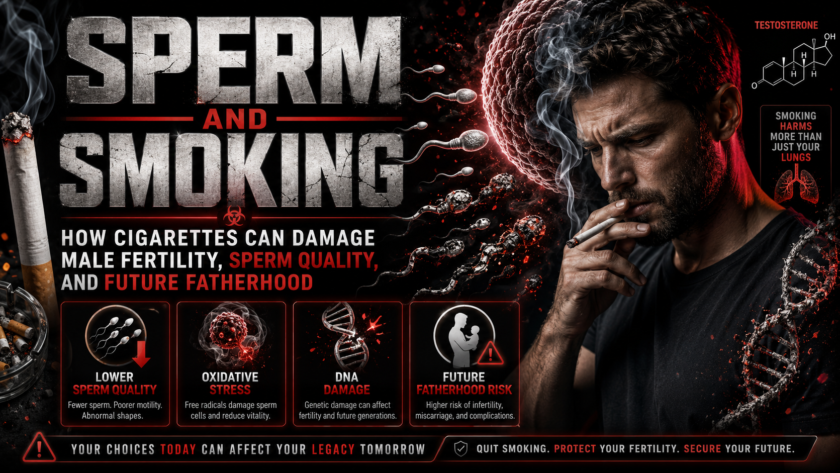
Many men know smoking is bad for the lungs and heart.
Fewer men think seriously about what smoking may be doing to their sperm.
That is the problem.
Sperm is not produced in isolation.
It is produced by the body a man lives in every day.
Cigarette smoke contains chemicals that can affect blood vessels, oxidative stress, inflammation, DNA, hormones, and reproductive function. Over time, that can matter for men who want strong sperm health, better fertility, stronger erections, and future fatherhood.
This article is not written to shame men who smoke.
Quitting is hard.
But fatherhood requires hard things.
If a man wants to become a father, or simply wants to protect his reproductive health, he has to face the truth:
Smoking is not just a habit.
It is a tax on the system.
And the system includes sperm.
A man can ignore that truth.
Or he can use it as a turning point.
Because when the goal is future fatherhood, sperm health cannot be treated like an afterthought.
Smoking does not only challenge the lungs.
It can challenge fertility, blood flow, sexual function, sperm DNA, sperm movement, and reproductive confidence.
The Alpha standard is not shame.
The Alpha standard is command.
Face the habit.
Break the chain.
Test the system.
Rebuild the body.
Protect the future.
Alpha Thought:
A man who wants future fatherhood cannot treat sperm health like an afterthought.
Quick Alpha Summary
Smoking may affect male fertility by damaging sperm quality, sperm DNA, sperm motility, reproductive health, blood flow, and erectile function.
The CDC states that smoking can damage sperm and can contribute to erectile dysfunction, both of which can make it harder for a man to father a baby.
The FDA states that smoking can reduce fertility, may negatively affect hormone production, can harm the reproductive system, and can damage DNA in sperm.
Research reviews have linked cigarette smoking with poorer semen parameters, including changes in sperm concentration, motility, morphology, oxidative stress, and sperm DNA integrity.
Quitting smoking is one of the strongest fertility protection moves a man can make.
Because sperm development takes several months, a 90-day fertility reset after quitting can be a powerful framework.
The goal is not panic.
The goal is action.
Quit.
Test.
Rebuild.
Protect the future father.
Alpha Thought:
Smoking is not just a lung issue. For men, it can become a fertility issue.
Does Smoking Affect Sperm?
Yes, smoking can affect sperm health.
Smoking has been linked with changes in semen quality, sperm motility, sperm morphology, sperm DNA damage, oxidative stress, reproductive hormones, and fertility outcomes.
Not every smoker will have the same results.
Some men smoke and still father children.
But that does not mean smoking is harmless.
This is where men need to think clearly.
Fertility is not about whether damage is guaranteed.
It is about whether a man is increasing risk.
A man can smoke and still have sperm.
A man can smoke and still have libido.
A man can smoke and still get his partner pregnant.
But the stronger question is not:
“Can I get away with it?”
The stronger question is:
“Is this helping or harming the future I want?”
If fatherhood matters, sperm health matters.
If sperm health matters, smoking cannot be treated casually.
A man who wants stronger fertility should remove obvious damage before chasing advanced supplements, expensive fertility products, or random internet protocols.
Smoking is obvious damage.
That does not mean quitting is easy.
It means quitting is serious.
Alpha Thought:
The question is not whether smoking destroys every man’s fertility. The question is whether it belongs in the life of a man protecting future fatherhood.
Smoking and Sperm Count
Sperm count refers to how many sperm are present in a semen sample.
When men think about fertility, this is usually the first number they think about.
But sperm count is only one part of the picture.
Still, it matters.
Some studies have associated smoking with lower sperm concentration or sperm count, although the strength of the effect can vary depending on smoking amount, duration, age, health, diet, alcohol use, abstinence time, and other lifestyle factors.
One review on cigarette smoking and male fertility noted that men who smoked more than 20 cigarettes per day experienced a reduction in sperm concentration compared with nonsmokers in one cited study, even after controlling for several factors.
This does not mean every smoker will have low sperm count.
It means smoking is not a fertility-supportive habit.
A man trying to improve sperm count should start with the obvious foundations:
Stop smoking.
Sleep properly.
Eat better.
Strength train.
Walk daily.
Reduce alcohol.
Avoid overheating the testicles.
Get a semen analysis.
Rebuild the system.
Too many men want advanced fertility hacks while protecting the habits that may be weakening their sperm.
That is backwards.
Before looking for the next supplement, remove the damage.
Alpha Thought:
Do not ask for stronger sperm while protecting the habit that may be weakening them.
Smoking and Sperm Motility
Sperm motility means how well sperm move.
This matters because sperm need to move through the female reproductive tract to reach and fertilise the egg.
A man may have sperm present, but if too many are slow, weak, or poorly moving, fertility may be affected.
Motility is one of the most important sperm health markers.
This is where smoking becomes especially important.
Research reviews have reported that cigarette smoking is associated with reduced sperm motility and abnormal morphology in some studies.
Motility is not something a man can guess.
He cannot judge sperm motility by semen volume.
He cannot judge it by libido.
He cannot judge it by gym performance.
He cannot judge it by how masculine he feels.
He needs testing.
A semen analysis can show whether sperm are moving, how many are moving, and how many are moving forward properly.
This matters because sperm have a mission.
They do not just need to exist.
They need to move.
They need direction.
They need power.
They need function.
If a man is smoking and worried about sperm motility, quitting should become part of his fertility protection plan.
Alpha Thought:
Sperm that cannot move with strength cannot complete the mission. Motility matters.
Smoking and Sperm Morphology
Sperm morphology refers to sperm shape.
A normal sperm has a head, midpiece, and tail designed to support movement and fertilisation.
The head carries genetic material.
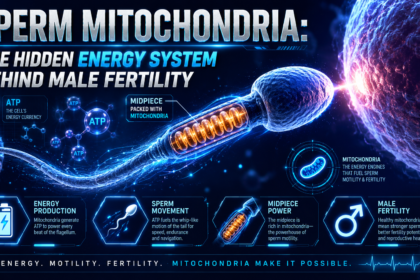
The midpiece contains energy-producing structures.
The tail helps movement.
Shape matters because sperm function depends on structure.
Smoking has been associated in some studies with poorer sperm morphology. This may reflect problems with sperm development, oxidative stress, or cellular damage.
A man should not panic over one morphology result.
Morphology can be confusing, and fertility is never judged by morphology alone.
But morphology belongs in the full sperm health picture.
Count matters.
Motility matters.
Morphology matters.
DNA integrity matters.
Hormones matter.
Lifestyle matters.
Testing matters.
A man should not measure fertility from one number and ignore the system.
He should look at the whole picture and take action where action is needed.
If smoking is part of the picture, it should be removed.
Not because the man is weak.
But because future fatherhood is worth protecting.
Alpha Thought:
A man should not measure fertility by one number. He should understand the whole sperm system.
Smoking and Sperm DNA Damage
This is one of the most powerful sections.
Sperm DNA carries the genetic information a man contributes to future life.
That makes sperm health deeper than count and movement.
Sperm carries responsibility.
The FDA states that smoking can damage DNA in sperm.
This matters because sperm DNA integrity may be relevant to fertility, embryo development, miscarriage risk, and assisted reproductive technology outcomes.
Smoking may increase oxidative stress, and oxidative stress can damage sperm membranes and DNA.
This section must be handled carefully.
It does not mean every smoker has damaged sperm DNA.
It does not mean quitting instantly fixes everything.
It does not mean a man should panic.
But it does mean this:
Smoking may increase risk.
And if future fatherhood matters, sperm DNA should be protected.
Some men may need sperm DNA fragmentation testing depending on fertility history, semen analysis results, miscarriages, assisted reproduction history, age, varicocele, smoking history, or medical advice.
A standard semen analysis does not always show DNA damage.
That is why some couples need deeper testing.
But the first move is still obvious:
Stop adding avoidable damage to the system.
A man cannot control every fertility factor.
But he can stop smoking.
That is command.
Alpha Thought:
Sperm carries more than movement. It carries genetic responsibility.
Smoking, Oxidative Stress, and the Fertility System
Oxidative stress is one of the key mechanisms in male fertility damage.
Here is the simple version.
The body produces unstable molecules called free radicals.
Antioxidants help control them.
When free radicals overwhelm the body’s antioxidant defence, oxidative stress can damage cells.
Sperm cells are vulnerable because their membranes contain fats that can be damaged by oxidative stress. Sperm also carry DNA that needs protection.
Smoking can increase oxidative stress and inflammation, which may affect sperm quality.
For sperm, oxidative stress may affect motility, membranes, DNA, and overall function.
A man who smokes is not only inhaling a habit.
He is adding pressure to the fertility system.
Practical support includes quitting smoking, eating antioxidant-rich foods, including vitamin C-rich foods, including vitamin E-rich foods, eating berries, citrus, leafy greens, oily fish, eggs, nuts, and seeds, sleeping properly, reducing alcohol, exercising intelligently, and avoiding overheating the testicles.
But be careful with the thinking here.
Antioxidants do not cancel out smoking.
A man should not smoke, then take a few supplements and pretend the problem is solved.
That is not discipline.
That is bargaining.
The Alpha move is not to cover the damage.
The Alpha move is to remove the damage.
Alpha Thought:
A man cannot keep feeding oxidative stress and expect his sperm to perform at their highest standard.
Smoking, Testosterone, and Hormones
Many men want to know whether smoking lowers testosterone.
The relationship between smoking and testosterone is complicated.
Some studies show mixed findings on smoking and testosterone levels, so a responsible article should avoid saying smoking always lowers testosterone.
The stronger and safer message is this:
Smoking can reduce fertility and may negatively affect hormone production, according to the FDA.
Even if a man’s testosterone is not clearly low, smoking may still damage reproductive health through sperm quality, DNA damage, blood flow, oxidative stress, inflammation, and erectile function.
Men should not reduce male reproductive health to testosterone alone.
Testosterone matters.
But fertility is bigger than one hormone.
A man can have testosterone in range and still have poor semen parameters.
A man can have good libido and still have poor sperm motility.
A man can look fit and still have sperm DNA fragmentation.
A man can feel masculine and still need a semen analysis.
This is why testing matters.
Do not guess.
Do not assume.
Do not turn fertility into ego.
If fatherhood matters, get the data.
Alpha Thought:
Testosterone matters, but fertility is bigger than one hormone.
Smoking and Erectile Dysfunction
Smoking is strongly connected to blood vessel health.
Erections depend heavily on blood flow.
The CDC states that smoking can lead to impotence, also known as erectile dysfunction, and that this can make it harder to father a baby.
This is important because fertility is not only about sperm quality.
A man also needs sexual function.
If smoking affects blood flow, erection quality, stamina, confidence, and sexual performance, it can affect the path to conception.
This makes quitting smoking more than a fertility move.
It is a masculine performance move.
It is a blood flow move.
It is a confidence move.
It is a future fatherhood move.
Some men separate sperm health from sexual function.
That is a mistake.
The reproductive system is connected.
Blood flow matters.
Hormones matter.
Nerves matter.
Sperm matter.
Libido matters.
Mental state matters.
Habits matter.
If smoking is weakening the vascular system, it is not just a lung issue.
It is a male performance issue.
Alpha Thought:
Future fatherhood requires sperm health and sexual function. Smoking can challenge both.
Vaping, Cannabis, and Other Smoke Exposure
This article should not only talk about cigarettes.
Modern men are exposed to more than traditional smoking.
Vaping.
Cannabis.
Second-hand smoke.
Shisha or hookah.
Cigars.
Mixed tobacco and cannabis use.
Nicotine pouches are a separate issue, but nicotine dependence itself can still keep a man trapped in a habit loop.
The evidence differs by exposure type, and not all risks are identical.
That needs to be said.
But the responsible message is simple:
If a man is actively trying to conceive, reducing smoke exposure is a wise fertility-protection step.
Do not replace cigarettes with heavy vaping and call the mission complete without thinking deeper.
Do not use cannabis casually while trying to optimise sperm health and ignore the possibility that it may affect fertility markers in some men.
Do not sit in second-hand smoke and pretend it has no relevance.
Do not assume shisha is harmless because it feels social.
A man should ask:
Is this helping the future I want?
Is this supporting fertility?
Is this protecting blood flow?
Is this building discipline?
Is this making me more free or more dependent?
Vaping may be used by some people as part of a quitting strategy, but men should seek proper support and avoid simply trading one dependency for another.
Command means freedom.
Not dependency with a different device.
Alpha Thought:
Do not swap one dependency for another and call it command.
How Long After Quitting Smoking Can Sperm Improve?
This is one of the biggest questions men ask:
How long after quitting smoking can sperm improve?
The answer is not overnight.
Sperm development takes several months, which is why a 90-day fertility reset is a useful framework.
A man should not expect perfection one week after quitting.
But quitting removes a major source of ongoing damage and gives the body a better environment to produce new sperm.
A study on infertile men who stopped smoking found improvements in semen volume, sperm concentration, and total sperm count after cessation, although individual results can vary.
This is important because quitting is not just about the present.
It is about the sperm the body will build next.
Improvements may depend on age, baseline health, how long and how heavily the man smoked, diet, alcohol, sleep, heat exposure, stress, weight, medical conditions, varicocele, and other factors.
A semen analysis before and after lifestyle change can show progress.
Some men may need medical help if results remain abnormal.
The key is patience with action.
Quit now.
Build the system.
Retest when appropriate.
Do not judge the entire future from one week of change.
The body needs time to produce a new generation of sperm.
Give it a better environment.
Alpha Thought:
Quitting today is not just about today. It is about the sperm your body will build next.
The 90-Day Alpha Quit-Smoking Fertility Reset
This section turns the article into a system.
Quitting smoking is not just removing a cigarette.
It is rebuilding identity.
It is replacing the smoker’s pattern with the future father’s standard.
Because sperm development takes several months, 90 days gives a man a powerful window to remove damage and create a better internal environment.
Phase 1: Break the Damage Loop
Weeks 1 and 2 are about interrupting the habit.
Set a quit date.
Remove cigarettes, lighters, ashtrays, and triggers.
Tell someone trustworthy.
Reduce alcohol triggers.
Start walking daily.
Improve your sleep schedule.
Book a semen analysis if concerned.
Speak to a healthcare professional about quitting support.
This phase is not about pretending quitting is easy.
It is about making the decision real.
Remove the tools.
Remove the triggers.
Change the environment.
Build accountability.
Get support.
A man should not rely on willpower alone when structure is available.
Phase 2: Rebuild the Body
Weeks 3 to 6 are about strengthening the system.
Stay smoke-free.
Strength train two to four times per week.
Walk daily.
Eat antioxidant-rich foods.
Improve protein intake.
Add omega-3-rich foods.
Hydrate properly.
Avoid hot baths and heat habits.
Track mood, cravings, libido, and energy.
This phase matters because quitting can be stressful.
Some men feel cravings, irritability, appetite changes, mood swings, or restlessness.
That is why the body needs a replacement system.
Walking.
Training.
Sleep.
Better food.
Prayer.
Journaling.
Breathing.
Support.
A man does not just quit smoking.
He builds a life where smoking no longer belongs.
Phase 3: Protect the Future Father
Weeks 7 to 12 are about identity.
Maintain the smoke-free standard.
Keep training and walking.
Review semen analysis results if tested.
Repeat semen analysis if advised.
Continue stress control.
Build long-term fertility habits.
Replace smoking identity with fatherhood discipline.
This phase is where the man stops saying, “I am trying to quit.”
He starts saying, “I do not smoke.”
That identity matters.
A cigarette becomes incompatible with the man he is becoming.
Future fatherhood becomes bigger than the old habit.
The 90-day reset is not punishment.
It is a man choosing legacy over dependency.
Alpha Thought:
The 90-day reset is not punishment. It is a man choosing future fatherhood over a habit.
What Men Should Not Do
Men need direct warnings because fertility anxiety can make them vulnerable to bad decisions.
Do not assume smoking only affects the lungs.
Do not keep smoking while trying to conceive.
Do not blame fertility only on the woman.
Do not ignore semen analysis.
Do not replace smoking with heavy vaping and call it solved.
Do not use random fertility supplements while still smoking.
Do not drink heavily while trying to quit.
Do not panic after one abnormal semen test.
Do not ignore erectile dysfunction.
Do not wait years before testing.
Do not treat quitting as optional if fatherhood matters.
Do not use antioxidants as an excuse to continue smoking.
Do not assume libido means sperm health is fine.
Do not let shame keep you trapped.
Panic sells shortcuts.
Discipline breaks chains.
A man should not shame himself into silence.
But he should not comfort himself with denial either.
If smoking is part of his life, and fertility matters, quitting needs to become part of his standard.
Alpha Thought:
Panic sells shortcuts. Discipline breaks chains.
Final Alpha Standard
Smoking and sperm health are connected through the wider system of fertility, blood flow, oxidative stress, DNA integrity, hormones, erectile function, and future fatherhood.
A man should not live in shame if he smokes.
But he should not live in denial either.
If he wants to protect sperm health, he needs to take command.
Quit.
Test.
Walk.
Train.
Sleep.
Eat for fertility.
Reduce heat.
Protect blood flow.
Support antioxidants.
Get medical help when needed.
Future fatherhood is not protected by excuses.
It is protected by the standard a man is willing to live by.
A cigarette is temporary.
Future fatherhood is legacy.
Choose the legacy.
Final Alpha Thought:
A cigarette is temporary. Future fatherhood is legacy. Choose the legacy.



No spam. Unsubscribe anytime.