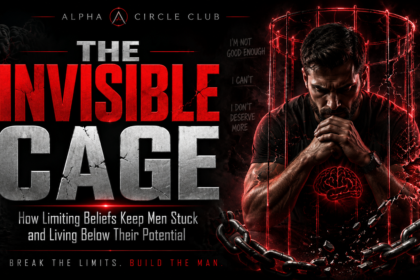
How Strong Men Recover Without Defining Themselves by Temporary Defeat
There are days when almost nothing seems to go according to plan.
You wake later than intended. Your concentration is poor. A conversation goes wrong. A piece of work is rejected. You miss a training session, lose your temper, receive disappointing news or make a decision you immediately regret. By the evening, the man who began the day with direction can feel as if he has lost control of everything.
The event may be painful, embarrassing or expensive. It may require an apology, a correction or an honest examination of your own behaviour. But there is another danger—one that can become more destructive than the original setback.
You begin turning what happened into a statement about who you are.
“I failed today” becomes “I am a failure.”
“I lost control” becomes “I have no discipline.”
“This opportunity rejected me” becomes “I am not good enough.”
“I made a mistake” becomes “I always ruin everything.”
That is how one difficult experience begins taking control of the future. A temporary event is promoted into a permanent identity. The mind takes one piece of evidence, ignores years of growth and declares that the worst moment reveals the whole man.
It does not.
A bad day describes a period of time. It may reveal something that needs attention, but it does not possess the authority to decide your value, your potential or your future. It only gains that authority when you continue repeating its message and behaving as if the judgement is final.
Real strength is not pretending that disappointment does not hurt. It is not forcing a smile, hiding every emotion or acting as if mistakes do not matter. Strong men feel frustration, sadness, anger, shame and uncertainty like everyone else. The difference is that they do not automatically build their identity around those feelings.
They tell the truth about what happened. They accept responsibility for what was theirs. They extract the lesson, repair what they can and return to disciplined action.
If you want to know how to recover from a bad day, begin here:
What happened matters—but what you decide it means, and what you do next, matter more.
1. A Bad Day Is an Event, Not an Identity
An event has a time, a place and a set of facts. An identity is the story you repeatedly accept about who you are.
Confusing the two is easy when emotion is high.
Perhaps you made a poor decision in a meeting. The event is that you were unprepared, spoke badly or failed to communicate your idea. That may be disappointing, and it may expose a skill that needs development. But the identity statement—“I am incapable of leadership”—goes far beyond the available evidence.
Perhaps you planned to train after work but spent the evening watching videos instead. The event is that you avoided one training session. It may reveal tiredness, weak preparation or an entertainment habit that needs firmer limits. But “I am a lazy man who will never become disciplined” is not an accurate description. It is a verdict issued while disappointed.
Perhaps somebody rejected your work, your application or your offer. The rejection is real. You may need to improve the work, approach a different person or accept that this opportunity was not yours. But rejection from one source is not proof that you have nothing valuable to offer.
Accuracy matters because recovery depends on solving the right problem. If the problem is poor preparation, prepare better. If it is missing knowledge, learn. If it is misconduct, apologise and change. If it is a result outside your control, accept the disappointment and redirect your energy.
But if you call the problem “I am worthless”, you create something so broad that no practical action can solve it. You replace a correctable event with an attack on your entire existence.
Ask yourself:
- What exactly happened?
- When did it begin and end?
- What did I do?
- What did somebody else do?
- What was outside my control?
- What conclusion am I adding that the facts do not prove?
This is not an attempt to minimise serious consequences. Some bad decisions cause real damage. Some failures require time, humility and sustained repair. But even then, the strongest response is accurate responsibility—not permanent self-condemnation.
Alpha Insight
Describe the event accurately without turning it into a permanent description of yourself.
2. Watch the Language That Follows Defeat
The first story you tell after a setback often determines whether the next few hours produce recovery or further damage.
Listen for absolute words:
- Always
- Never
- Everything
- Nothing
- Everyone
- Nobody
“I always fail.”
“Nothing ever works for me.”
“Everyone is ahead of me.”
“I never keep my word.”
These statements can feel true because strong emotion makes exceptions difficult to remember. Yet they are rarely accurate. Their purpose is not to solve the problem. They convert pain into certainty—and certainty can feel easier than ambiguity. If you decide you are incapable, you no longer have to face the uncomfortable work of trying again.
Strong self-talk is not dishonest positivity. It does not turn failure into victory or pretend that poor behaviour was acceptable. It uses language precise enough to preserve both accountability and possibility.
Instead of:
“I always ruin everything.”
Say:
“I handled that badly. I need to understand what went wrong and correct what I can.”
Instead of:
“I have no discipline.”
Say:
“I did not maintain my standard today. My next decision can begin restoring it.”
Instead of:
“I will never succeed.”
Say:
“This attempt did not produce the result I wanted. I need to review the method, improve the execution and decide the next step.”
The second version is not softer. It is more demanding because it leaves you responsible for taking action. Destructive language feels severe, but it often becomes an escape. If you label yourself hopeless, you can justify giving up. Accurate language removes that hiding place.
Speak to yourself as a strong leader would speak to a man he expects to recover: directly, honestly and without humiliation.
The voice inside your mind should not excuse weakness. It should also never become an enemy that makes improvement feel pointless.
Alpha Insight
Your internal language should tell the truth without becoming a weapon against your future.
3. One Result Does Not Erase Your Progress
A bad day can make the most recent event appear more important than everything that came before it.
You have trained consistently for three months, but one missed week convinces you that you have lost all momentum. You have managed your money more responsibly, but one impulsive purchase makes you feel that nothing changed. You have been patient with your family, but one argument makes you question your entire character.
The mistake matters. It should be examined. But it does not travel backwards through time and erase every disciplined choice you previously made.
Progress is not a flawless upward line. It contains interruptions, plateaux, misjudgements and days when old habits return. If perfection is the only evidence you accept, you will repeatedly decide that you have failed—even while becoming stronger.
Think of the standards you are building as a vote. Each action votes for the man you are becoming. One missed workout casts a vote for avoidance, but it does not cancel fifty votes for consistency. One angry response casts a vote for poor emotional control, but it does not erase every conversation you handled with maturity.
However, do not misuse this idea to dismiss a pattern. One event is not an identity, but repeated events contain information. If “one bad day” appears four times every week, you no longer have an isolated exception. You have a system that needs attention.
The correct response is neither catastrophe nor denial. It is proportion.
Ask:
- Is this genuinely unusual, or is it recurring?
- What progress remains intact?
- Which habit protected me before this setback?
- What condition allowed the setback to happen?
- What must I resume immediately?
Look at the whole record, not only the latest entry. Respect the progress you have made without pretending there is nothing left to improve.
A man becomes mentally stronger when he can hold two truths at once:
“I am disappointed by what happened.”
And:
“What happened has not destroyed everything I have built.”
Alpha Insight
A temporary fall does not erase the distance you have already travelled.
4. Feel the Disappointment Without Building a Home Inside It
Some men believe strength means feeling nothing. They push emotion down, call pain weakness and attempt to overpower every difficult moment with productivity.
That is not always recovery. Sometimes it is avoidance wearing the clothes of discipline.
If you are hurt, admit that you are hurt. If you are disappointed, name the disappointment. If you are angry, recognise the anger before it controls your mouth, messages or decisions. An emotion acknowledged early is easier to manage than an emotion forced underground and allowed to direct behaviour invisibly.
The objective is not to eliminate feeling. It is to prevent feeling from becoming the only voice in the room.
You can say:
“I am embarrassed by what happened, but embarrassment does not get to decide my next action.”
“I feel rejected, but this rejection does not define my value.”
“I am angry, so I will wait before responding.”
“I am exhausted, which means my interpretation may be harsher than the facts justify.”
Give the emotion a boundary. You may need an hour to walk, pray, write, speak with somebody you trust or sit quietly without stimulation. You may need a night of sleep before analysing the situation. You may need to grieve a genuine loss instead of trying to convert it immediately into a motivational lesson.
But emotional honesty must not become emotional surrender. Feeling disappointed does not require cancelling every responsibility. Feeling angry does not permit cruelty. Feeling ashamed does not remove the need to apologise. Feeling unmotivated does not mean every constructive action must stop.
An emotion is a visitor. Listen to what it may be revealing, but do not hand it the keys to your life.
Alpha Insight
Visit the emotion, understand its message and then continue your journey. Do not move your identity into it.
5. Separate Responsibility From Self-Destruction
There is a major difference between saying “I did something wrong” and declaring “There is something permanently wrong with me.”
Responsibility examines behaviour. Self-destruction attacks identity.
Responsibility asks:
- What did I choose?
- Who was affected?
- What must I admit?
- What can be repaired?
- What consequence must I accept?
- What system will make repetition less likely?
Self-destruction declares:
- I am useless.
- I never change.
- I deserve to fail.
- There is no point trying.
- Everybody would be better without me.
The first approach requires courage because it leads to action. The second can sound severe and accountable, but it frequently produces paralysis. A man becomes so occupied with hating himself that he avoids the practical work of putting things right.
Suppose you spoke disrespectfully to somebody you love. Accountability does not say, “That was not the real me, so it does not matter.” It says, “I chose those words. They caused harm. I need to apologise without defending myself, understand what triggered the response and build a better way of handling that situation.”
It also does not say, “I am a terrible man and will always hurt people.” That statement may sound remorseful, but it places attention back on you and asks the injured person to reassure you. Real accountability keeps the focus on truth, repair and changed behaviour.
Strong men do not protect their ego from every consequence. They also do not confuse punishment with transformation.
You do not prove that you understand a mistake by repeatedly insulting yourself. You prove it through the quality of the correction and the consistency of the change that follows.
Alpha Insight
Accountability corrects behaviour. Shame tries to condemn the entire man.
6. Do Not Make Permanent Decisions From Temporary Pain
A bad day can create an intense desire to escape.
You want to resign immediately. End the relationship. Delete the project. Sell everything. Send the message. Abandon the plan. Announce that you are finished.
Sometimes a decisive change is necessary. A harmful environment may need to be left. A dishonest partnership may need to end. A strategy may genuinely have failed. But a decision can be correct and still be made at the wrong time or in the wrong emotional state.
Pain narrows perspective. Anger makes immediate action feel powerful. Exhaustion makes every obstacle appear permanent. Humiliation makes disappearance seem preferable to repair.
Before making a decision with consequences that will last beyond the current emotion, create distance.
Use the 24-hour rule when safety does not require immediate action:
- Do not send the emotionally charged message.
- Write what you want to say privately.
- Sleep before finalising the decision.
- Review the facts when your nervous system is calmer.
- Speak with a wise person who is not emotionally invested in the drama.
- Ask whether the decision serves your values or merely relieves the present feeling.
This is not weakness or indecision. It is command.
A strong man understands that he is most vulnerable to unnecessary destruction when he feels most certain that he must act immediately. He learns to recognise the heat of the moment and refuses to let that heat burn down something that could have been repaired.
The pause does not guarantee that you will remain. It gives you a better chance of leaving, staying, changing or responding for the right reason.
Alpha Insight
Do not give a temporary emotional state permanent authority over your life.
7. Break the Downward Spiral Early
The original setback is often only the first loss.
A disappointing email arrives. You begin attacking yourself. You abandon the afternoon’s work, order food that leaves you feeling worse, spend money for temporary relief and stay awake consuming content. The next morning begins with exhaustion, guilt and another reason to avoid the task.
The full spiral looks like this:
Disappointment → destructive interpretation → avoidance → numbing behaviour → lost time → greater disappointment
The earlier you interrupt it, the less recovery will cost.
Do not demand a heroic transformation while emotionally unsettled. Choose one stabilising action that makes the next harmful decision less likely:
- Put the phone in another room.
- Drink water and eat a proper meal.
- Take a ten-minute walk.
- Shower and change your clothes.
- Pray or sit quietly.
- Write down the facts.
- Clean one part of your environment.
- Apologise if an apology is already clearly required.
- Complete one small responsibility.
- Prepare the first task for tomorrow.
- Go to bed instead of extending the damage into the night.
These actions may appear too small to answer a serious disappointment. That is precisely why they work. They do not require you to solve everything. They restore a small area of control.
Momentum can move downwards, but it can also move upwards. A glass of water can lead to a walk. The walk can clear enough emotion to write the facts. Writing the facts can reveal the next correction. The correction can restore a measure of self-respect.
Do not underestimate the power of preventing the second mistake. You may not be able to reverse what happened at 10:00am, but you can stop it from taking possession of the evening.
Alpha Insight
You do not need to repair your entire life tonight. You need to stop making the day worse.
8. Find the Lesson Without Worshipping the Failure
Every bad day does not contain a profound lesson. Sometimes you are tired, a plan fails or circumstances refuse to cooperate. Do not manufacture meaning merely to make pain feel worthwhile.
But many difficult days do reveal information:
- You began without sufficient preparation.
- You ignored a boundary until resentment exploded.
- You expected perfection from an early attempt.
- You depended on motivation instead of a system.
- You accepted too many responsibilities.
- You lacked a necessary skill.
- You had not slept enough to perform well.
- You avoided a conversation until the problem became more expensive.
- You placed yourself in an environment where an old habit was easy to repeat.
Ask the question once with seriousness:
“What should this experience teach me?”
Then convert the answer into a change.
If the lesson is “I need more preparation”, decide exactly what preparation looks like next time. If the lesson is “I should not respond while angry”, create a rule that messages written in anger remain unsent until reviewed. If the lesson is “My workload is unrealistic”, remove, delegate or delay something before promising another perfect week.
Learning is not endlessly replaying the failure. Repetition can masquerade as reflection. A man tells himself he is analysing what happened, but he is actually revisiting humiliation without producing a new conclusion.
Once the lesson has been identified and translated into action, you are allowed to stop staring at the event.
Take the instruction. Leave the identity behind.
Alpha Insight
Take the wisdom from the experience without carrying its weight longer than necessary.
9. Return to Your Standards Quickly
After a setback, men often wait to feel like themselves again before resuming disciplined behaviour.
They tell themselves:
“I will train when my motivation returns.”
“I will work when my confidence improves.”
“I will repair the relationship when the embarrassment fades.”
But the feeling they are waiting for is often produced by the action they are avoiding.
Confidence grows when you collect evidence that you can still act. Self-trust begins returning when you keep the next promise. Direction becomes clearer when you take a step rather than when you remain still and demand certainty.
The first action after a bad day should be small enough to begin and meaningful enough to count.
- Complete twenty minutes of the delayed task.
- Return to training with a sensible session.
- Send the honest apology.
- Open the document and write the first paragraph.
- Review the rejected work and identify one improvement.
- Transfer money back into the savings account.
- Prepare a healthy meal.
- Attend the appointment.
Do not attempt to punish yourself with an extreme comeback. A man who misses one workout may try to train twice as hard, becomes excessively sore and then misses three more. A man who wastes one morning may attempt to work through the entire night and destroys the next day as well.
Recovery is not revenge against yourself. It is the intelligent restoration of your standard.
The objective is to shorten the distance between falling and returning. Over time, that recovery speed becomes one of your greatest strengths. You stop fearing imperfect days because you know how to come back from them.
Alpha Insight
Your identity is strengthened by the speed with which you return to your standards.
10. Create a Recovery Floor
Your highest standard is what you pursue when energy, time and circumstances are strong. Your recovery floor is the minimum you protect when the day becomes difficult.
Without a floor, men often think in extremes: perfect performance or complete surrender. If the planned sixty-minute workout becomes impossible, they do nothing. If the full work block is interrupted, they abandon the project. If the diet is imperfect at lunch, they turn the evening into unrestricted consumption.
A recovery floor prevents one failure from authorising five more.
Your floor might include:
- Ten minutes of movement
- One nourishing meal
- One completed priority
- No destructive spending
- No alcohol used to numb emotion
- No angry messages
- Five minutes of prayer, reflection or writing
- Preparing tomorrow’s workspace
- Going to bed at a responsible time
- Speaking to one trusted person instead of isolating
The floor is not the new goal. It is the emergency standard beneath which you refuse to fall voluntarily.
Build separate floors for the areas that matter:
Physical floor: What is the minimum action that protects your body?
Mental floor: What prevents the mind from becoming consumed by destructive input?
Work floor: What single output keeps the mission moving?
Relationship floor: What behaviour remains unacceptable even when you are angry?
Spiritual floor: What keeps you connected to faith, gratitude and perspective?
Financial floor: Which decisions will you not make for emotional relief?
A recovery floor is especially valuable because it can be decided before the bad day arrives. You do not have to invent wisdom while tired, hurt or angry. Your stronger, clearer self has already established the rule.
Alpha Insight
When you cannot reach your highest standard, protect yourself from falling beneath your lowest acceptable one.
11. Tomorrow Needs Preparation, Not Promises
“Tomorrow will be better” is a comforting sentence. But tomorrow does not become better merely because you want a different feeling.
It improves when tonight reduces friction around the right action.
Suppose you missed your morning work because you reached for your phone. A promise to be stronger tomorrow may fail because the same phone will be beside the same bed. Preparation means charging it outside the room, opening the required document tonight and leaving a written instruction on the desk.
Suppose you skipped training because you arrived home exhausted and had not planned the session. Preparation means setting out your clothes, choosing a realistic workout and deciding the exact starting time.
Suppose an argument damaged an important relationship. Preparation means writing down what you need to own, removing the defensive explanation and arranging a calm conversation.
Before ending the day:
- Name what went wrong. Keep the description factual.
- Choose tomorrow’s first meaningful action. Avoid vague intentions.
- Define the first ten minutes. Make starting obvious.
- Remove one predictable distraction. Change the environment.
- Prepare the tools. Open the file, pack the bag or write the number.
- Choose the starting time. Put the action somewhere real.
- Protect sleep. Do not steal from tomorrow while claiming you are preparing for it.
Preparation converts hope into structure.
When you wake, you should not need to debate what recovery looks like. The starting line should already be visible.
Alpha Insight
Hope becomes more powerful when preparation is waiting beside it.
12. Build an Identity That Can Survive Imperfection
A fragile identity depends on constant success.
“I am confident because people approve of me.”
“I am disciplined because I have not missed a day.”
“I am successful because this launch worked.”
“I am strong because nothing has upset me.”
What happens when approval disappears, the streak ends, the launch struggles or life produces an emotion you cannot ignore?
An identity built on flawless performance collapses at the first contradiction.
A stronger identity includes recovery:
“I am a man who confronts his mistakes.”
“I am a man who returns after disappointment.”
“I am a man who can apologise without surrendering his dignity.”
“I am a man who learns rather than hides.”
“I am a man who can experience a bad day without giving it my future.”
These statements are not fantasies. They can be proved every time life tests you.
When you fall and return, you produce evidence. When you admit a mistake and change, you produce evidence. When you experience rejection and continue building, you produce evidence. This is how real confidence develops—not from believing that you will never struggle, but from knowing that struggle does not automatically remove you from the path.
Your goal is not to become a man who never has a bad day. Such a man does not exist. Your goal is to become a man whose values remain available during one.
That identity is resilient because it does not require perfect conditions. It can bend without breaking. It can acknowledge damage without declaring the whole structure condemned.
Alpha Insight
Real strength is not an identity that never gets tested. It is an identity that survives the test and returns stronger.
When a Bad Day Has Become Something More
Not every struggle should be answered with another command to “push through”. Sometimes what appears to be a bad day is part of a longer period of low mood, anxiety, exhaustion or distress.
Pay attention when:
- Low mood continues rather than lifting
- Ordinary responsibilities feel increasingly difficult
- Sleep, appetite or concentration remain seriously disrupted
- You are withdrawing from people who care about you
- The strategies you usually use are not helping
- You feel unable to cope
- You are using alcohol, drugs, gambling or other harmful behaviours to escape
- You are experiencing thoughts of harming yourself or somebody else
Seeking help is not the abandonment of strength. It is a responsible use of it.
The NHS advises speaking to a GP if low mood has lasted for more than two weeks, you are struggling to cope or things you have tried yourself are not helping. In England, many people can also refer themselves to NHS talking therapies without already having a diagnosis. If help is needed urgently, contact NHS 111 and select the mental health option; if somebody’s life is at risk or you cannot keep yourself or another person safe, call 999 or go to A&E.
This article offers a framework for everyday setbacks. It is not a substitute for professional assessment, therapy or urgent support.
A strong man does not prove his strength by suffering in silence. He uses the right support for the reality he is facing.
Sources: NHS guidance on low mood and NHS urgent mental health help.
The Alpha Recovery Protocol
When emotion is high, complicated plans become difficult to follow. Use this six-part process to regain control.
1. Stop
Stop the bad day from acquiring more evidence.
Do not send the angry message. Do not make the impulsive purchase. Do not turn one missed commitment into permission to abandon every other standard. Create physical distance from the behaviour that is likely to make the situation worse.
Ask:
“What is the next decision most likely to deepen this problem?”
Then make that decision harder.
2. Separate
Separate facts from the identity forming around them.
Create two columns:
| What happened | What I am telling myself it means |
|---|---|
| My proposal was rejected | I have no valuable ideas |
| I missed today’s workout | I am incapable of discipline |
| We had an argument | I destroy every relationship |
| I made a financial mistake | I will never manage money well |
The second column reveals where pain has begun expanding beyond the facts.
3. Study
Identify the lesson, weakness or preparation gap.
Do not ask only, “Why did this happen to me?” Ask, “What does this require from me now?” The answer might be better preparation, stronger boundaries, a new skill, more sleep, an apology, professional advice or acceptance of something outside your control.
4. Stabilise
Restore the foundations that make good judgement possible.
Eat, hydrate, move, breathe, pray, sleep and step away from overstimulation. Stabilisation is not avoidance when it prepares you to address the issue more intelligently.
5. Set Right
Repair what can be repaired.
Tell the truth. Apologise. Correct the error. Reschedule the work. Replace what was damaged. Accept a fair consequence. Ask for help. Not everything can be restored immediately, but responsibility should become visible.
6. Step Forward
Complete one constructive action that proves recovery has begun.
The action does not need to be impressive. It needs to move in the right direction. Your identity listens closely to what you do after disappointment.
The governing sequence is:
Stop → Separate → Study → Stabilise → Set Right → Step Forward
Four Real-Life Recovery Examples
The Failed Workday
You intended to complete an important project but spent the day switching tasks and consuming content.
Defeated identity: “I am lazy. I cannot finish anything.”
Accurate response: “I avoided the task and allowed distraction to control the day. Tonight I will block the main distraction, define the first deliverable and complete twenty focused minutes.”
The Rejected Opportunity
An employer, client or potential partner says no.
Defeated identity: “Nobody will ever value what I offer.”
Accurate response: “This opportunity rejected me. I will ask whether useful feedback is available, improve what needs improving and continue approaching suitable opportunities.”
The Broken Health Promise
You abandon your food or training plan after several demanding days.
Defeated identity: “I always return to old habits.”
Accurate response: “My system failed under pressure. I will identify the point at which it broke, restore one meal and one session, and build a simpler plan for difficult weeks.”
The Relationship Mistake
You speak with anger and hurt somebody you care about.
Defeated identity: “I am a terrible husband, father, partner or friend.”
Accurate response: “My words were unacceptable. I will apologise without excuses, listen to the effect they had and create a pause rule for future conflict.”
In every example, the accurate response remains demanding. It refuses both denial and despair.
The Bad-Day Recovery Audit
Use these questions before sleep or during a quiet recovery period:
The Facts
- What actually happened?
- Which details can I verify?
- When did the event begin and end?
- What remains unresolved?
The Story
- What am I telling myself this means about me?
- Am I using words such as “always”, “never” or “everything”?
- What evidence contradicts the most destructive conclusion?
- Would I speak to a respected friend this way?
Responsibility
- What was within my control?
- What choice do I need to own?
- Is an apology, correction or consequence required?
- What was genuinely outside my control?
The Lesson
- What weakness, skill gap or preparation failure was revealed?
- Is this an isolated event or a recurring pattern?
- What environmental change would reduce repetition?
- What professional or personal support may be useful?
The Recovery
- What behaviour would make tonight worse?
- Which foundation needs stabilising first?
- What is one action that would restore direction?
- What is tomorrow’s first responsibility?
- What would the stronger version of me do next?
Do not answer every question with an essay. The audit should produce clarity, not become another form of rumination.
The 24-Hour Identity Reset
Within the next twenty-four hours, complete the following:
1. Write the event without exaggeration
Use names, actions, times and consequences. Remove dramatic conclusions.
2. Name the emotion honestly
Write: “I feel disappointed”, “I feel ashamed”, “I feel angry” or “I feel frightened”. Naming an emotion is different from becoming it.
3. Reject one destructive identity statement
Cross out the conclusion that condemns the entire man. Replace it with an accurate description of the behaviour or result.
4. Accept responsibility for what you controlled
No excuses. No responsibility for actions that belonged to somebody else. Own your part completely and only your part.
5. Complete one corrective action
Send the apology, reopen the work, rearrange the appointment, repair the damage or ask the necessary question.
6. Restore one physical foundation
Choose sleep, food, hydration, movement or time away from overstimulation. The mind recovers more effectively when the body is not being neglected.
7. Prepare tomorrow’s first meaningful task
Decide what, when and where. Set out everything required to begin.
8. Keep one promise before the reset ends
Make it clear and achievable. Completion creates the first piece of evidence that the bad day has not taken command.
This reset is not about pretending the event never happened. It is about preventing the event from becoming the beginning of a defeated identity.
Frequently Asked Questions
How do I recover from a bad day quickly?
Begin by stopping behaviours that would make the situation worse. Separate the facts from destructive conclusions, take care of immediate physical needs and complete one corrective action. “Quickly” should mean returning to direction—not forcing yourself to feel cheerful before you are ready.
Should I try to forget the bad day?
Not necessarily. Forgetting can cause you to miss an important lesson. Examine what happened, accept responsibility and decide what needs to change. Once the lesson has been converted into action, stop replaying the event merely to punish yourself.
What if the bad day was entirely my fault?
Then accountability is required. Admit the behaviour, apologise where appropriate, accept reasonable consequences and build a system that reduces the chance of repetition. Being responsible for a mistake does not require making that mistake your permanent identity.
How can I stop negative self-talk after failure?
Challenge absolute statements and replace identity attacks with accurate behavioural descriptions. “I am a failure” becomes “This attempt failed.” “I have no discipline” becomes “I did not maintain my standard today.” Accurate language creates a problem that can be addressed.
What if I keep repeating the same mistake?
Treat repetition as information. Motivation alone may not be enough. Change the environment, reduce access to the trigger, add accountability, learn the missing skill or seek professional support. Repeated behaviour does not prove you are incapable of change, but it does mean the existing approach is insufficient.
Is taking a break the same as giving up?
No. A deliberate break can restore the ability to think and act well. Giving up abandons the direction; recovery prepares you to continue it. Define when the break ends and what action follows so rest does not become indefinite avoidance.
How do I help another man who is having a bad day?
Listen before delivering a speech. Help him distinguish facts from identity attacks. Encourage responsibility where necessary, but do not humiliate him. Ask what practical support would help. If his distress is persistent, severe or involves safety, encourage appropriate professional or urgent help.
When should I seek professional support?
Seek help when low mood persists, you are struggling to cope, everyday life is being affected or self-help is not improving the situation. Use urgent services when safety is at risk. Asking for qualified help is a responsible action, not a failure of character.
Closing Declaration
I will not allow one difficult day to define my entire life.
I will tell the truth about what happened without using that truth to destroy myself.
I will feel disappointment without surrendering my identity to it.
I will accept responsibility without becoming trapped in shame.
I will learn from my mistakes and correct what remains within my control.
I will not make permanent decisions from temporary pain.
I will protect my recovery floor when I cannot reach my highest standard.
I will prepare tomorrow through action, not promises alone.
I may experience rejection, failure and disappointment—but I will not build my identity around them.
What happened today may become part of my story, but it will not decide how that story ends.
Final Line
A bad day can interrupt your progress, but only you can give it permission to become your identity. Tell the truth, make the correction and take the next step.



No spam. Unsubscribe anytime.