Magnesium and testosterone is a topic more men should understand — but not because magnesium is some miracle “testosterone booster” that turns a weak lifestyle into a strong one overnight.
That is not how the male body works.
Most men think about testosterone in loud terms.
Heavy weights.
Aggression.
Muscle.
Libido.
Drive.
Competition.
Masculine energy.
But sometimes, the body does not need louder hype.
It needs deeper support.
A man can lift weights, eat protein, take supplements, chase testosterone hacks, and still feel flat if his sleep is broken, his stress is high, his recovery is weak, and his mineral intake is poor.
That is where magnesium enters the conversation.
Not as a magic pill.
Not as a cure for low testosterone.
Not as a shortcut.
But as a foundational mineral involved in hundreds of processes that help the male body function, recover, sleep, train, and regulate stress. Magnesium is a cofactor in more than 300 enzyme systems involved in processes such as protein synthesis, muscle and nerve function, blood glucose control, and blood pressure regulation.
For Alpha Circle Club, the message is simple:
A man who wants strong testosterone should stop chasing hacks and start protecting the system that testosterone depends on.
Magnesium may not be the whole answer.
But it may be one important piece of the foundation.

What Is Magnesium?
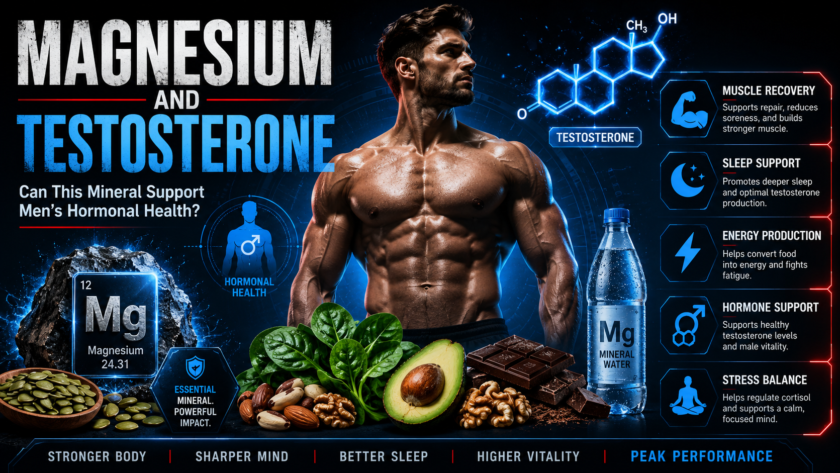
Magnesium is involved in more than 300 enzyme reactions in the body, making it one of the most important minerals for men’s health, energy, recovery, and overall performance.
It may not get the same attention as testosterone, protein, creatine, or vitamin D, but magnesium works quietly in the background, supporting the systems that help a man function properly.
Your muscles need it.
Your nervous system needs it.
Your energy production depends on it.
Your sleep, stress response, recovery, and hormone-supportive foundation may all be influenced by whether your body has enough of this essential mineral.
For men, this matters.
Because testosterone does not exist in isolation.
It is connected to sleep, training, stress, nutrition, recovery, minerals, and overall health. If the foundation is weak, the system can suffer.
Magnesium is not a miracle testosterone booster.
It is not a shortcut.
It is not a cure for low testosterone.
But it may be one of the key minerals men should stop ignoring if they want stronger recovery, better sleep, sharper performance, and a healthier hormonal foundation.
A serious man does not only chase the loud things.
He protects the quiet systems that keep him strong.
Magnesium is an essential mineral found naturally in foods such as leafy greens, nuts, seeds, legumes, and whole grains.
The body uses magnesium for many important functions, including:
Muscle function
Nerve function
Energy production
Protein synthesis
Blood glucose control
Blood pressure regulation
Bone health
Electrolyte balance
Normal cellular function
Magnesium is naturally present in many foods, added to some fortified foods, available as a supplement, and used in some medicines such as antacids and laxatives.
Magnesium is not glamorous.
But neither is discipline.
Both work quietly in the background.
And the things that work quietly in the background often hold the whole system together.

Does Magnesium Increase Testosterone?
This is the big question:
Does magnesium increase testosterone?
The careful answer is this:
Magnesium may support testosterone in some men, especially where magnesium intake is low, deficiency is present, recovery is poor, or training load is high. But magnesium should not be sold as a guaranteed testosterone booster for every man.
One study found that four weeks of magnesium supplementation increased free and total testosterone values in both sedentary men and athletes, with the highest values seen in athletes who combined magnesium with exercise.
A review on magnesium and anabolic hormones also states that evidence suggests magnesium may have a positive influence on anabolic hormonal status, including testosterone, in men.
But this does not mean magnesium alone will fix clinically low testosterone.
It does not mean every man needs a supplement.
It does not mean more magnesium equals more masculinity.
It means magnesium may help support the environment testosterone needs.
That environment includes:
Sleep
Nutrition
Training
Recovery
Stress control
Vitamin D status
Body composition
Mineral balance
Medical health
Magnesium does not replace those things.
It supports the foundation.
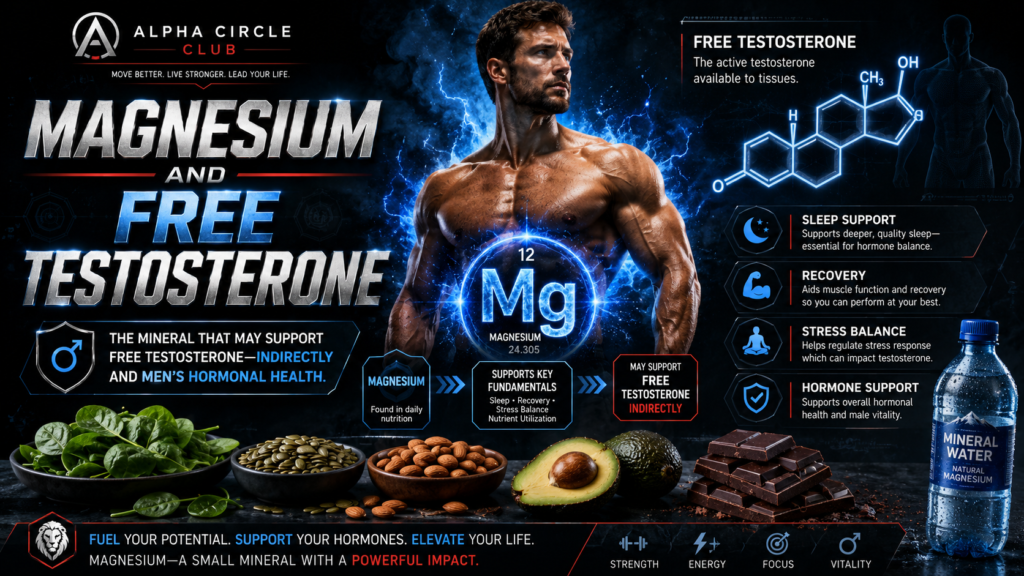
Magnesium and Free Testosterone
Magnesium may support testosterone in more than one way, but this section needs to be understood carefully.
It is not accurate to say magnesium automatically raises testosterone in every man. It is also too strong to claim magnesium “cures” low testosterone. A better way to say it is this:
Magnesium may help support the hormonal environment that allows testosterone to function properly — especially when a man has low magnesium intake, poor recovery, weak sleep, high stress, or heavy training demands.
Magnesium, SHBG, and Free Testosterone
Testosterone does not simply float around the body completely free.
A large amount of testosterone is bound to proteins in the blood, especially sex hormone-binding globulin, also known as SHBG. When testosterone is tightly bound to SHBG, it is less available for the body to use.
This is why men often pay attention to free testosterone.
Free testosterone is the portion that is more available to tissues.
Some research suggests magnesium may interact with SHBG and reduce how strongly testosterone binds to it, which may help increase testosterone availability. One study reported that magnesium can bind to SHBG in a way that inhibits testosterone binding, potentially increasing the amount of bioavailable testosterone.
This is why magnesium is often discussed in relation to free testosterone.
But the wording matters.
Magnesium should not be described as a guaranteed SHBG “destroyer” or an instant free testosterone booster. The more responsible message is:
Magnesium may help support free testosterone availability by influencing the relationship between testosterone and SHBG, but the effect depends on the individual man, his mineral status, training, recovery, age, diet, and overall health.
Men often search for magnesium and free testosterone because free testosterone is the form many men are especially interested in.
Total testosterone is the overall amount of testosterone measured in the blood.
Free testosterone is the portion not tightly bound to proteins and is considered more available for use by tissues.
Magnesium has been discussed in relation to free testosterone because it may interact with binding proteins such as SHBG. But this area needs to be explained carefully.
Some research suggests magnesium may be linked with higher free testosterone availability, but men should not assume that taking magnesium automatically creates a dramatic rise in free testosterone.
The goal is not to chase one number.
The goal is to build a body where hormones can function properly.
That means sleeping well.
Training properly.
Eating real food.
Recovering hard.
Getting enough minerals.
Managing stress.
Testing when needed.
A strong man does not worship numbers.
He builds the system behind them.
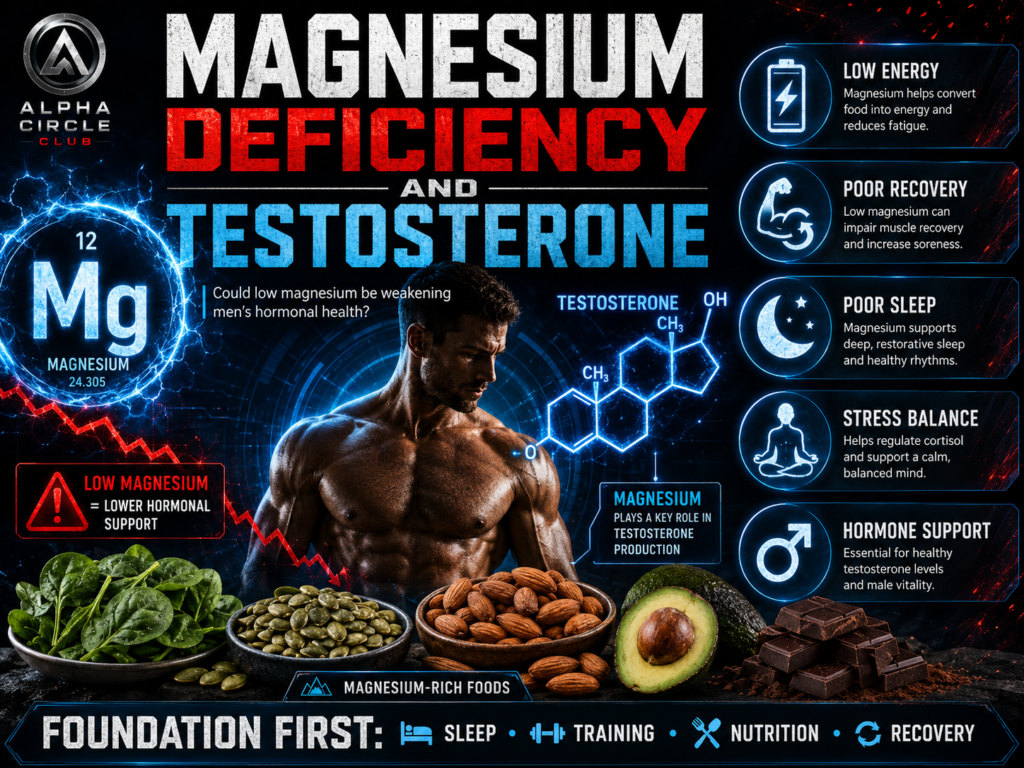
Magnesium Deficiency and Testosterone
A weak mineral foundation can create problems.
Possible signs of low magnesium intake may include fatigue, muscle cramps, weakness, poor sleep, irritability, and reduced exercise tolerance — but these symptoms are not specific and can have many possible causes.
Men at higher risk of low magnesium intake may include those who:
Eat a low-quality processed diet
Drink too much alcohol
Have certain digestive conditions
Use certain medications
Sweat heavily through training
Have poorly controlled diabetes
Eat very few magnesium-rich foods
Low magnesium does not automatically mean low testosterone.
But poor mineral intake can be part of a weaker health foundation.
And a man cannot build strong hormones from a weak nutritional foundation.
If the body is constantly underfed, under-rested, under-recovered, and low in essential nutrients, it should not surprise a man when energy, mood, performance, libido, and recovery start to suffer.
Magnesium and Leydig Cell Function
Leydig cells are the testosterone-producing cells inside the testes. They respond to luteinizing hormone, also called LH, and produce testosterone as part of the male hormonal system.
This makes Leydig cell health important for men’s hormonal health.
If the testes are under pressure from inflammation, oxidative stress, poor sleep, nutrient deficiencies, alcohol overload, obesity, overtraining, or poor recovery, testosterone production may suffer.
Magnesium may support Leydig cell function indirectly because it is involved in energy production, cellular function, muscle and nerve function, and many enzyme reactions throughout the body. Magnesium is not a direct “Leydig cell stimulant” in the same way LH is, but it may help support the cellular environment these testosterone-producing cells depend on.
A stronger and safer way to write it is:
Magnesium may support healthy testosterone production by helping the body maintain the cellular, metabolic, and recovery systems that Leydig cells need to function well.
This matters because testosterone production is not isolated.
It depends on:
Sleep
Nutrient status
LH signalling
Testicular health
Energy production
Oxidative stress balance
Inflammation control
Training and recovery
Overall metabolic health
Magnesium is one part of that foundation.
Not the whole foundation.
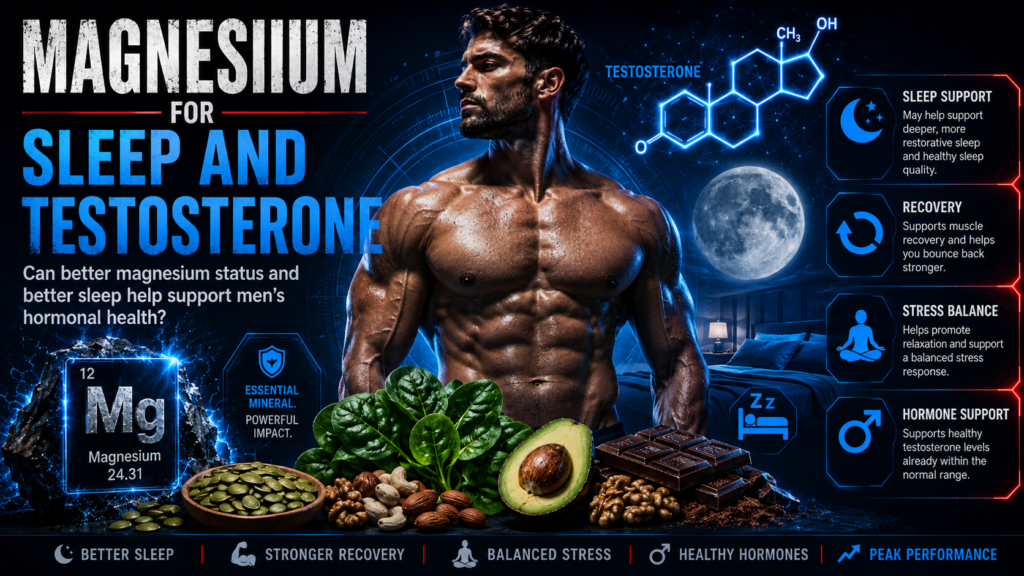
Magnesium for Sleep and Testosterone
This may be one of the most important angles for men.
Poor sleep is one of the biggest enemies of testosterone, recovery, focus, mood, discipline, and performance.
Magnesium may support sleep quality in some people, partly because of its role in nervous system and muscle function, but it should not be treated like a knockout pill.
A man does not protect testosterone by taking magnesium at night and scrolling until 2am.
Sleep requires standards.
Good sleep habits include:
Consistent bedtime
Dark, cool room
Less late-night scrolling
No caffeine too late
Evening wind-down routine
Morning sunlight
Training earlier if intense workouts affect sleep
Reducing alcohol
Protecting the final hour before bed
Magnesium may support the process.
But it cannot rescue a lifestyle that keeps attacking sleep every night.
No supplement beats discipline.
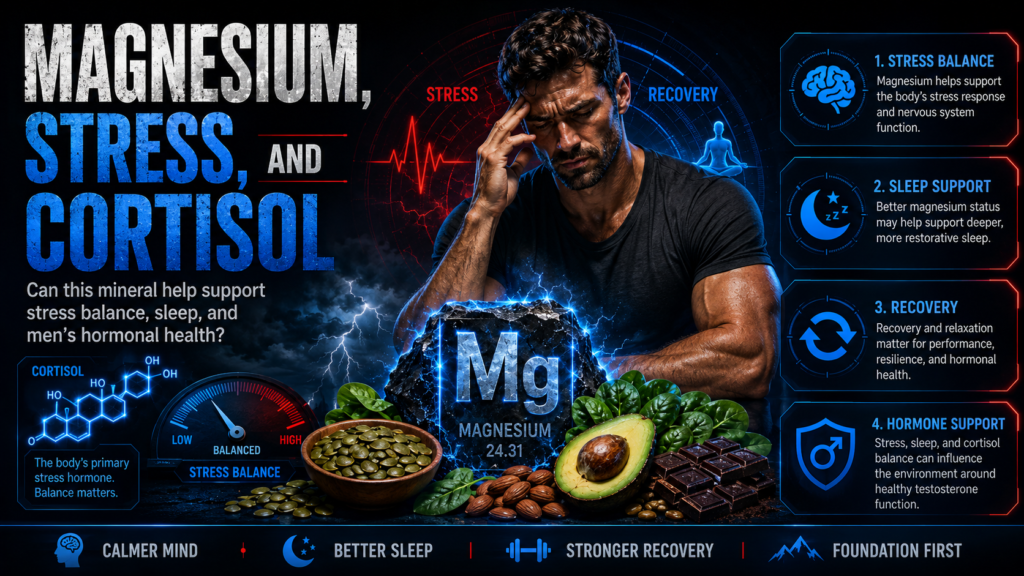
Magnesium, Stress, and Cortisol
Stress is not always bad.
Training is stress.
Business is stress.
Pressure is stress.
Competition is stress.
Growth requires stress.
But chronic stress without recovery is different.
When a man is constantly wired, under-slept, over-caffeinated, emotionally tense, training too hard, eating poorly, and never switching off, the body can start operating like it is in survival mode.
That can affect sleep, libido, mood, recovery, and mental clarity.
Magnesium may support normal nervous system function, which may indirectly help a man handle stress better. But again, magnesium is support — not a replacement for real stress management.
A man also needs:
Walking
Strength training
Prayer or quiet reflection
Better sleep
Less alcohol
Better boundaries
Less constant scrolling
Proper recovery
Real food
Time away from noise
Testosterone is not built in a body that is constantly stuck in survival mode.
A man must learn how to attack when it is time to attack — and recover when it is time to recover.
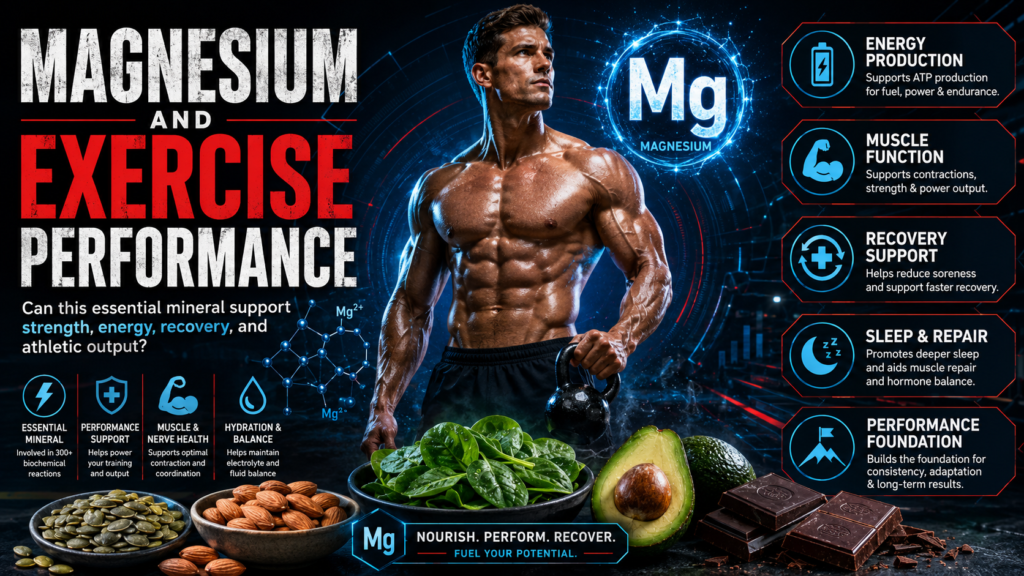
Magnesium and Exercise Performance
Magnesium matters for men who train.
It is involved in muscle function, nerve function, energy production, and protein synthesis.
That makes magnesium relevant for men who lift, sprint, train hard, and want better recovery.
Magnesium may support:
Muscle contraction
Nerve signalling
Energy metabolism
Training output
Recovery
Normal muscle function
Strength and conditioning support
But magnesium will not replace proper programming.
It will not replace protein.
It will not replace calories.
It will not replace hydration.
It will not replace sleep.
It will not replace recovery days.
The gym creates the signal.
Recovery builds the result.
Magnesium may support the machinery behind that recovery.
A man who trains hard but refuses to recover is not disciplined.
He is careless.

Best Magnesium for Testosterone
Many men search for the best magnesium for testosterone or magnesium glycinate testosterone.
The truth is simple:
There is no proven “best magnesium for testosterone” that works for every man.
Different forms may suit different goals and tolerances.
Magnesium Glycinate
Magnesium glycinate is often used by people focused on sleep, calmness, and relaxation. It is usually considered gentle on the stomach.
For men interested in sleep and recovery, this is often one of the most popular forms.
Magnesium Citrate
Magnesium citrate is commonly used and may be well absorbed for many people, but it can have a laxative effect in some.
This may suit some men, but not others.
Magnesium Malate
Magnesium malate is often discussed in relation to energy metabolism.
Some men prefer it earlier in the day rather than at night.
Magnesium Oxide
Magnesium oxide contains a high amount of elemental magnesium, but it is often considered less well absorbed and more likely to cause digestive side effects.
The best form depends on:
Your diet
Your goals
Your digestion
Your sleep
Your medical history
Your tolerance
Whether you take medication
Whether a healthcare professional has advised supplementation
Do not choose supplements by hype.
Choose them by purpose.
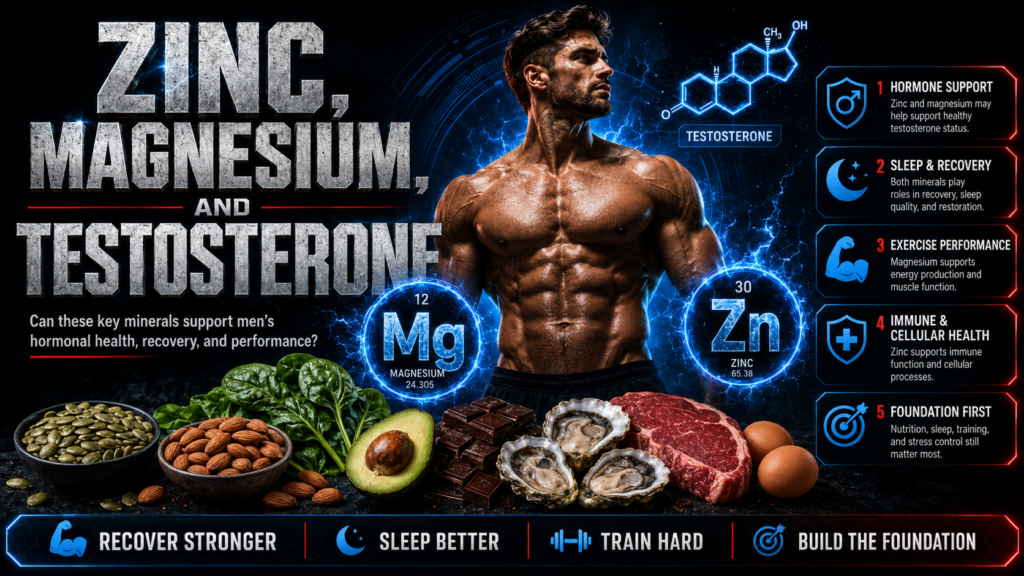
Zinc, Magnesium, and Testosterone
The keyword zinc magnesium and testosterone is popular because men often connect these minerals with hormone health.
Zinc and magnesium are both important minerals for men.
Zinc is connected with immune function, reproductive health, and normal testosterone production.
Magnesium supports muscle, nerve, energy, and recovery processes.
Together, they may help support the foundation.
But they are not magic.
This is where many supplement companies overhype products like ZMA.
Zinc and magnesium are not shortcuts.
They are building materials.
A man still has to build.
He still has to sleep.
He still has to train.
He still has to eat well.
He still has to manage stress.
He still has to test if symptoms persist.
Supplements do not replace standards.
They support standards.

Vitamin D, Magnesium, and Testosterone
Vitamin D is often discussed in relation to testosterone and men’s health.
Magnesium is also connected to vitamin D because it assists vitamin D metabolism. Research has described magnesium as a cofactor that helps with vitamin D metabolism, and more recent athlete-focused research notes that magnesium is important for vitamin D synthesis, transport, and activation.
This matters because men often think in isolated nutrients.
They ask:
“Should I take vitamin D?”
“Should I take magnesium?”
“Should I take zinc?”
But the male body is not built from one nutrient.
It is built from a system of habits.
Magnesium, vitamin D, zinc, protein, healthy fats, sleep, training, sunlight, body composition, and stress control all matter.
A man who wants better testosterone should think in systems, not shortcuts.

Magnesium-Rich Foods for Men
Supplements can help fill gaps.
Food builds the foundation.
Good magnesium-rich foods include:
Pumpkin seeds
Almonds
Cashews
Spinach
Black beans
Lentils
Dark chocolate
Avocado
Whole grains
Greek yoghurt
Bananas
Salmon
Mackerel
Wholemeal bread
Nuts
Seeds
The NHS lists spinach, nuts, and wholemeal bread as good sources of magnesium, and states that men aged 19 to 64 need around 300 mg of magnesium per day.
For Alpha Circle Club, the food-first standard is simple:
Eat like your hormones matter.
Eat like your recovery matters.
Eat like your future matters.
A man cannot run his body on ultra-processed food, caffeine, alcohol, and random snacks, then complain that his energy and performance are weak.
Build the foundation first.
Should Men Take a Magnesium Supplement?
A magnesium supplement may be useful for some men, especially if:
Dietary intake is low
Sleep is poor
Training load is high
Stress is high
A healthcare professional identifies a need
The man struggles to eat magnesium-rich foods
But supplementation should be done wisely.
Men should be especially careful if they have kidney disease, take medications, or are considering high-dose supplements.
High doses of supplemental magnesium can cause diarrhoea, nausea, and abdominal cramping, and very large doses can be dangerous. The NHS also notes that taking more than 400 mg of magnesium from supplements for a short time can cause diarrhoea.
More is not always more masculine.
Sometimes more is just careless.
The goal is not to mega-dose.
The goal is to correct gaps, support the foundation, and avoid stupidity.

The Alpha Circle Club Magnesium Hormone Support Checklist
This is the practical standard.
Not hype.
Not obsession.
A checklist for men who want better energy, recovery, sleep, and hormone-supportive habits.
1. Eat Magnesium-Rich Foods Daily
Seeds.
Nuts.
Greens.
Legumes.
Whole grains.
Quality whole foods.
Build the mineral foundation before chasing advanced supplements.
2. Protect Sleep First
No supplement can outperform a destroyed sleep routine.
If a man sleeps badly every night, fixing sleep becomes a priority.
Dark room.
Cool room.
Less scrolling.
Less late caffeine.
Consistent bedtime.
Recovery begins there.
3. Train Hard, Recover Harder
Magnesium supports function.
But recovery builds strength.
Lift.
Walk.
Sprint when appropriate.
Rest when needed.
A strong man trains with purpose, not ego.
4. Get Sunlight and Check Vitamin D
Vitamin D and magnesium work better as part of a full health system.
Get sensible sunlight where possible.
Consider testing vitamin D if symptoms or risk factors suggest it may be low.
Do not guess forever.
5. Do Not Ignore Zinc
Zinc matters for male reproductive health and normal testosterone production.
But balance matters.
Do not abuse high-dose supplements without guidance.
Build with food first.
6. Avoid Alcohol Overload
Alcohol can weaken sleep, recovery, nutrient status, and hormone-supportive habits.
A man who wants stronger hormones should question anything that repeatedly weakens his recovery.
7. Test, Do Not Guess
If symptoms of low testosterone persist, discuss proper blood work with a healthcare professional.
That may include total testosterone, free testosterone, SHBG, LH, FSH, prolactin, thyroid markers, vitamin D, full blood count, and metabolic markers depending on the situation.
Strong men deal in reality.
Testing gives reality.
8. Use Supplements Wisely
Choose quality.
Avoid excessive dosing.
Check labels.
Watch for digestive side effects.
Speak to a professional if you have health conditions or take medication.
Supplements should support discipline — not replace it.
What This Article Is Not Saying
This article is not saying magnesium cures low testosterone.
It is not saying magnesium boosts testosterone fast.
It is not saying magnesium replaces TRT or medical treatment.
It is not saying every tired man needs magnesium.
It is not saying one mineral can fix a broken lifestyle.
What it is saying is this:
Magnesium is an essential mineral for men’s health.
Magnesium may support testosterone indirectly through sleep, recovery, stress regulation, and training support.
Some evidence suggests magnesium may influence testosterone status in men.
Men with low intake may benefit from improving magnesium intake.
More is not always better.
Medical testing matters if symptoms persist.
That is the balanced position.
Not hype.
Not fear.
Not miracle claims.
Foundation.
Magnesium Is Not Magic — It Is Foundation
Magnesium will not turn a weak lifestyle into a strong one.
It will not replace sleep.
It will not replace training.
It will not replace protein.
It will not replace sunlight.
It will not replace recovery.
It will not replace medical testing.
But magnesium may support the foundation that male hormones depend on.
A man who wants stronger testosterone should stop looking for shortcuts and start building the system.
Sleep.
Train.
Eat real food.
Recover.
Control stress.
Get minerals.
Check deficiencies.
Test, do not guess.
Magnesium is not the whole answer.
But it may be one piece of the masculine health foundation.
A serious man does not chase miracle boosters.
He builds the body, habits, and environment that hormones can respect.
Call to Action
Want to support testosterone, recovery, sleep, and long-term male vitality?
Explore more Alpha Circle Club guides built for men who want strength, discipline, and hormonal resilience.



No spam. Unsubscribe anytime.