Most men do not think seriously about fertility until there is a problem.
They wait until a semen analysis comes back abnormal.
They wait until months of trying turn into frustration.
They wait until they hear words like low sperm count, poor motility, abnormal morphology, azoospermia, male factor infertility, or TRT and fertility risk.
Then suddenly, the language of male fertility becomes very real.
But here is the truth: male fertility is not just about sperm.
It is connected to your hormones, sleep, stress, nutrition, exercise, testosterone, inflammation, mental health, lifestyle discipline, and long-term male health.
Your fertility is not just a lab result.
It is a signal.
A signal of how your body is functioning.
A signal of how well you recover.
A signal of how well you sleep.
A signal of how you eat, train, think, and live.
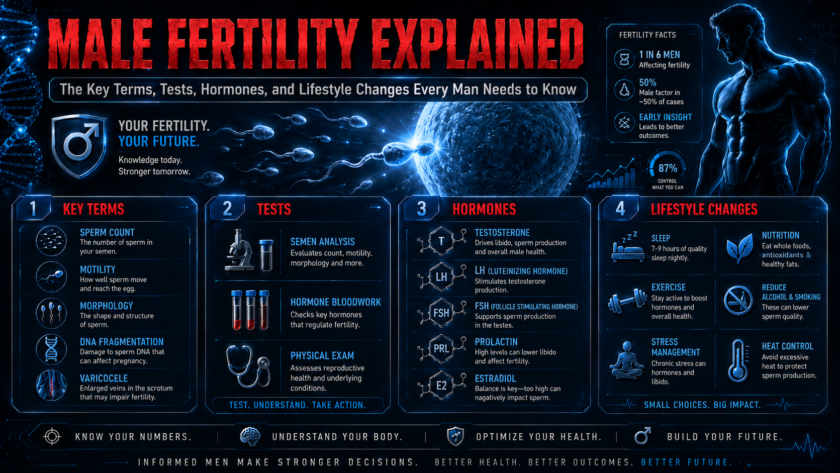
This male fertility glossary will explain the key terms every man should understand — but it will go further than definitions.
This is not just a glossary.
This is a male fertility action guide.
Why Men Need to Understand Fertility Terms
For too long, fertility has been treated like a women-only issue.
But men matter.
A man contributes half of the genetic material needed to create a child. Male fertility problems can involve low sperm count, poor sperm movement, abnormal sperm shape, hormonal imbalance, varicocele, oxidative stress, lifestyle damage, heat exposure, alcohol, smoking, poor sleep, and excess stress. Male fertility evaluation is designed not only to identify fertility issues, but also health conditions that may affect the man or future offspring.
That means male fertility is not something to ignore, avoid, or leave until the last minute.
If a man wants to lead, protect, build, and create a future family, he needs to understand what is happening inside his own body.
You do not need to become a doctor.
But you do need to understand the language.
Because when you understand the language, you stop being passive.
You ask better questions.
You make better decisions.
You protect your future.

Semen Analysis: The Test Every Man Should Know
A semen analysis is one of the main male fertility tests used to evaluate sperm health.
It usually looks at important markers such as semen volume, sperm concentration, total sperm count, sperm motility, sperm morphology, pH, viscosity, and total motile sperm count. The NHS explains that semen analysis checks the amount of sperm, how fast the sperm move, and the shape of the sperm.
This test matters because it can reveal whether sperm production, sperm movement, sperm shape, or semen quality may be affecting fertility.
A man should consider discussing a semen analysis with a healthcare professional if he has been trying to conceive without success, has used testosterone or anabolic steroids, has had testicular injury, has symptoms of a varicocele, has low libido or low testosterone symptoms, or simply wants a baseline before trying for a baby.
One important point: a single semen analysis does not always tell the full story.
Sperm results can vary. Illness, stress, heat, poor sleep, alcohol, medication, and lifestyle factors can affect results. If an issue is found, repeat testing is often needed to confirm the picture.
Do not panic from one result.
Study the result.
Understand it.
Then take action with proper medical guidance.
Sperm Count: Quantity Still Matters
Sperm count refers to how many sperm are present in a semen sample.
This matters because a lower sperm count can reduce the chance of sperm reaching and fertilising an egg.
But sperm count is not just a random number. It can be influenced by several factors, including poor diet, smoking, heavy alcohol use, obesity, poor sleep, heat exposure, stress, hormonal issues, medical conditions, and nutrient deficiencies.
This does not mean every case of low sperm count is caused by lifestyle.
But it does mean lifestyle cannot be ignored.
A man should not see a low sperm count and immediately collapse into fear. He should see it as information.
Information gives direction.
Direction gives power.
The next step is not panic.
The next step is proper evaluation, repeat testing if needed, and a serious look at the habits that may be weakening the body.
Motility: Can the Sperm Move?
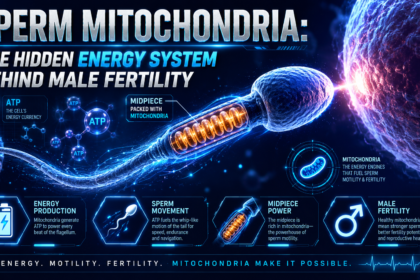
Sperm motility refers to sperm movement.
Sperm do not just need to exist. They need to move.
They need direction.
They need energy.
They need the ability to travel through the female reproductive tract and reach the egg.
A sperm cell without movement is like a man without direction.
Present, but not effective.
Motility may be influenced by oxidative stress, inflammation, mitochondrial function, diet, heat exposure, smoking, alcohol, and overall health. This is why sperm health should never be treated as separate from male health.
Energy matters.
Mitochondria matter.
Recovery matters.
Nutrition matters.
Your body is not building sperm in isolation. It is building sperm inside the environment you create every day.
Morphology: Shape and Structure Matter
Sperm morphology refers to sperm shape.
A sperm cell has a head, midpiece, and tail. If the shape is abnormal, it may affect movement or the ability to fertilise an egg.
But morphology needs to be understood carefully.
Men should not obsess over one number without professional interpretation.
A semen analysis is a full picture. Sperm count matters. Motility matters. Morphology matters. Total motile sperm count matters. Medical history matters. Female partner factors matter too.
Morphology is one signal.
It is not the whole war.
Total Motile Sperm Count: The Number Men Should Not Ignore
Total motile sperm count combines sperm quantity and movement.
This can be more useful than sperm count alone because it gives a clearer idea of how many sperm are actually moving.
It is not just how many sperm you produce.
It is how many are alive, moving, and capable of doing the job.
That is a powerful lesson for men.
Numbers are not enough.
Function matters.
Output matters.
Direction matters.
Azoospermia: When No Sperm Are Found
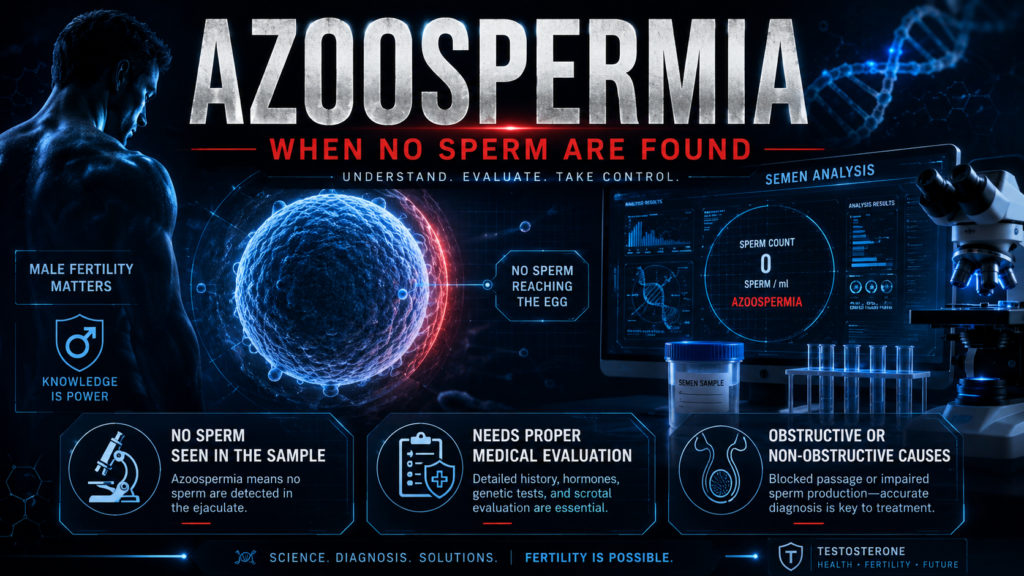
Azoospermia means no sperm are found in the semen sample.
This can be frightening, but it does not always mean there is no hope.
There are different types, including obstructive azoospermia, where sperm production may be happening but a blockage prevents sperm from appearing in the semen, and non-obstructive azoospermia, where sperm production itself may be severely impaired.
This is not something a man should try to diagnose on his own.
Azoospermia requires proper medical evaluation from a urologist or fertility specialist.
This is where a man needs discipline and courage.
Do not hide from the result.
Get properly assessed.
Varicocele: The Hidden Fertility Problem Many Men Miss
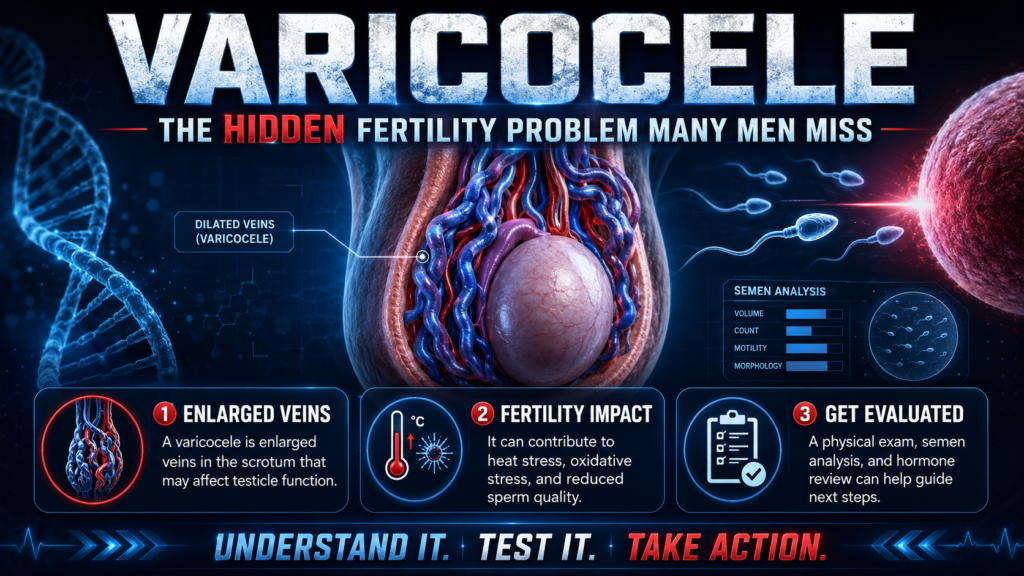
A varicocele is an enlargement of veins in the scrotum. Mayo Clinic explains that a varicocele can affect sperm quality and production, and may be linked with reduced sperm quantity and quality.
Some men may notice a dull ache, heaviness, visible enlarged veins, one testicle feeling different, or fertility struggles with no obvious explanation.
Other men may have no obvious symptoms.
That is why proper examination matters.
A varicocele does not automatically mean infertility, but it is one of the issues men should know about, especially if semen analysis results are abnormal.
If something feels off, do not ignore it.
A serious man gets checked.
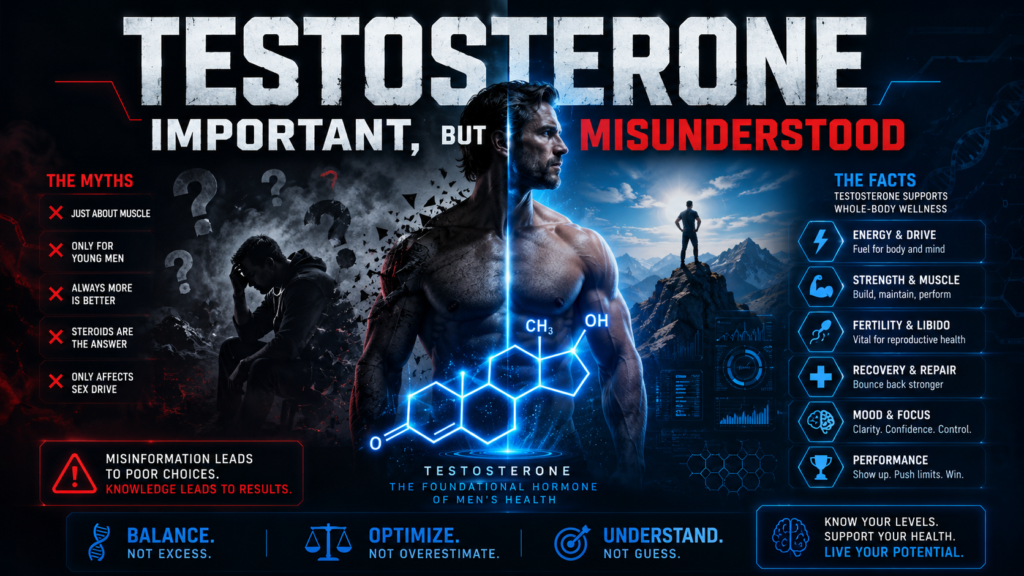
Testosterone: Important, But Misunderstood
Testosterone supports male health, libido, muscle, mood, energy, and reproductive function.
But testosterone is not simple.
Many men think fertility is just about having “high testosterone.”
That is a mistake.
Testosterone is part of a system.
To understand male fertility properly, a man needs to understand terms like total testosterone, free testosterone, SHBG, LH, FSH, sperm production, and testicular function.
A man can have testosterone symptoms and still need a deeper investigation.
He may have low testosterone.
He may have poor sleep.
He may have high stress.
He may have excess body fat.
He may have poor nutrition.
He may have a hormone signalling issue.
He may have testicular dysfunction.
This is why guessing is dangerous.
Testing matters.
Context matters.
Medical guidance matters.
Testosterone is not just a number on a blood test.
It is part of a system.
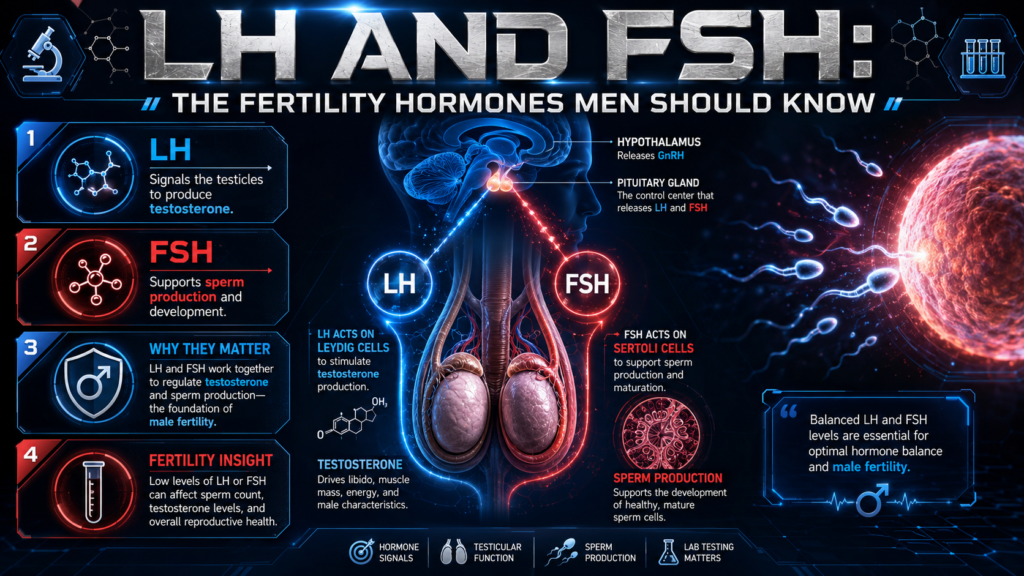
LH and FSH: The Fertility Hormones Men Should Know
LH and FSH are two key hormones involved in male reproductive function.
LH helps signal the testes to produce testosterone.
FSH supports sperm production.
A medical review explains that FSH acts on Sertoli cells, which are important for spermatogenesis, while LH stimulates Leydig cells, which are involved in testosterone production.
This matters because a man can have a testosterone problem, a sperm production problem, or both.
Blood tests may help a healthcare professional understand whether the issue is coming from the brain-testicle signalling system, the testes, or another underlying problem.
This is where men need to stop chasing random solutions.
You cannot fix what you do not understand.

TRT and Fertility: The Warning Every Man Needs Before Starting
TRT stands for testosterone replacement therapy.
For some men with medically diagnosed low testosterone, it may be considered under proper medical supervision.
But when fertility matters, TRT needs serious caution.
Testosterone therapy can suppress the body’s natural hormone signals. When LH and FSH drop, sperm production can fall. Cleveland Clinic warns that testosterone therapy can actually stop a man from producing sperm.
This is why men who want children should not start TRT blindly.
Before considering TRT, a man should speak to a qualified medical professional and ask about semen analysis, hormone testing, fertility preservation, and fertility-friendly alternatives where appropriate.
Do not chase higher testosterone while accidentally shutting down the system that produces sperm.
That is not alpha.
That is uninformed.
A serious man asks the hard questions before making decisions that could affect his future family.

Fertility Preservation: Planning Before It Is Too Late
Fertility preservation can include sperm freezing before medical treatments, testosterone therapy, chemotherapy, surgery, or other fertility-risk situations.
Many men assume fertility will always be there.
But age, illness, medication, lifestyle, hormone use, and medical treatment can change the picture.
Planning ahead is not weakness.
It is leadership.
A man who thinks ahead protects options for his future.
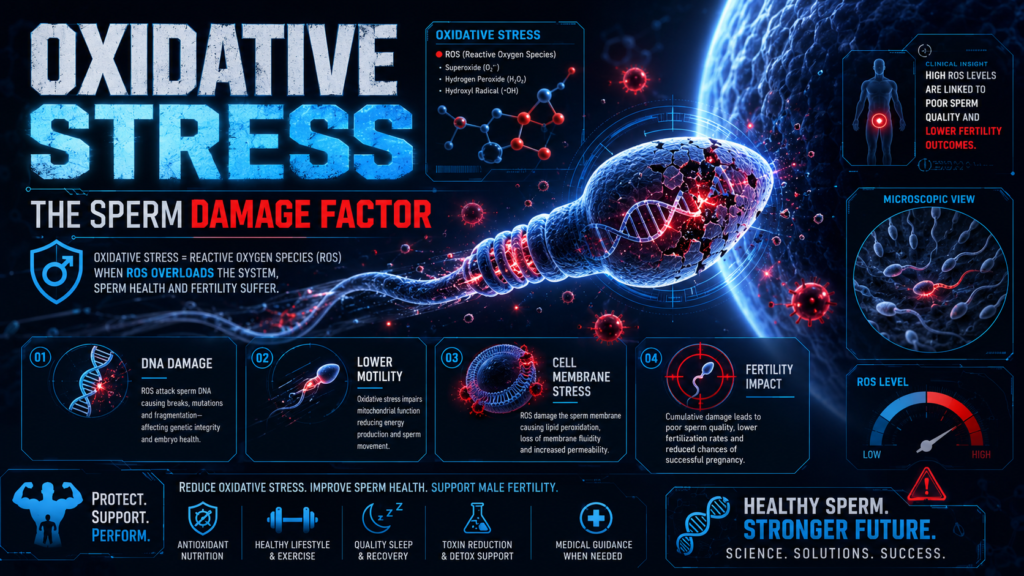
Oxidative Stress: The Sperm Damage Factor
Oxidative stress happens when harmful free radicals overwhelm the body’s antioxidant defences.
Sperm are vulnerable because they are delicate cells with sensitive membranes and DNA.
Oxidative stress may be linked with smoking, alcohol, poor diet, obesity, pollution, heat exposure, chronic stress, poor sleep, inflammation, and certain medical conditions.
This is where lifestyle becomes serious.
Every day, a man is either building a healthier internal environment or creating more damage.
That does not mean perfection.
It means standards.
Better food.
Better sleep.
Less alcohol.
No smoking.
More movement.
Less heat exposure.
More recovery.
More discipline.
Antioxidant-rich foods may support sperm health as part of a wider fertility-focused lifestyle.
But supplements and foods should never be treated like magic bullets.
The foundation comes first.
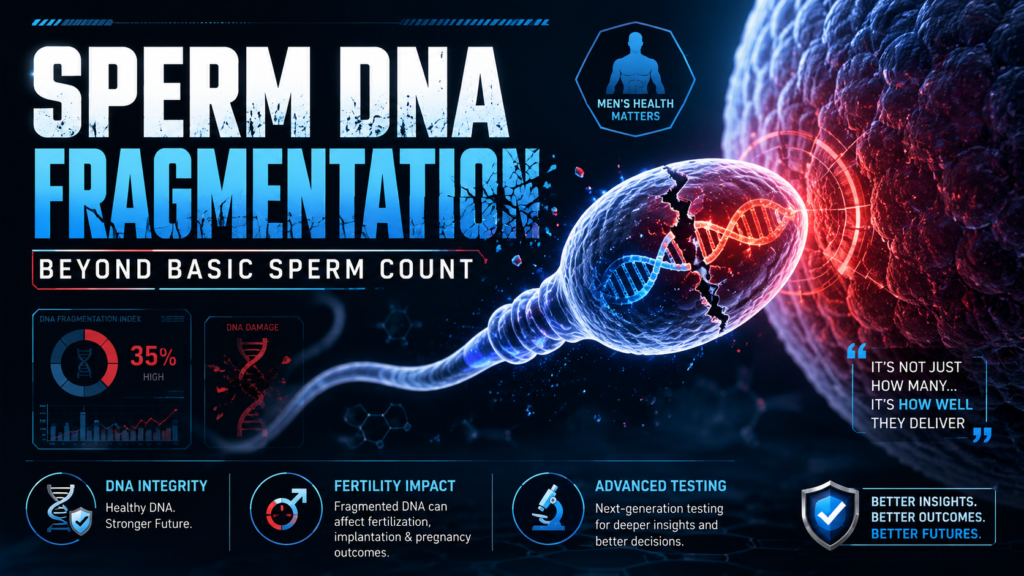
Sperm DNA Fragmentation: Beyond Basic Sperm Count
Sperm DNA fragmentation refers to damage in sperm DNA.
This matters because a man may have a semen analysis that looks acceptable in some areas, but sperm DNA quality may still be an issue.
This may be discussed in cases involving repeated fertility struggles, miscarriage history, failed fertility treatment, older paternal age, high oxidative stress, smoking, heavy alcohol use, or varicocele.
Not every man needs this test.
But every man should understand the concept.
Fertility is not only about how many sperm exist.
It is also about quality.
Strength is not just visible.
Sometimes the deepest damage is hidden.

Nutrition for Male Fertility: More Than “Eat Healthy”
Most fertility advice says, “eat a balanced diet.”
That is not enough.
Men need to understand that sperm are built from the materials the body receives.
Poor fuel creates poor output.
A fertility-supportive diet should focus on whole foods, adequate protein, healthy fats, vitamins, minerals, and antioxidants.
Key nutrients often discussed in male fertility include zinc, selenium, folate, vitamin C, vitamin E, omega-3 fatty acids, CoQ10, B vitamins, magnesium, protein, and antioxidants.
Food examples include eggs, oily fish, shellfish, pumpkin seeds, leafy greens, berries, citrus fruit, avocado, olive oil, Brazil nuts, lean meat, Greek yoghurt, beans, and lentils.
This is not about eating perfectly.
It is about giving your body the building blocks it needs.
A man’s sperm are built from the materials he gives his body.
Respect the process.
Respect the fuel.

Exercise and Fertility: Train Hard, Recover Smarter
Exercise is generally good for male health.
It can support weight management, insulin sensitivity, mood, circulation, strength, hormone health, and long-term wellbeing.
But there is a difference between training hard and destroying your body.
The issue is not exercise itself.
The bigger problems are overtraining, poor recovery, heat exposure, anabolic steroids, extreme dieting, chronic stress, and lack of sleep.
A smarter fertility-supportive approach may include strength training, walking, moderate cardio, mobility work, good sleep, recovery days, and avoiding steroid use.
Train like a man who wants strength, hormones, and fertility.
Not like a man trying to destroy his nervous system every week.
More is not always better.
Better is better.
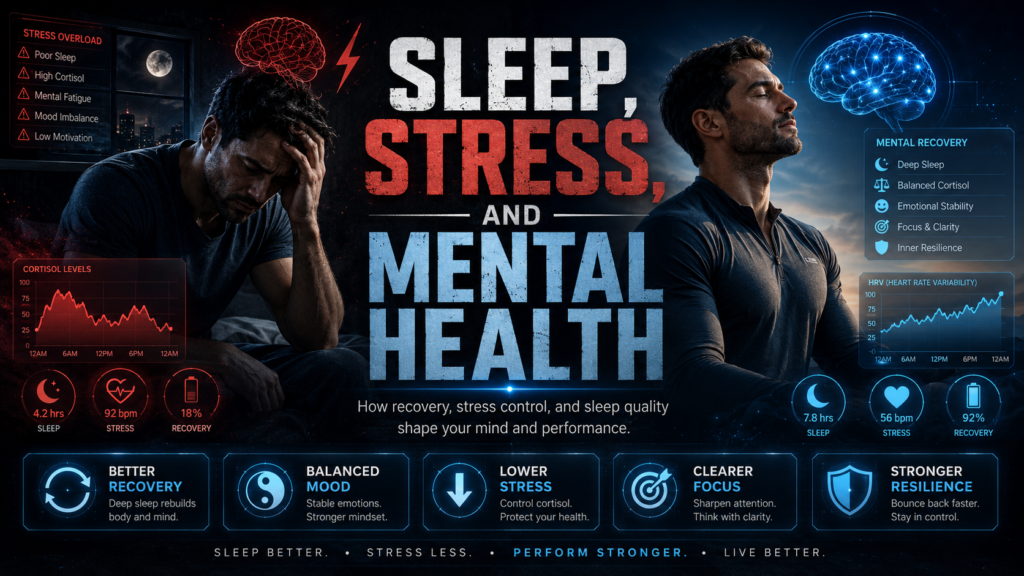
Sleep, Stress, and Mental Health
Male fertility is not only physical.
Stress, anxiety, depression, and poor sleep can affect libido, energy, decision-making, training, food choices, hormone health, and relationships.
Men may not always show stress through sadness.
They may show it through anger, irritability, isolation, overworking, risk-taking, porn use, alcohol, avoidance, or low motivation.
This matters because fertility struggles can hit a man hard.
They can affect confidence.
They can affect identity.
They can affect relationships.
They can make a man feel like he is failing in silence.
But silence is not strength when it keeps you trapped.
A man cannot build strong fertility on a broken nervous system.
Sleep matters.
Stress management matters.
Mental health matters.
Recovery matters.
The 70–90 Day Sperm Development Window
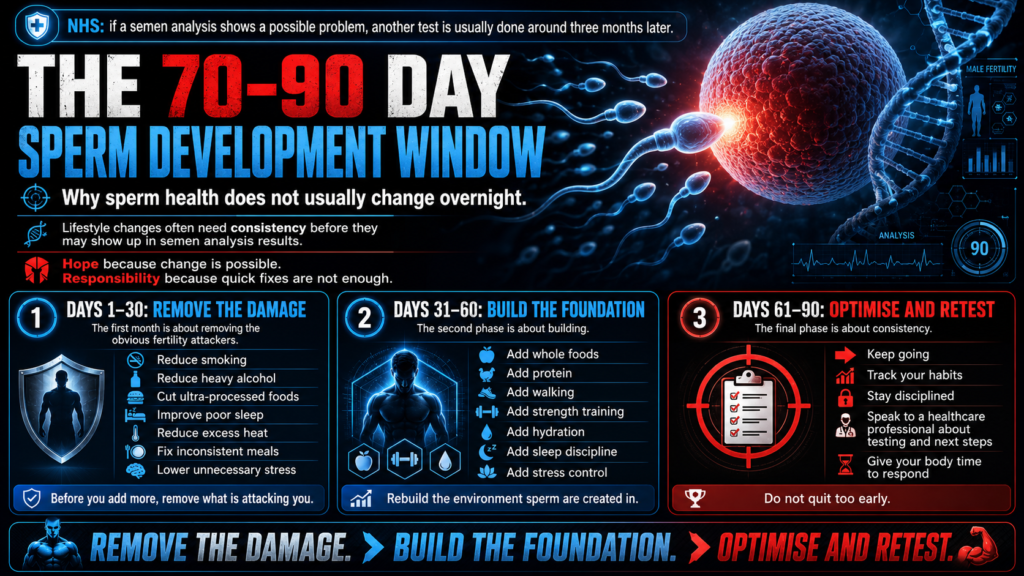
Sperm health does not usually change overnight.
This is one of the most important lessons men need to understand.
Sperm development takes time, which is why lifestyle changes often need consistency before they may show up in semen analysis results. The NHS notes that if a semen analysis finds a possible problem, another semen analysis is usually done around three months later.
This gives men both hope and responsibility.
Hope because change is possible.
Responsibility because quick fixes are not enough.
Days 1–30: Remove the Damage
The first month is about removing the obvious fertility attackers.
Reduce smoking, heavy alcohol, ultra-processed foods, poor sleep, excess heat, inconsistent meals, and unnecessary stress where possible.
This phase is not glamorous.
But it is powerful.
Before you add more, remove what is attacking you.
Days 31–60: Build the Foundation
The second phase is about building.
Add whole foods.
Add protein.
Add walking.
Add strength training.
Add hydration.
Add sleep discipline.
Add stress control.
You are not just trying to “boost sperm.”
You are rebuilding the environment sperm are created in.
Days 61–90: Optimise and Retest
The final phase is about consistency.
Keep going.
Track your habits.
Stay disciplined.
Speak to a healthcare professional about testing and next steps where needed.
This is where many men quit too early.
Do not be that man.
Give your body time to respond.
When to Speak to a Doctor or Fertility Specialist
This article is educational. It is not a replacement for medical advice.
A man should consider speaking to a doctor, urologist, or fertility specialist if he has been trying to conceive for 12 months without success, or 6 months if his female partner is over 35.
He should also seek advice if he has previous steroid or TRT use, very low libido, erectile issues, testicular pain, history of undescended testicle, cancer treatment history, varicocele symptoms, abnormal semen analysis, or repeated pregnancy loss.
Do not wait until the problem becomes bigger.
A disciplined man deals with reality early.
The Alpha Circle Club Male Fertility Action Plan
Male fertility can feel complicated, but action brings clarity.
Here is the simple starting framework:
Discuss a semen analysis if needed.
Discuss blood work with a professional.
Understand testosterone, LH, FSH, and fertility before considering TRT.
Improve sleep.
Reduce alcohol and smoking.
Eat fertility-supportive foods.
Train consistently but recover properly.
Reduce heat exposure where possible.
Manage stress.
Give the body 90 days of consistency.
You do not control every fertility outcome.
But you do control the standard you bring to your body, your habits, and your health.
Final Thoughts: Fertility Is a Signal
Male fertility is not something men should ignore until there is a crisis.
The more you understand the language, the less powerless you feel.
Semen analysis.
Motility.
Morphology.
TRT.
LH.
FSH.
Oxidative stress.
Sperm DNA fragmentation.
The 90-day sperm cycle.
These are not just medical terms.
They are signals.
They tell a man what may be happening inside his body — and where he may need to take action.
Your fertility is not just about becoming a father.
It is about becoming the kind of man who takes ownership before life forces him to.
Call to Action
Want to take your male fertility, testosterone, and health more seriously?
Explore more Alpha Circle Club guides built for men who want discipline, strength, and long-term vitality.



No spam. Unsubscribe anytime.