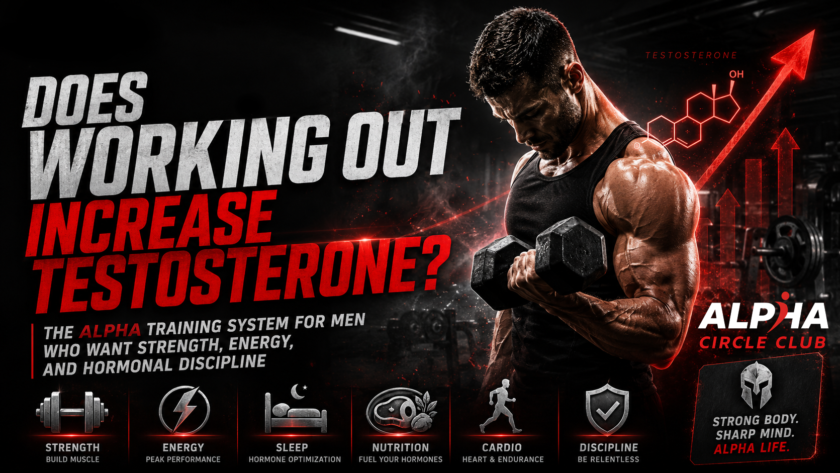
Most men ask the question simply:
Does working out increase testosterone?
But underneath that question is usually something deeper.
They want more energy.
They want more strength.
They want more drive.
They want better discipline, better confidence, stronger performance, and the feeling that their body is no longer working against them.
The honest answer is this: working out can support testosterone, especially through strength training, heavy compound movements, high-intensity interval training, improved body composition, better metabolism, and greater physical resilience.
But exercise is not a magic testosterone switch.
A hard workout can create a temporary hormonal response.
A disciplined lifestyle creates the environment where testosterone can function better.
That is the difference most men miss.
They train harder, but sleep worse.
They lift more, but recover less.
They chase testosterone, but ignore the habits that testosterone depends on.
This article is not another basic “5 exercises to boost testosterone” list.
This is the Alpha Circle Club training standard.
A complete system for men who want strength, energy, recovery, sleep discipline, better nutrition, smarter training, proper testing, and long-term hormonal health.
Alpha Thought:
Do not chase a quick hormone spike. Build the man whose body is disciplined enough to support strength long term.
Quick Alpha Summary
Working out may support testosterone, especially resistance training, heavy compound lifts, leg training, and HIIT.
But the best results do not come from training harder every day.
They come from training properly, recovering properly, sleeping properly, eating properly, and testing when symptoms persist.
Strength training two to four times per week can be a strong foundation for men.
HIIT one to two times per week can be useful, but too much high-intensity work without recovery can backfire.
Leg training matters because large lower-body movements challenge more muscle mass and build a stronger full-body foundation.
Walking, mobility, sleep, rest days, and stress control are not weak. They are part of the testosterone support system.
Men with ongoing low testosterone symptoms should test, not guess.
Alpha Thought:
The stronger man is not built by one workout. He is built by the system he refuses to break.
Does Working Out Increase Testosterone?
Working out can increase testosterone temporarily, especially after certain forms of resistance training and high-intensity exercise.
But the effect depends on the man.
It depends on the workout.
It depends on the intensity.
It depends on recovery, sleep, nutrition, age, body composition, stress levels, and overall health.
This is why two men can follow the same workout and get different results.
One man may sleep well, eat properly, recover fully, manage stress, and train with structure.
Another man may train hard while sleeping badly, eating poorly, drinking too much alcohol, and living under constant stress.
The workout is not the only factor.
The system around the workout matters.
Exercise can support testosterone, but it does not guarantee high testosterone by itself. A workout can trigger a short-term response, but long-term male health requires a stronger foundation.
That foundation includes strength, muscle mass, healthy body fat, good sleep, controlled stress, proper nutrition, and medical testing when symptoms persist.
This is where men need to be careful.
Working out is powerful.
But it is not a replacement for medical evaluation if a man has symptoms such as low libido, erectile problems, ongoing fatigue, low mood, brain fog, loss of muscle, infertility concerns, or poor recovery.
Training is part of the answer.
It is not the whole answer.
Alpha Thought:
One workout may wake the system up. Discipline keeps the system alive.
Temporary Testosterone Spikes vs Long-Term Hormonal Health
Many men hear that exercise can increase testosterone and immediately focus on the short-term spike.
They want the workout that gives the biggest hormonal response.
They want the fastest result.
They want the shortcut.
But a temporary testosterone increase after a workout is not the same as long-term hormonal health.
A man can have a short-term testosterone rise after training and still be living in a way that weakens his energy, libido, mood, confidence, and performance.
That is why the bigger goal is not a temporary spike.
The bigger goal is building the body and lifestyle that supports testosterone over time.
Long-term testosterone support comes from building muscle, reducing excess body fat, improving insulin sensitivity, sleeping better, managing stress, eating enough protein and healthy fats, training consistently, avoiding overtraining, and supporting important nutrients such as vitamin D, zinc, and magnesium.
It also comes from being mature enough to get blood work when symptoms persist.
This is what separates a serious man from a man chasing internet hacks.
The serious man does not ask, “What can I do once to spike testosterone?”
He asks, “What system can I build that makes me stronger every week?”
That is the Alpha Circle Club standard.
Do not chase the spike.
Build the standard.
Alpha Thought:
A spike fades. A standard stays.
Strength Training: The Foundation of the Alpha Testosterone System
Strength training should be the foundation of a man’s testosterone support system.
Not because lifting weights is magic.
Not because one gym session solves everything.
But because resistance training challenges the muscles, bones, nervous system, metabolism, and mind.
It teaches a man to push with control.
It teaches pressure.
It teaches patience.
It teaches discipline.
Strength training helps build muscle, improve body composition, support metabolic health, and create a stronger physical identity.
For men who want to support testosterone naturally, the foundation should usually include compound resistance movements.
These are exercises that use multiple joints and recruit large amounts of muscle.
The best strength movements include squats, deadlifts, bench press, rows, pull-ups, overhead press, lunges, dips, and loaded carries.
These exercises are not easy.
That is the point.
They demand effort.
They demand technique.
They demand progression.
They demand respect.
For many men, two to four strength sessions per week is a strong target. Beginners may start with two sessions. More experienced men may use three or four, depending on recovery.
But the goal is not to destroy the body.
The goal is to stimulate, recover, adapt, and grow stronger.
A beginner should not rush into heavy weights just because he wants faster results. Form comes first. Control comes first. Progression comes after consistency.
A man who trains carelessly is not disciplined.
He is reckless.
The Alpha standard is different.
Lift with purpose.
Control the weight.
Build the structure.
Repeat the process.
Alpha Thought:
A man does not build strength by wishing for more testosterone. He builds the body testosterone respects.
Heavy Compound Movements: The Core Testosterone Training Weapons
Heavy compound resistance movements are often the best place to start because they train large muscle groups and demand full-body effort.
These are not fancy exercises.
They are not social media tricks.
They are the movements that build real strength.
Squat
The squat builds lower-body strength, core stability, hip power, balance, and discipline.
It trains the quads, glutes, hamstrings, hips, and trunk.
A good squat teaches a man how to brace, descend under control, drive through pressure, and stand back up.
That is more than an exercise.
That is a physical lesson.
Deadlift
The deadlift builds posterior-chain strength, grip, back strength, hip power, and mental toughness.
It teaches a man to pull from the ground, create tension, and move weight with control.
The deadlift is simple, but it is not easy.
It exposes weakness quickly.
That is why it is valuable.
Bench Press
The bench press builds upper-body pressing strength through the chest, shoulders, and triceps.
It is one of the most common strength movements, but it should still be performed with control, proper shoulder position, and full-body tension.
A strong bench press is not just about pushing.
It is about setup, stability, breathing, and control.
Row
Rows balance pressing movements and strengthen the back.
They help build posture, shoulder health, pulling strength, and upper-body density.
Many men train what they can see in the mirror and neglect the back.
That is a mistake.
A strong back supports a stronger frame.
Pull-Up
The pull-up builds back, grip, arms, and upper-body control.
It is one of the clearest tests of relative strength.
A man who can control his own bodyweight has built something real.
If pull-ups are too difficult at first, use assisted pull-ups, lat pulldowns, or inverted rows.
Progress matters more than ego.
Overhead Press
The overhead press builds shoulder strength, core stability, and full-body tension.
It teaches a man to press weight while staying braced, balanced, and controlled.
It is demanding because there is nowhere to hide.
Weakness in the core, shoulders, or technique shows quickly.
Loaded Carry
Loaded carries build grip, traps, core, posture, conditioning, and mental resilience.
They are simple.
Pick up heavy weight.
Walk with control.
Do not collapse.
That simplicity is what makes them powerful.
Loaded carries train the body and the mind at the same time.
The best exercises are not always the newest ones.
They are the ones that demand effort, control, and progression.
Alpha Thought:
Train the movements that build the whole man, not just the muscles people see.
Leg Training: The Missing Standard for Many Men
Many men train chest and arms with intensity but treat leg day like an optional extra.
That is not the Alpha standard.
Leg training matters because the lower body contains large muscle groups. Training the legs creates a serious physical demand and builds power, athleticism, balance, and full-body strength.
Men who skip legs are often building an incomplete body.
They may look trained from certain angles, but the foundation is missing.
A serious man builds from the ground up.
The best leg movements include squats, front squats, lunges, Bulgarian split squats, Romanian deadlifts, step-ups, leg press, sled pushes, and hill sprints.
Each movement builds something different.
Squats build strength.
Deadlift patterns build posterior-chain power.
Lunges build balance and single-leg control.
Sled pushes build conditioning and aggression.
Walking supports recovery.
Together, these movements create a stronger lower-body system.
Leg training is also mental.
It teaches a man not to avoid difficult work.
It forces effort.
It exposes weakness.
It demands breath, focus, and control.
That is why many men avoid it.
And that is exactly why serious men should do it.
The man who only trains the muscles people praise is still controlled by approval.
The man who trains legs builds the foundation even when nobody is watching.
That is discipline.
Alpha Thought:
A man who skips legs often skips the hard standard. Build from the ground up.
HIIT: Powerful, But Not Every Day
High-intensity interval training can be a powerful tool when it is used correctly.
HIIT can support conditioning, fat loss, metabolism, fitness, and training intensity. It can also be useful for men who want short, sharp sessions that challenge the body without spending hours doing cardio.
Examples of HIIT include sprint intervals, hill sprints, assault bike intervals, rowing intervals, battle ropes, kettlebell circuits, and bike sprints.
But HIIT must be respected.
It is not something most men should do every day.
Too much high-intensity training without enough sleep, food, and recovery can increase fatigue, weaken performance, disturb sleep, increase soreness, and work against the very system a man is trying to build.
HIIT is a weapon.
Used correctly, it sharpens the man.
Used recklessly, it drains him.
For many men, one to two HIIT sessions per week is enough.
A simple sprint session could look like this:
Warm up for 10 minutes.
Sprint for 15 to 20 seconds.
Rest for 90 to 120 seconds.
Repeat for 6 to 8 rounds.
Cool down for 5 to 10 minutes.
That is enough.
The goal is not to crawl home destroyed.
The goal is to train with controlled intensity and recover properly afterwards.
A disciplined man does not confuse punishment with progress.
Alpha Thought:
Intensity without recovery is not discipline. It is self-destruction dressed as effort.
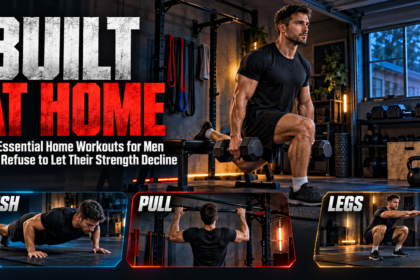
Bodyweight Training: The No-Excuse Option
Not every man has access to a gym.
Not every man is ready for heavy weights.
Not every man knows where to start.
That does not mean he has an excuse.
Bodyweight training can build strength, consistency, movement control, and discipline. It may not replace heavy lifting for advanced strength development, but it is a powerful starting point.
The floor is enough.
The body is enough.
The will is enough.
Good bodyweight exercises include push-ups, pull-ups, inverted rows, bodyweight squats, split squats, planks, burpees, mountain climbers, and walking lunges.
A simple beginner bodyweight circuit could look like this:
Push-ups: 8 to 15 reps.
Bodyweight squats: 15 to 20 reps.
Plank: 30 to 60 seconds.
Inverted rows: 8 to 12 reps.
Walking lunges: 10 each leg.
Repeat for 3 to 4 rounds.
This is not complicated.
But it works if the man works.
Bodyweight training teaches consistency. It removes excuses. It shows a man that discipline does not require perfect conditions.
A man who cannot train at the gym can still train his standard at home.
He can still become stronger.
He can still build momentum.
He can still start.
Alpha Thought:
No gym is not an excuse. The floor, the body, and the will are enough to begin.
Cardio, Walking, and Testosterone: The Balanced Truth
Cardio is not the enemy.
Some men hear that endurance training may reduce testosterone when overdone, and they make the mistake of thinking all cardio is bad.
That is too simplistic.
Walking, zone 2 cardio, and low-impact movement can support heart health, blood flow, fat loss, stress control, recovery, and general male health.
A man who lifts but cannot walk up stairs without losing breath is not truly fit.
A man who only chases heavy weights while ignoring heart health is missing part of the system.
The best options include daily walking, zone 2 cycling, incline treadmill walking, swimming, light jogging if recovery is good, and mobility-based recovery sessions.
Walking is especially underrated.
It is simple, low stress, easy to recover from, and powerful for consistency.
The Alpha approach is balanced:
Walk daily.
Use zone 2 cardio one to three times per week if needed.
Use HIIT one to two times per week.
Avoid turning every session into punishment.
The problem is not cardio.
The problem is excessive endurance training combined with poor sleep, low calories, high stress, and no recovery.
Cardio should support the system.
It should not drain it.
Alpha Thought:
Walk like a man rebuilding his system, not like a man trying to punish his body.
Recovery Training: The Forgotten Testosterone Tool
Recovery is not laziness.
Recovery is where adaptation happens.
Training creates the signal.
Recovery allows the body to respond.
Many men get this wrong because they think masculinity means constantly pushing harder.
But if a man trains hard, sleeps badly, eats poorly, ignores stress, and never rests, he is not becoming stronger.
He is fighting his own system.
Recovery tools include 7 to 9 hours of sleep, rest days, walking, mobility work, stretching, breathwork, lower-stress training days, proper warm-ups, planned deload weeks, hydration, and enough calories and protein.
These are not optional extras.
They are part of the training system.
A man cannot out-train poor sleep.
He cannot out-supplement chronic stress.
He cannot build strength on low fuel forever.
He cannot expect better testosterone while living in constant physical and mental chaos.
The man who recovers properly is not weaker than the man who trains every day.
He is smarter.
He understands that strength is not built during the workout alone.
It is built in the recovery after the workout.
Sleep matters.
Food matters.
Rest matters.
Stress control matters.
A disciplined man does not just train hard.
He recovers with the same seriousness.
Alpha Thought:
The man who trains hard but refuses to recover is not becoming stronger. He is fighting his own system.
Overtraining and Testosterone: When Hard Work Starts Working Against You
More training is not always better.
This is hard for ambitious men to accept.
When a man feels weak, tired, overweight, unmotivated, or disconnected from his drive, he may think the solution is to train harder and harder.
But if he pushes too hard, too often, for too long, especially without sleep, food, and recovery, the system can start working against him.
Warning signs of overtraining or under-recovery may include poor sleep, low libido, constant fatigue, irritability, weaker workouts, loss of motivation, persistent soreness, brain fog, increased cravings, lower mood, higher resting heart rate, more injuries, and reduced morning energy.
These signs matter.
They are not weakness.
They are feedback.
A disciplined man listens to feedback before the body forces him to stop.
The goal is not to destroy the body.
The goal is to stimulate, recover, adapt, and build.
Training should make a man stronger.
It should not leave him constantly exhausted.
This is why the Alpha system includes strength, HIIT, walking, mobility, sleep, nutrition, and recovery days.
A man who trains with structure can push hard without burning out.
A man who trains from ego eventually breaks his own system.
Alpha Thought:
If your training destroys your sleep, libido, mood, and motivation, it is not building your testosterone standard. It is burning it down.
The 7-Day Alpha Testosterone Training Blueprint
This is where the article becomes more than another exercise list.
This is the system.
It combines strength, HIIT, walking, recovery, and preparation.
The goal is not to destroy the body.
The goal is to stimulate, recover, adapt, and build.
Monday: Strength Training A
Focus on the squat pattern, upper-body push, upper-body pull, and core.
Example session:
Squat: 3 to 5 sets.
Bench press: 3 to 5 sets.
Row: 3 to 4 sets.
Plank or hanging knee raise: 3 sets.
This session builds lower-body strength, upper-body pressing strength, back strength, and trunk control.
Start the week with structure.
Start with effort.
Start with control.
Tuesday: Recovery and Walking
Focus on movement, blood flow, stress reduction, and sleep.
Example:
30 to 45 minute walk.
Mobility work.
Stretching.
Early sleep target.
This day is not wasted.
It supports the next hard session.
A man who recovers properly earns the right to train hard again.
Wednesday: HIIT
Focus on short, controlled intensity.
Example:
Warm up properly.
Perform 6 to 8 rounds of sprints, bike intervals, or rowing intervals.
Use full recovery between rounds.
Cool down afterwards.
The aim is sharp intensity, not reckless exhaustion.
Leave the session feeling challenged, not destroyed.
Thursday: Strength Training B
Focus on the deadlift pattern, overhead press, pull-up, and lunge.
Example session:
Deadlift or Romanian deadlift: 3 to 5 sets.
Overhead press: 3 to 4 sets.
Pull-ups or lat pulldown: 3 to 4 sets.
Lunges: 3 sets.
This session builds posterior-chain strength, shoulder strength, pulling power, and lower-body control.
It trains the body as a complete unit.
Friday: Active Recovery
Focus on recovery, mobility, zone 2 cardio, and stress control.
Example:
30 to 60 minute walk.
Zone 2 cardio if needed.
Stretching.
No hard intensity.
This is the day to lower stress and prepare the body for Saturday.
A serious man does not need to prove himself every day.
He needs to build himself every week.
Saturday: Strength Training C
Focus on full body, loaded carries, and controlled volume.
Example session:
Leg press or squat variation: 3 to 4 sets.
Incline press: 3 to 4 sets.
Row: 3 to 4 sets.
Loaded carries: 4 rounds.
Core work.
This session builds strength, muscle, posture, grip, conditioning, and resilience.
It should feel strong, focused, and controlled.
Sunday: Full Recovery
Focus on reset and preparation.
Example:
Rest.
Meal prep.
Sunlight.
Sleep reset.
Progress review.
Plan the next week.
Sunday is where the serious man prepares his next standard.
He does not drift into the week.
He enters it ready.
Alpha Thought:
The Alpha system is simple: train with purpose, recover with discipline, return stronger.
Beginner, Intermediate, and Advanced Versions
Not every man should train the same way.
The right level is the one a man can recover from and repeat.
Ego chooses the hardest plan.
Discipline chooses the right plan.
Beginner Version
This is best for men returning to training, overweight men, older beginners, or men with low fitness.
Start with two strength sessions per week.
Walk three to five times per week.
Avoid HIIT at first.
Focus on form.
Prioritise sleep.
Build consistency before intensity.
A beginner does not need to prove anything.
He needs to build the habit.
The first victory is showing up.
Intermediate Version
This is best for men with some training experience.
Use three strength sessions per week.
Add one HIIT session per week.
Walk daily.
Track your lifts.
Track your sleep.
Add mobility work.
The intermediate man must stop training randomly. He needs progression, structure, and recovery.
Advanced Version
This is best for men already training consistently.
Use four strength sessions per week if recovery allows.
Use one to two HIIT sessions per week.
Plan deload weeks.
Track recovery.
Track sleep.
Consider blood work if symptoms persist.
The advanced man needs discipline, not chaos.
He must understand that more is not always better.
Better is better.
Alpha Thought:
Do not train like the man you want to impress. Train like the man you are disciplined enough to become.
Rest Periods, Reps, and Progression
A man should not train randomly.
Random effort creates random results.
Structured effort builds a stronger man.
For heavy compound lifts, men often benefit from lower reps, heavier weight, and longer rest periods when the goal is strength.
For muscle-building work, moderate reps and controlled volume can be useful.
For conditioning, short bursts and smart recovery matter.
Strength Focus
Reps: 3 to 6.
Sets: 3 to 5.
Rest: 2 to 3 minutes.
Purpose: strength, power, heavy compound work.
This is useful for exercises like squats, deadlifts, bench press, overhead press, and heavy rows.
Muscle-Building Focus
Reps: 6 to 12.
Sets: 3 to 4.
Rest: 60 to 120 seconds.
Purpose: muscle growth and training volume.
This can work well for rows, lunges, presses, pull-downs, split squats, and accessory movements.
Conditioning Focus
Reps or time: short bursts.
Rest: full or partial recovery.
Purpose: HIIT, work capacity, intensity.
This can include sprint intervals, rowing intervals, assault bike work, battle ropes, or kettlebell circuits.
Progression matters.
A man should not simply repeat the same weights forever and expect a different body.
Progression options include adding weight, adding reps, adding sets, improving form, improving range of motion, reducing unnecessary rest, and improving recovery and consistency.
But progression should be earned.
Do not add weight if form breaks down.
Do not add intensity if sleep is poor.
Do not add volume if recovery is failing.
The Alpha standard is controlled progression.
Not ego lifting.
Not chaos.
Not random effort.
Alpha Thought:
Random effort creates random results. Structured effort builds a stronger man.
The Alpha Testosterone Support Stack
Exercise works best when the body has the raw materials and recovery environment to adapt.
Training is the signal.
Sleep, food, minerals, sunlight, hydration, and recovery are the support system.
A man who trains hard but lives on poor sleep, poor food, high stress, and low discipline is trying to build a strong body on a weak foundation.
That does not work long term.
Sleep
Aim for 7 to 9 hours of quality sleep.
Poor sleep can weaken energy, recovery, mood, motivation, training quality, and hormonal health.
If a man wants better testosterone, sleep cannot be treated like an optional extra.
Sleep is part of the program.
Protein
Protein supports muscle repair, training adaptation, satiety, and body composition.
Men who train hard need to eat in a way that supports recovery.
Training breaks the body down.
Food helps build it back.
Healthy Fats
Healthy fats from foods like eggs, olive oil, avocado, oily fish, nuts, and seeds can support a stronger nutrition foundation.
Low-quality food creates low-quality fuel.
A man’s body cannot perform at a high standard if his diet is constantly working against him.
Zinc
Zinc is important for male reproductive health and general hormone function.
Good food sources may include oysters, beef, pumpkin seeds, seafood, eggs, and dairy.
A man should not guess blindly with supplements. Food first, testing when needed, and professional advice if unsure.
Magnesium
Magnesium supports muscle function, relaxation, sleep quality, and recovery.
Good food sources may include leafy greens, nuts, seeds, dark chocolate, legumes, and whole grains.
For men training hard, recovery minerals matter.
Vitamin D
Sunlight and vitamin D status matter.
Men should consider testing rather than guessing, especially if they get little sunlight or live in places with long winters.
Vitamin D is not something to blindly megadose.
It should be handled intelligently.
Hydration
Dehydration can affect performance, energy, focus, and training quality.
A man who wants to train hard must handle the basics.
Water is basic.
Electrolytes may also matter for men who sweat heavily.
Stress Control
Chronic stress can work against sleep, recovery, motivation, mood, and male performance.
A man cannot live in constant stress and expect his body to thrive.
Stress control may include walking, prayer, journaling, breathing exercises, better time management, fewer distractions, and stronger boundaries.
Body Fat Control
Excess body fat can affect energy, confidence, metabolic health, and hormone balance.
This does not mean a man should starve himself.
It means he should build a sustainable system: strength training, walking, protein, sleep, and consistency.
Alcohol and Ultra-Processed Foods
Too much alcohol and poor-quality food can weaken the system men are trying to build.
A man cannot keep feeding the old identity and expect the new body to appear.
The Alpha Testosterone Support Stack is simple:
Train.
Sleep.
Eat.
Recover.
Walk.
Get sunlight.
Control stress.
Test when needed.
Repeat.
Alpha Thought:
You cannot build a high-standard body on low-standard habits.
Test, Do Not Guess
This section matters.
If a man has ongoing symptoms of low testosterone, he should not rely on workouts, supplements, or internet advice alone.
He should speak to a medical professional and consider proper blood testing.
Symptoms to take seriously include low libido, erectile issues, fatigue, low mood, brain fog, loss of muscle, increased belly fat, poor motivation, infertility concerns, weak recovery, and loss of morning energy.
These symptoms do not always mean low testosterone.
They can overlap with sleep problems, stress, thyroid issues, depression, nutrient deficiencies, metabolic problems, medication effects, alcohol use, relationship stress, and other health issues.
That is why testing matters.
Possible tests to discuss with a doctor include total testosterone, free testosterone, SHBG, LH, FSH, prolactin, thyroid markers, vitamin D, fasting glucose or HbA1c, and lipids.
The point is not to become obsessed with numbers.
The point is to stop guessing.
A disciplined man wants truth.
If the numbers are good, he knows he may need to improve sleep, stress, fitness, nutrition, or other areas.
If the numbers are low, he can have a proper conversation with a qualified professional.
Either way, he is no longer operating in the dark.
Alpha Thought:
Guessing is weakness. Testing is leadership over your own body.
Common Mistakes Men Make When Training for Testosterone
The biggest mistake is thinking testosterone is only about exercise.
It is not.
It is about the whole system.
Here are the common mistakes men make.
Only Training Chest and Arms
Chest and arms are not a complete training plan.
A strong man trains the whole body.
Skipping Legs
Skipping legs weakens the foundation.
Train from the ground up.
Doing HIIT Every Day
HIIT is powerful, but too much intensity can drain recovery.
Use it wisely.
Training Hard While Sleeping Badly
Poor sleep weakens recovery.
A man cannot out-train bad sleep forever.
Eating Too Little While Training Hard
Undereating can reduce performance, recovery, mood, and consistency.
Fuel the work.
Doing Too Much Endurance Cardio
Cardio is not bad, but excessive endurance work without recovery can become a problem.
Balance matters.
Ignoring Stress
Stress affects sleep, recovery, decision-making, and discipline.
A man must manage his internal environment.
Drinking Too Much Alcohol
Alcohol can work against sleep, recovery, body composition, and performance.
A man should be honest about the cost.
Using Supplements Before Fixing Lifestyle
Supplements cannot replace sleep, food, training, and discipline.
Lifestyle comes first.
Expecting Instant Results
A weak system is not rebuilt overnight.
The body respects consistency.
Never Tracking Progress
If a man does not track, he guesses.
Track lifts, sleep, body weight, waist size, energy, mood, and recovery.
Ignoring Pain and Injuries
Pain is feedback.
Ignoring it is not toughness.
It is foolishness.
Avoiding Blood Tests When Symptoms Persist
If symptoms continue, test.
A serious man does not guess with his health.
Alpha Thought:
You cannot train like a warrior and recover like a fool.
Visuals to Add to Make This Article Stand Out
A strong Alpha Circle Club article should not just be words.
It should teach visually.
Here are powerful visuals to include.
Visual 1: The Alpha Testosterone Training Pyramid
Top: Recovery.
Middle: Strength training and HIIT.
Base: Sleep, nutrition, minerals, sunlight, and stress control.
This shows men that the foundation matters.
Visual 2: Temporary Spike vs Long-Term Support
Compare short-term testosterone response after workouts with long-term support through muscle, sleep, body composition, recovery, and testing.
This helps men stop obsessing over short-term spikes.
Visual 3: The 7-Day Alpha Training Blueprint
Create a clean weekly chart showing strength days, HIIT, walking, recovery, and full rest.
This makes the system practical.
Visual 4: Overtraining Warning Signs
Show fatigue, poor sleep, low libido, irritability, weak workouts, soreness, brain fog, and low motivation.
This gives men a visual warning system.
Visual 5: Strength vs HIIT vs Walking Table
Compare purpose, frequency, benefits, and mistakes.
This helps men understand balance.
Visual 6: The Alpha Leg Day System
Show squat, deadlift pattern, lunge, sled push, and walking recovery.
This makes leg training more memorable.
Visual 7: Test, Do Not Guess Checklist
Show symptoms, possible blood markers, and action steps.
This gives the article medical maturity.
Alpha Thought:
A strong visual does not just decorate the article. It teaches the standard faster.
Final Alpha Standard
Working out may increase testosterone temporarily.
But the real win is bigger than a temporary rise.
The real win is building the body, discipline, recovery, sleep, nutrition, stress control, and testing mindset that supports male health long term.
Lift with purpose.
Train legs.
Use HIIT wisely.
Walk daily.
Recover like a disciplined man.
Sleep like it matters.
Eat for strength.
Test when symptoms persist.
Because testosterone does not respect chaos.
It respects discipline.
This is not a shortcut.
This is the standard.
Train hard.
Recover harder.
Test wisely.
Build the stronger man.
Final Alpha Thought:
This is not about chasing testosterone. This is about becoming the kind of man whose body, habits, and discipline command strength.

No spam. Unsubscribe anytime.